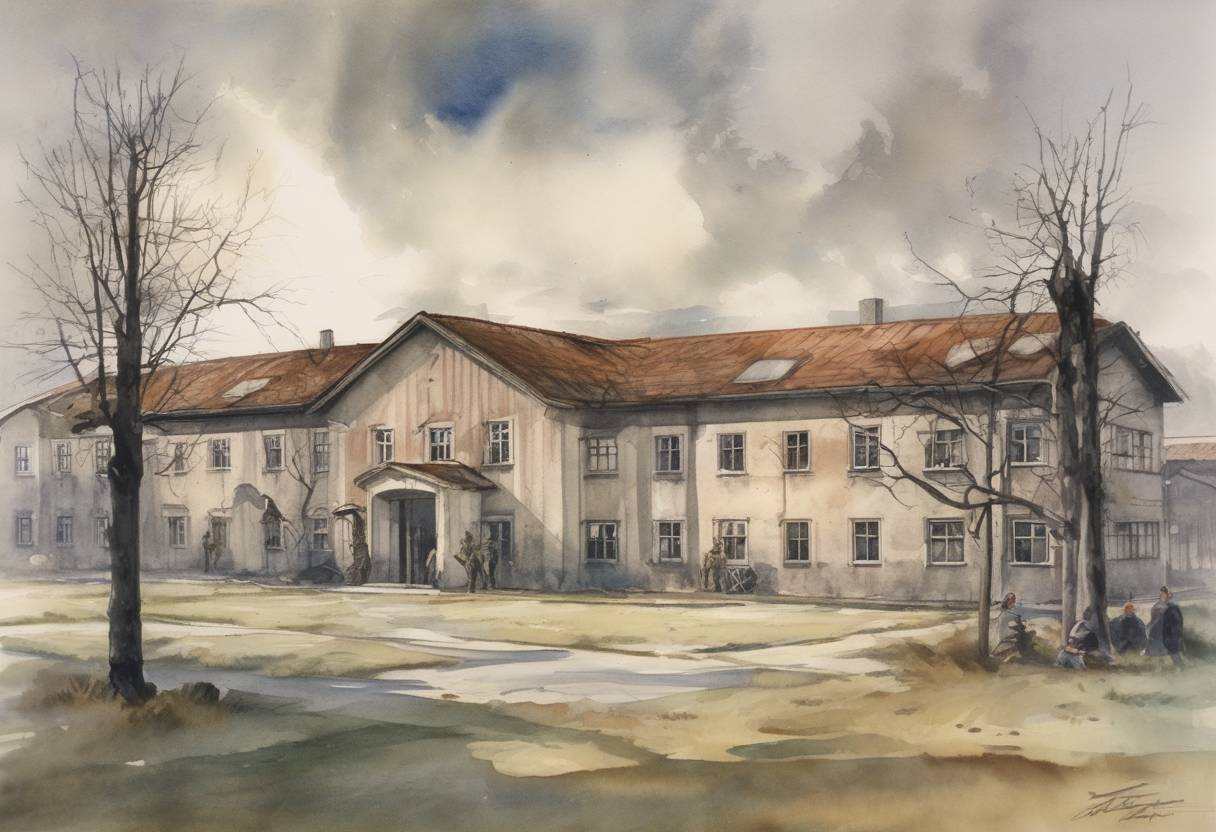
Liberation of Dachau Concentration Camp
On April 29, 1945, United States troops liberated the Dachau concentration camp, marking a significant moment in the closing days of World War II. This event was a crucial step in the Allied forces’ efforts to dismantle the Nazi regime and bring an end to the Holocaust.
Background
Dachau was the first concentration camp established by the Nazi regime, opened on March 22, 1933. Located near Munich in southern Germany, it initially served as a detention center for political prisoners. Over time, it expanded to incarcerate Jews, Romani people, homosexuals, Jehovah’s Witnesses, and other groups deemed undesirable by the Nazis. The camp became a model for subsequent concentration camps and was notorious for its brutal conditions and the inhumane treatment of its prisoners.
The Liberation
As Allied forces advanced into Germany in early 1945, they uncovered the full extent of the atrocities committed in concentration camps. The 42nd and 45th Infantry Divisions of the U.S. Seventh Army approached Dachau in late April. On April 29, 1945, they reached the camp and found approximately 32,000 prisoners suffering from starvation and disease.
The liberating troops were met with scenes of horror, including piles of corpses and emaciated survivors. The conditions at Dachau shocked the soldiers, many of whom were unprepared for the scale of human suffering they encountered. The liberation of the camp was a pivotal moment that brought the realities of the Holocaust to the forefront of global consciousness.
Aftermath
Following the liberation, the U.S. military provided medical care and food to the survivors. The camp was used as a place to house displaced persons and as a site for war crimes trials. The Dachau Trials, held between 1945 and 1948, prosecuted numerous Nazi officials and camp personnel for their roles in the atrocities committed there.
The liberation of Dachau was a significant event in the broader context of World War II and the Holocaust. It highlighted the need for justice and accountability for the crimes committed by the Nazi regime. The camp itself has since been preserved as a memorial site, serving as a reminder of the atrocities of the Holocaust and the importance of remembering history to prevent future genocides.
Historical Significance
The liberation of Dachau was not only a moment of rescue for the surviving prisoners but also a powerful symbol of the Allied victory over Nazi tyranny. It underscored the importance of documenting and acknowledging the horrors of the Holocaust, ensuring that the world would not forget the lessons of this dark chapter in history. The event remains a poignant reminder of the resilience of the human spirit and the enduring need for vigilance against hatred and intolerance.