The Battle of Fort Necessity: July 3, 1754
1754 · Farmington, United States
The Battle of Fort Necessity took place, marking one of the first engagements of the French and Indian War.
May 28, 1754
The Battle of Jumonville Glen occurs, marking the beginning of the French and Indian War. It was a skirmish between British colonial forces led by George Washington and French troops.
Fayette County, United States | British Army
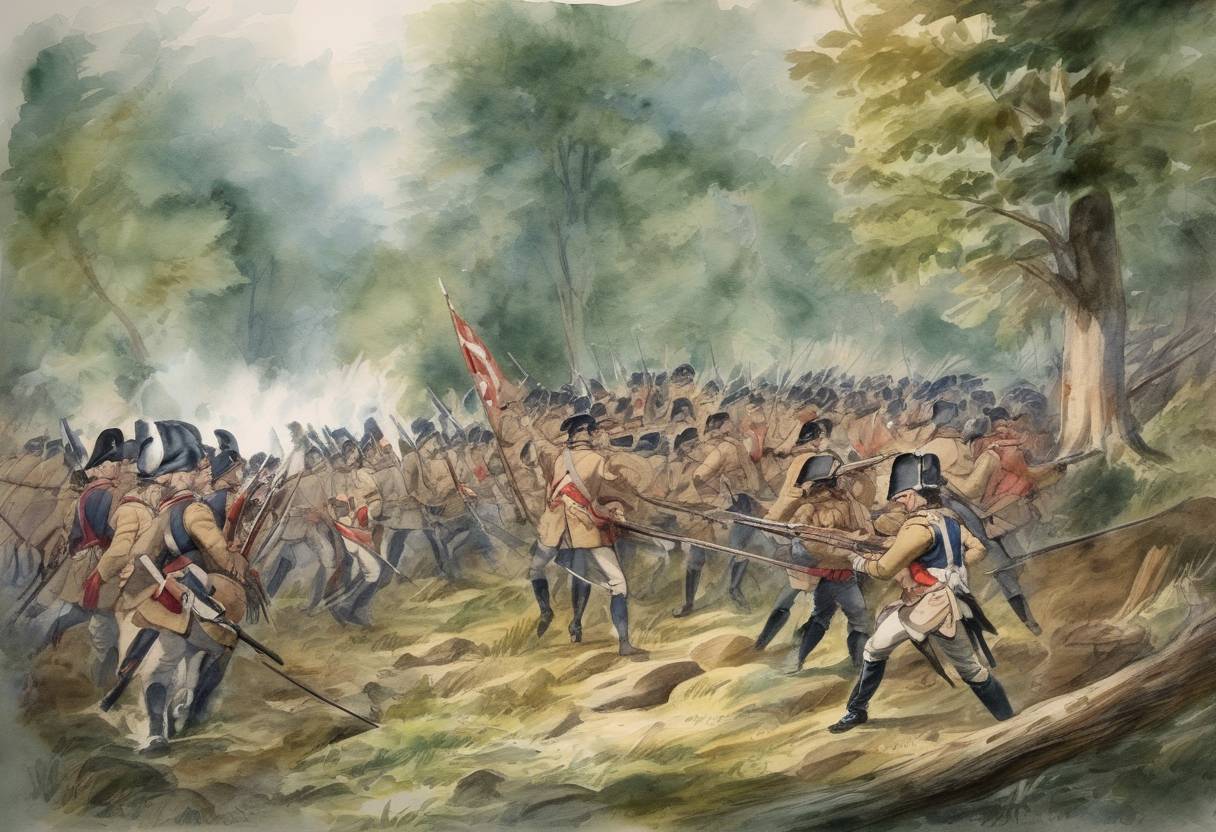
The Battle of Jumonville Glen, which occurred on May 28, 1754, is widely recognized as the opening engagement of the French and Indian War, a conflict that was part of the larger Seven Years’ War. This skirmish took place in what is now Fayette County, Pennsylvania, and involved British colonial forces led by a young George Washington and a small detachment of French troops.
In the mid-18th century, both Britain and France were vying for control over North America, particularly the Ohio Valley, a region rich in resources and strategic importance. Tensions had been escalating as both colonial powers sought to expand their territories. The British, under the Virginia Colony’s directive, aimed to assert their claims by constructing a series of forts, while the French were doing the same to solidify their presence.
George Washington, then a 22-year-old lieutenant colonel in the Virginia militia, was dispatched by Governor Robert Dinwiddie to the Ohio Valley to deliver a message to the French, demanding they vacate the area. The French refused, and Washington was subsequently ordered to return with a military force to reinforce British claims.
On May 28, 1754, Washington, along with a group of Virginia militiamen and Native American allies led by the Seneca leader Tanacharison (also known as the Half-King), encountered a French reconnaissance party led by Joseph Coulon de Villiers de Jumonville. The French were encamped in a small glen, and the encounter quickly escalated into a brief but intense skirmish.
The details of the battle are somewhat contentious, with differing accounts from the British and French sides. However, it is generally agreed that the engagement resulted in the deaths of Jumonville and several of his men, with the remainder captured. The French claimed that Jumonville was on a diplomatic mission, while the British viewed the French presence as a military threat.
The Battle of Jumonville Glen had significant repercussions. It marked the beginning of open hostilities between Britain and France in North America, leading to the French and Indian War. This conflict eventually expanded into the global Seven Years’ War, involving numerous European powers.
For George Washington, the skirmish was a pivotal moment in his early military career, though it also brought controversy due to the ambiguous nature of the engagement and the death of Jumonville. The incident fueled further military actions, culminating in the Battle of Fort Necessity, where Washington was forced to surrender to a larger French force.
The French and Indian War ultimately reshaped the geopolitical landscape of North America, leading to British dominance in the region following the Treaty of Paris in 1763. However, the war also sowed the seeds of discontent among the American colonies, contributing to the conditions that led to the American Revolution.
In summary, the Battle of Jumonville Glen was a small but significant event that set the stage for a major conflict, highlighting the complex interplay of colonial ambitions, military engagements, and the broader struggle for power in the 18th century.
Source: en.wikipedia.org