World Premiere of Disney's "Pinocchio"
1940 · New York City, United States
The animated film 'Pinocchio', produced by Walt Disney Productions, had its world premiere at the Center Theatre in New York City.
March 15, 1972
The film 'The Godfather' premiered in New York City, becoming a major cultural phenomenon.
New York City, United States | Paramount Pictures
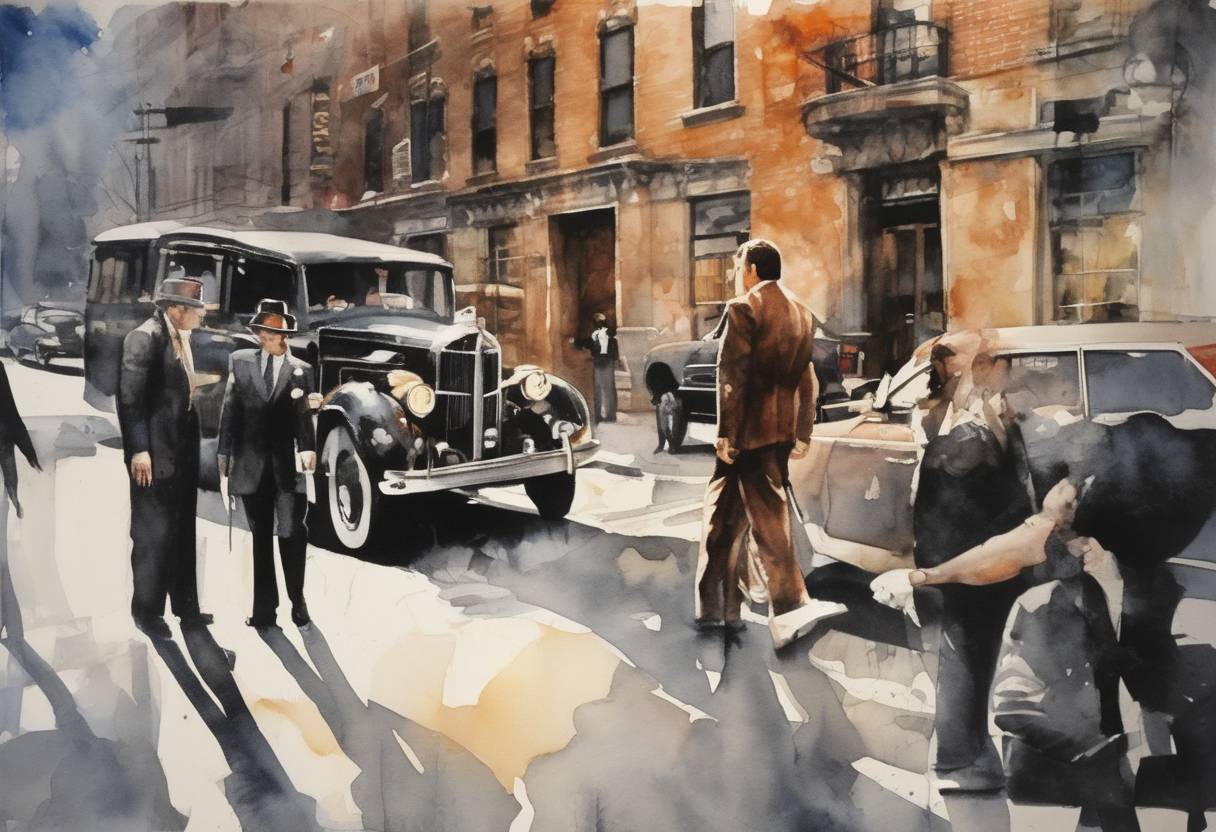
On March 15, 1972, The Godfather, directed by Francis Ford Coppola, premiered at the Loew’s State Theatre in New York City. This event marked the beginning of what would become a major cultural phenomenon in American cinema and beyond.
The Godfather is an adaptation of Mario Puzo’s best-selling novel of the same name, published in 1969. The film was produced by Paramount Pictures, which initially had reservations about the project due to its controversial subject matter and the potential for glorifying organized crime. However, the novel’s success and the compelling narrative convinced the studio to proceed.
Francis Ford Coppola: A relatively young director at the time, Coppola was chosen to helm the film due to his Italian-American heritage and his vision for the project. His direction would later be praised for its depth and authenticity.
Marlon Brando: Cast as Vito Corleone, Brando’s performance became iconic, earning him an Academy Award for Best Actor. His portrayal of the patriarch of the Corleone family set a new standard for acting in film.
Al Pacino: As Michael Corleone, Pacino’s role was pivotal in the film’s narrative. His transformation from reluctant family outsider to ruthless mafia leader is central to the story’s arc.
The premiere in New York City was a star-studded event, attended by the film’s cast and crew, as well as numerous celebrities and industry insiders. The anticipation was high, given the novel’s popularity and the buzz surrounding the film’s production.
Upon its release, The Godfather received widespread critical acclaim and quickly became a box office success. It was praised for its storytelling, character development, and its unflinching portrayal of the mafia’s inner workings. The film’s impact extended beyond the cinema:
Cinematic Influence: The Godfather is often credited with revitalizing the gangster genre and influencing countless films and television shows. Its narrative style, character complexity, and thematic depth set new benchmarks for storytelling in film.
Cultural Phenomenon: The film’s quotes, characters, and scenes became ingrained in popular culture. Phrases like “I’m gonna make him an offer he can’t refuse” entered the lexicon, and the film’s music, composed by Nino Rota, became instantly recognizable.
Awards and Recognition: The Godfather won three Academy Awards, including Best Picture, Best Actor for Marlon Brando, and Best Adapted Screenplay for Coppola and Puzo. It has since been preserved in the National Film Registry for its cultural, historical, and aesthetic significance.
The success of The Godfather led to two sequels, with The Godfather Part II (1974) also achieving critical acclaim and winning the Academy Award for Best Picture. The trilogy is often regarded as one of the greatest in film history.
The film’s exploration of themes such as power, loyalty, and family continues to resonate with audiences, and its influence is evident in various aspects of media and popular culture. The Godfather remains a seminal work in the history of cinema, celebrated for its artistry and enduring impact.
Source: en.wikipedia.org