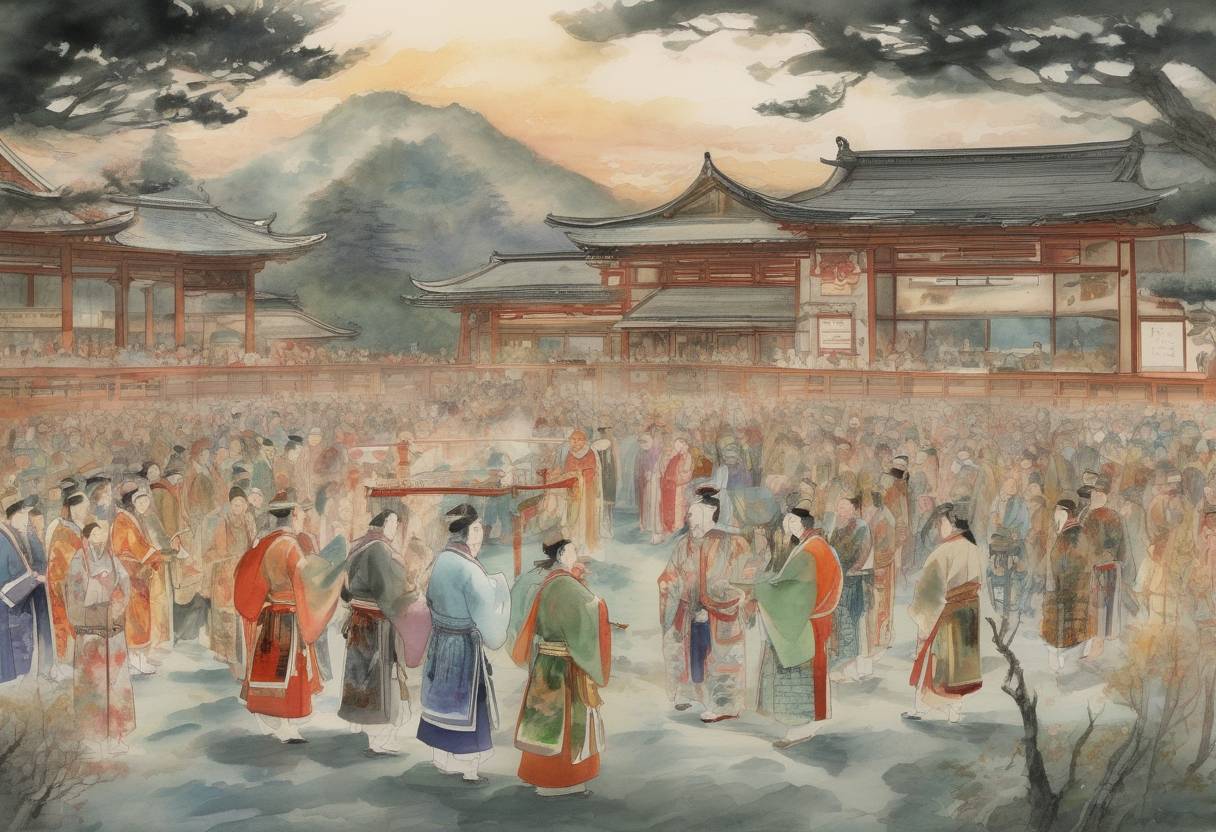
Establishment of the First Official Calendar in Japan
On March 20, 673, Emperor Tenmu of Japan decreed the establishment of the first official calendar in Japan, marking a significant moment in the country’s history. This calendar was based on the Chinese lunisolar calendar, reflecting the influence of Chinese culture and technology on Japan during this period.
Historical Context
The Asuka Period
- Timeframe: The Asuka period (538-710 AD) was a transformative era in Japanese history, characterized by significant cultural, political, and technological changes.
- Chinese Influence: During this time, Japan was heavily influenced by Chinese civilization, particularly in terms of governance, religion, and technology. The introduction of Buddhism and Confucianism played crucial roles in shaping Japanese society.
Emperor Tenmu
- Reign: Emperor Tenmu reigned from 673 to 686 AD. He was known for his efforts to consolidate power and strengthen the central government.
- Reforms: Tenmu implemented various reforms to enhance the administrative efficiency of the state, including the establishment of a more structured legal and bureaucratic system.
The Calendar Decree
Adoption of the Lunisolar Calendar
- Lunisolar System: The calendar adopted by Emperor Tenmu was based on the Chinese lunisolar system, which combines both lunar and solar cycles to determine months and years.
- Purpose: The introduction of an official calendar was aimed at standardizing timekeeping across the nation, which was essential for agricultural planning, religious observances, and governmental administration.
Implementation
- Cultural Integration: The calendar facilitated the integration of Chinese cultural and scientific advancements into Japanese society, promoting a more unified and organized state.
- Administrative Efficiency: By aligning with the Chinese calendar, Japan could better coordinate its activities with neighboring regions, enhancing trade and diplomatic relations.
Broader Historical Significance
Cultural Exchange
- Sinification: The adoption of the Chinese calendar is an example of the broader process of Sinification, where Japanese culture was significantly influenced by Chinese practices.
- Technological Advancements: This period saw the introduction of various Chinese technologies and ideas, which contributed to the development of a more sophisticated Japanese state.
Legacy
- Foundation for Future Calendars: The establishment of the first official calendar laid the groundwork for future timekeeping systems in Japan, influencing the development of subsequent calendars.
- Historical Documentation: The use of a standardized calendar allowed for more accurate historical records, aiding historians in understanding Japan’s past.
In conclusion, Emperor Tenmu’s decree to establish the first official calendar in Japan was a pivotal moment in the nation’s history, reflecting the deep cultural and technological exchanges between Japan and China during the Asuka period. This move not only enhanced administrative efficiency but also played a crucial role in shaping the cultural landscape of Japan.