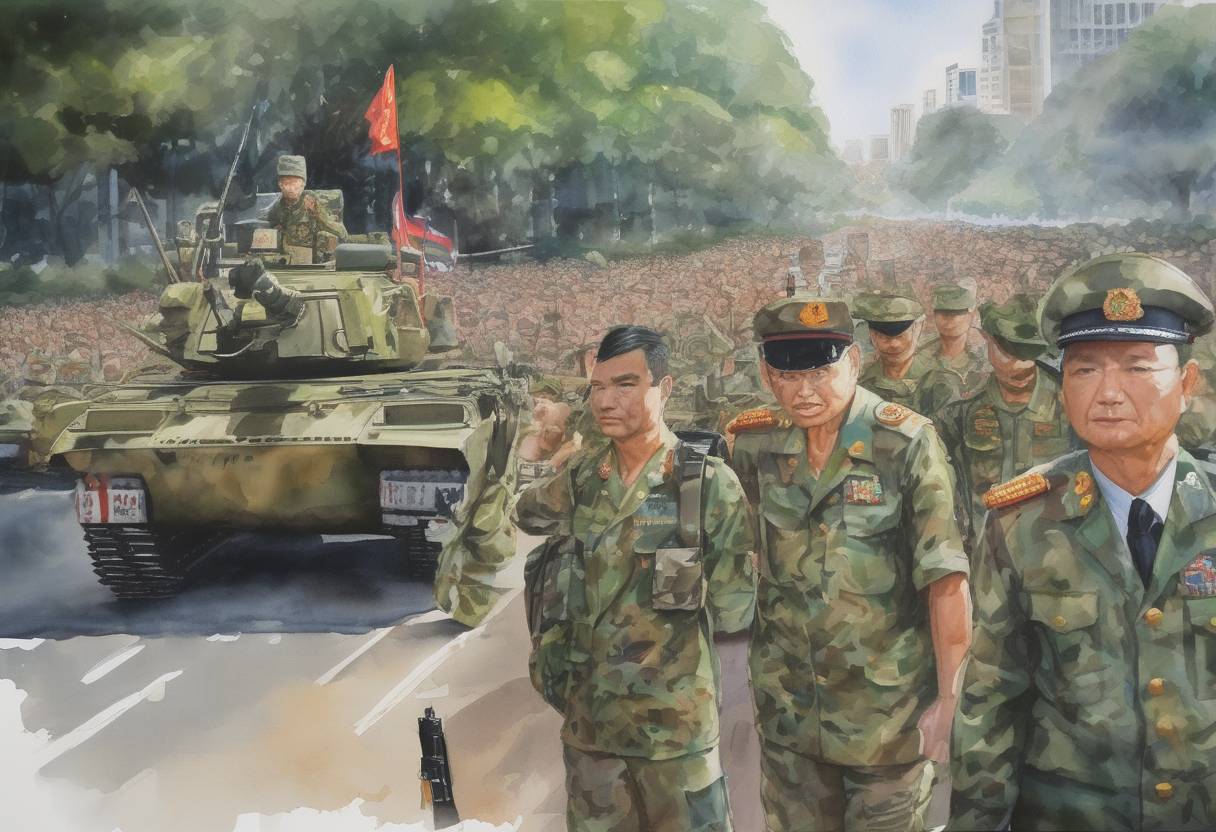
The 2006 Thai Coup d’État
On September 19, 2006, the Royal Thai Army staged a coup d’état against the government of Prime Minister Thaksin Shinawatra. This event marked a significant turning point in Thailand’s political landscape, leading to the establishment of a military junta.
Background
Thaksin Shinawatra, a telecommunications tycoon, became Prime Minister of Thailand in 2001. His tenure was characterized by populist policies that garnered widespread support among rural and lower-income Thais. However, his administration was also marred by allegations of corruption, abuse of power, and conflicts of interest, which polarized Thai society.
In the months leading up to the coup, political tensions escalated. Thaksin faced mounting opposition from various sectors, including the urban middle class, the military, and the monarchy. The situation was exacerbated by a controversial sale of his family’s telecommunications company, Shin Corporation, to a Singaporean company, which intensified public outrage over perceived corruption.
The Coup
While Thaksin was attending a United Nations General Assembly meeting in New York City, the Royal Thai Army, led by General Sonthi Boonyaratglin, executed a bloodless coup on September 19, 2006. Tanks and troops moved into Bangkok, seizing key government buildings and media outlets. The military declared martial law, dissolved the constitution, and established the Council for National Security to govern the country.
The coup leaders justified their actions by citing the need to restore order and address corruption. They received tacit support from the monarchy, which played a crucial role in legitimizing the coup.
Aftermath
Following the coup, the military installed an interim government led by General Surayud Chulanont, a former army chief. The junta promised to hold new elections and implement political reforms. A new constitution was drafted and approved via a national referendum in 2007.
The coup had significant implications for Thailand’s political landscape. It deepened the divide between Thaksin’s supporters, known as the “Red Shirts,” and his opponents, the “Yellow Shirts.” This division would continue to influence Thai politics for years, leading to further political instability and subsequent coups.
Broader Historical Significance
The 2006 coup highlighted the persistent role of the military in Thai politics and underscored the challenges of democratic governance in the country. It also reflected broader regional trends of military intervention in politics and the struggle for democratic consolidation in Southeast Asia.
The events of September 19, 2006, remain a pivotal moment in Thailand’s modern history, shaping the nation’s political trajectory and influencing its socio-political dynamics in the years that followed.