Desmond Tutu Receives the Nobel Peace Prize
1984 · Oslo, Norway
South African Bishop Desmond Tutu received the Nobel Peace Prize for his role as a unifying leader in the campaign to resolve the problem of apartheid in South Africa.
December 10, 1993
Nelson Mandela and F.W. de Klerk were awarded the Nobel Peace Prize for their efforts to peacefully end apartheid and establish a new democratic South Africa.
Oslo, Norway | Nobel Foundation
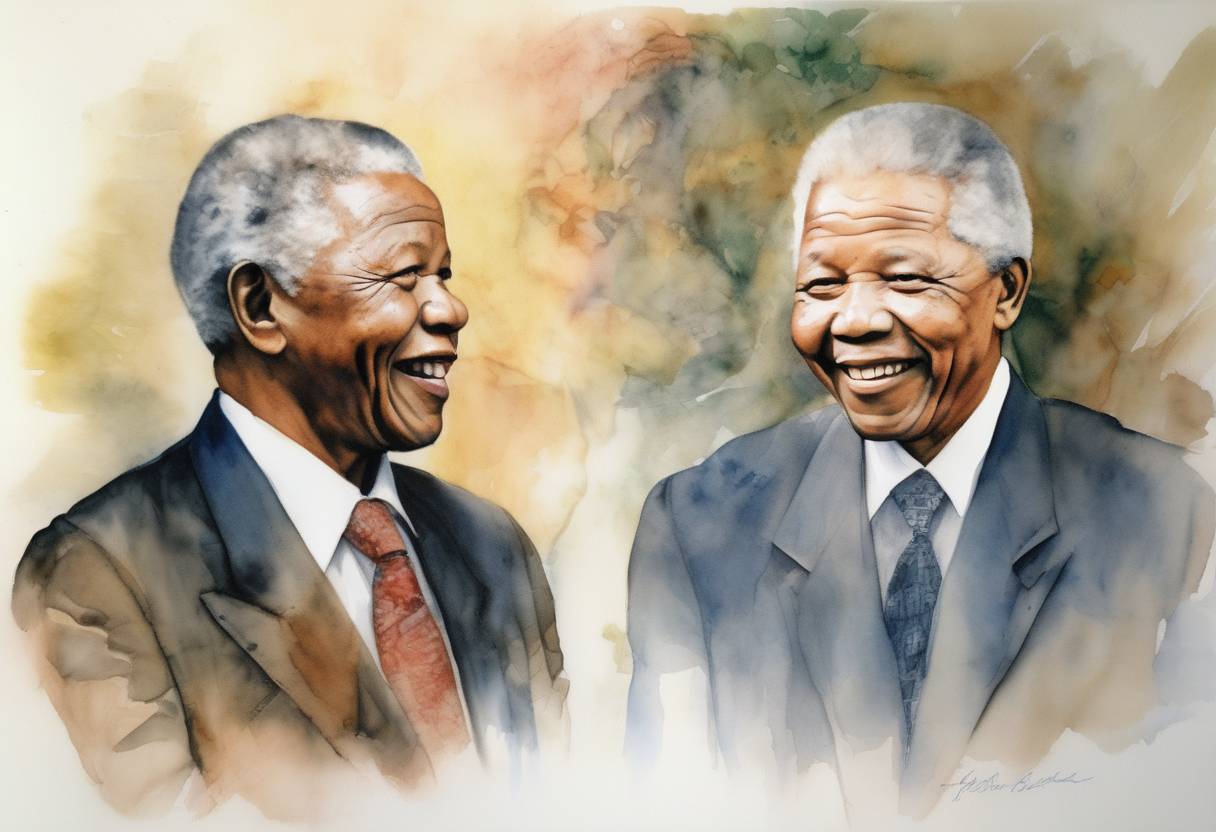
On October 12, 1993, Nelson Mandela and Frederik Willem (F.W.) de Klerk were jointly awarded the Nobel Peace Prize for their pivotal roles in the peaceful termination of the apartheid regime and the establishment of a democratic South Africa. This recognition highlighted their collaborative efforts to dismantle a system of institutionalized racial segregation and discrimination that had been in place for decades.
Apartheid in South Africa: Apartheid was a policy of racial segregation and economic discrimination against non-whites, enforced by the South African government from 1948 until the early 1990s. It was characterized by laws that severely restricted the rights of the majority black inhabitants and other ethnic groups in favor of the minority white population.
Nelson Mandela: Mandela was a key figure in the anti-apartheid movement, having been a leader of the African National Congress (ANC). He spent 27 years in prison for his activism against apartheid, becoming a global symbol of resistance to racial oppression.
F.W. de Klerk: De Klerk served as the President of South Africa from 1989 to 1994. He played a crucial role in the transition from apartheid to a democratic society by initiating and overseeing the dismantling of apartheid policies.
Release of Nelson Mandela: In February 1990, de Klerk announced the release of Nelson Mandela from prison, a significant step towards reconciliation and reform.
Negotiations for a New South Africa: Mandela and de Klerk engaged in extensive negotiations to end apartheid and establish a multiracial democracy. These talks culminated in the drafting of a new constitution and the first multiracial elections in 1994.
Efforts for Peaceful Transition: Both leaders worked to prevent the country from descending into civil war, advocating for peaceful change and reconciliation among South Africa’s diverse communities.
Democratic Elections: The efforts of Mandela and de Klerk led to South Africa’s first democratic elections in April 1994, in which Nelson Mandela was elected as the country’s first black president.
Legacy of Reconciliation: The peaceful transition from apartheid to democracy in South Africa is considered one of the most significant achievements in the late 20th century, setting a precedent for conflict resolution and reconciliation worldwide.
Continued Challenges: Despite the successful transition, South Africa has continued to face challenges related to economic inequality and social justice, issues rooted in its apartheid past.
The awarding of the Nobel Peace Prize to Mandela and de Klerk underscored the importance of dialogue and compromise in resolving deep-seated conflicts and highlighted the potential for peaceful change even in the most divided societies.
Source: en.wikipedia.org