258 · Rome, Roman Empire
Pope Sixtus II was martyred during the persecution of Christians under the Roman Emperor Valerian.
January 20, 0250
Pope Fabian, the Bishop of Rome, is martyred during the persecution of Christians under Emperor Decius.
Rome, Roman Empire | Christian Church
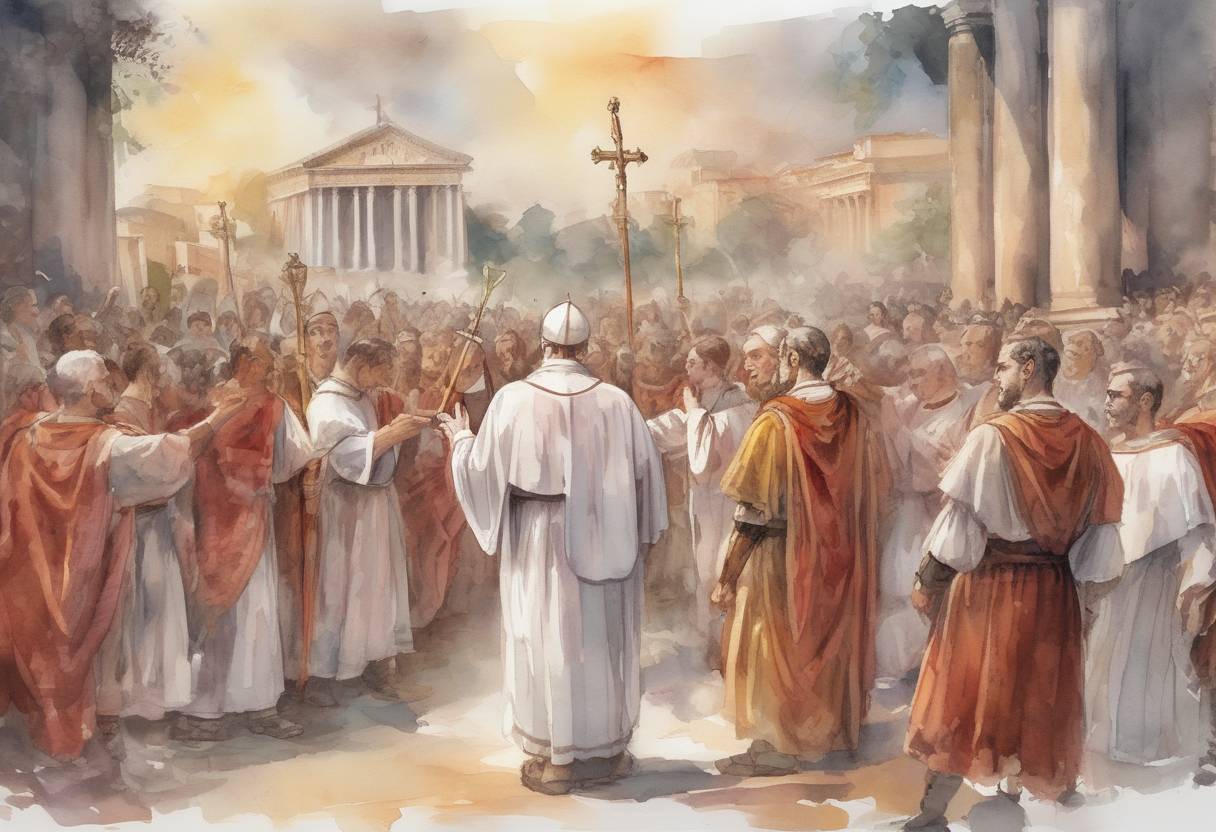
On January 20, 250, Pope Fabian, the Bishop of Rome, was martyred during the persecution of Christians under the Roman Emperor Decius. This event marked a significant moment in early Christian history, illustrating the challenges faced by the early Church and the steadfastness of its leaders.
Emperor Decius came to power in 249 AD, during a time of considerable instability within the Roman Empire. To consolidate his rule and restore traditional Roman values, Decius initiated a series of reforms. Among these was a mandate that required all Roman citizens to perform a public sacrifice to the Roman gods, a gesture meant to unify the empire under its traditional religious practices.
Christians, who refused to worship the Roman gods or the emperor, were seen as subversive and a threat to the unity and stability of the empire. Decius’s edict demanded that all citizens obtain a certificate (libellus) proving they had performed the sacrifice. Failure to comply resulted in severe penalties, including imprisonment, torture, and execution.
Fabian became the Bishop of Rome in 236 AD. His election was considered miraculous by early Christian writers, as it is said that a dove descended upon him, marking him as the chosen leader. During his papacy, Fabian organized the Roman Church, dividing it into seven districts, each overseen by a deacon. He also appointed several regional bishops, strengthening the Church’s administrative structure.
As the persecution intensified, Pope Fabian was arrested for his refusal to renounce his faith and perform the sacrificial rites. His steadfastness and refusal to compromise his beliefs led to his martyrdom on January 20, 250. Fabian’s death was a profound moment for the Christian community, symbolizing the ultimate sacrifice for faith and conviction.
Fabian’s martyrdom had a lasting impact on the Christian Church. It served as a powerful testament to the resilience and dedication of early Christians in the face of persecution. His leadership and organizational reforms left a lasting legacy, helping to strengthen the Church’s structure during a time of crisis.
Pope Fabian is venerated as a saint in both the Roman Catholic and Eastern Orthodox Churches. His feast day is celebrated on January 20, the anniversary of his martyrdom. Fabian’s life and death continue to be remembered as an example of unwavering faith and courage.
In summary, the martyrdom of Pope Fabian during the Decian persecution is a pivotal event in early Christian history, highlighting the challenges faced by the Church and the enduring legacy of its leaders.
Source: en.wikipedia.org