The Battle of Beersheba: October 31, 1917
The Battle of Beersheba was a pivotal engagement during World War I, occurring on October 31, 1917. It was part of the larger Sinai and Palestine Campaign, where British Empire forces sought to break the Ottoman defensive line stretching from Gaza to Beersheba. This battle is particularly noted for the successful charge by the Australian Light Horse, which played a crucial role in the Allied victory.
Context and Prelude
- Strategic Importance: Beersheba was a key location due to its water wells, which were vital for sustaining military operations in the arid region. Its capture was essential for the British to outflank the Ottoman defenses at Gaza.
- British Strategy: Under the command of General Edmund Allenby, the British forces aimed to deceive the Ottomans into believing that Gaza was the primary target, while planning a surprise attack on Beersheba.
The Battle
- Forces Involved: The British Empire forces included units from the United Kingdom, Australia, and New Zealand, with the Australian Light Horse Brigade playing a significant role. The Ottoman defenders were well-entrenched and prepared for a prolonged defense.
- The Assault: The attack began with an artillery bombardment early in the morning, followed by infantry assaults. The decisive moment came in the afternoon when the 4th and 12th Australian Light Horse Regiments executed a mounted charge.
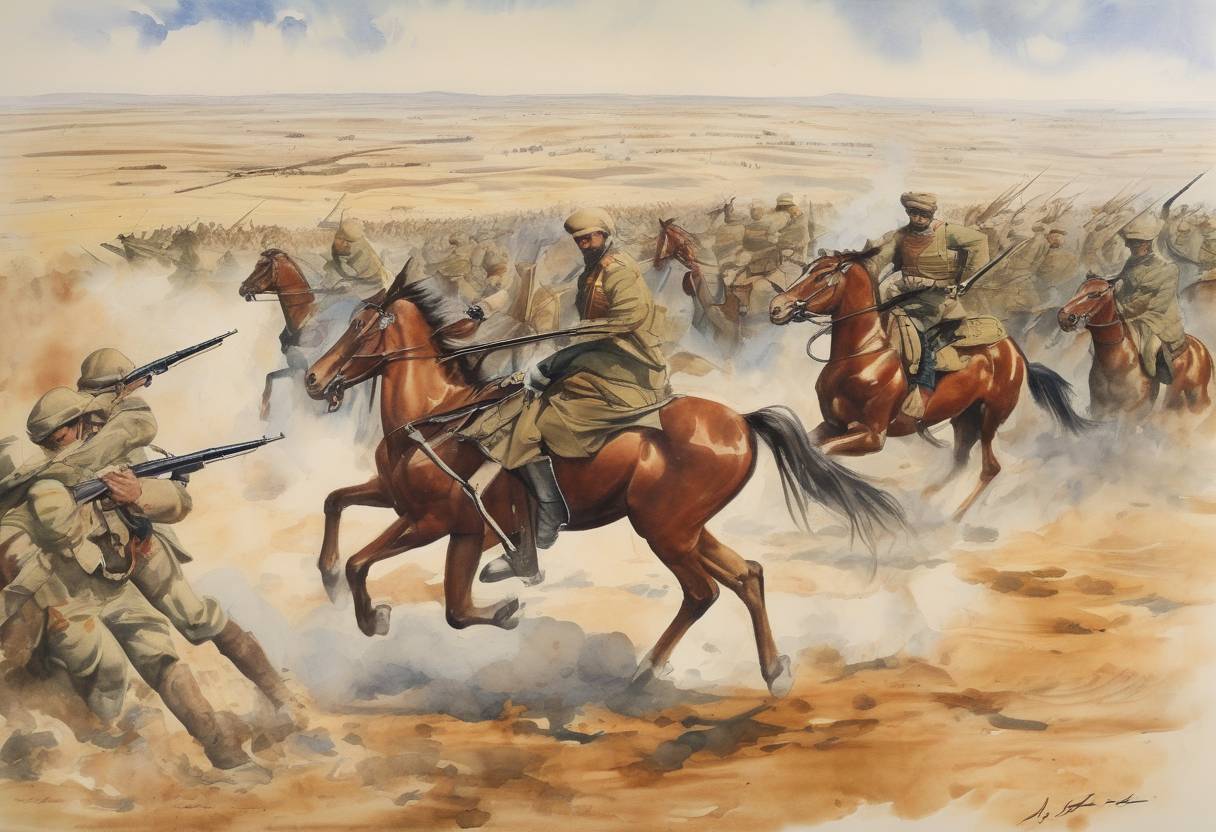
- The Charge: The Australian Light Horsemen, traditionally mounted infantry, charged the Ottoman trenches on horseback, wielding bayonets as improvised lances. This unexpected tactic overwhelmed the Ottoman defenders, leading to a swift capture of the town.
Aftermath and Significance
- Victory and Consequences: The capture of Beersheba allowed the British forces to outflank the Ottoman line at Gaza, leading to its eventual fall and opening the way for the advance into Palestine.
- Strategic Impact: This victory marked a turning point in the campaign, boosting Allied morale and undermining Ottoman control in the region.
- Legacy: The charge of the Australian Light Horse is remembered as one of the last successful cavalry charges in military history, symbolizing bravery and tactical innovation.
The Battle of Beersheba demonstrated the effectiveness of combined arms operations and the element of surprise in military strategy, contributing significantly to the eventual Allied success in the Middle Eastern theatre of World War I.