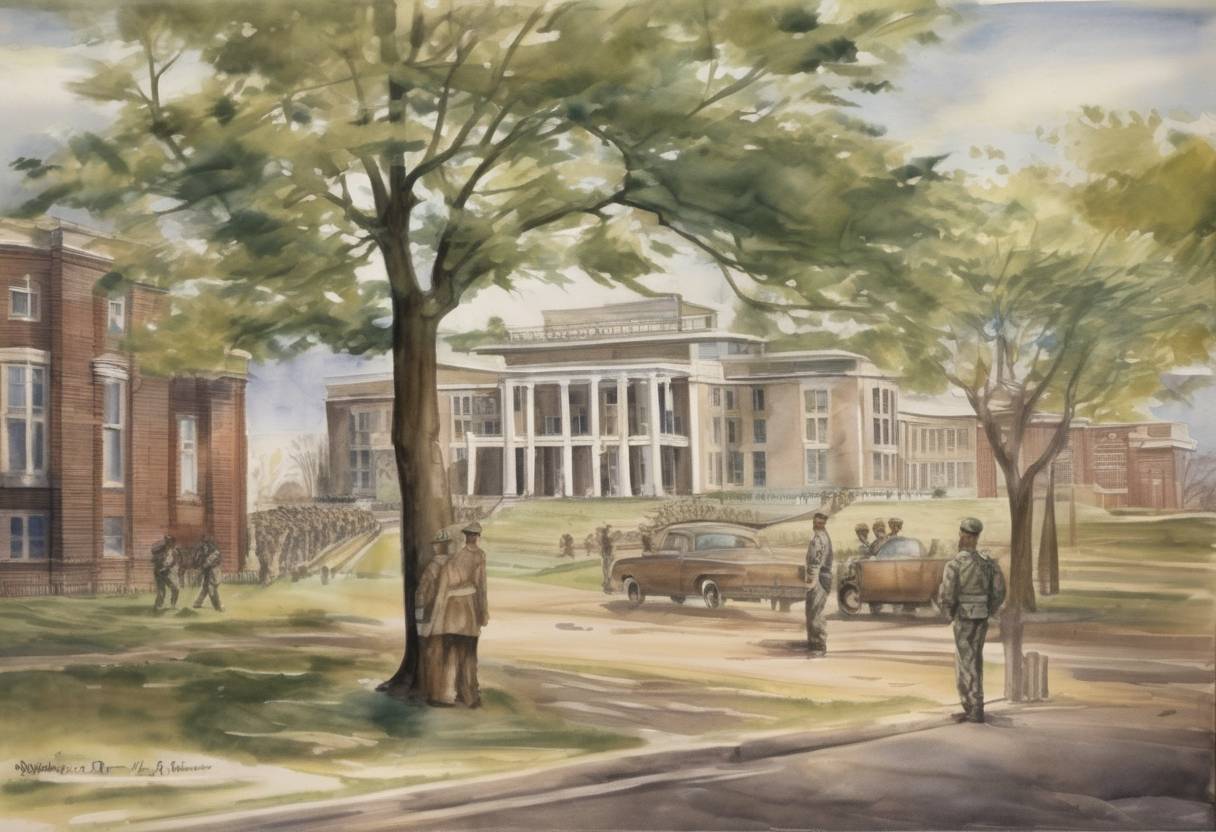
Eisenhower Sends Federal Troops to Little Rock: September 24, 1957
On September 24, 1957, President Dwight D. Eisenhower made a pivotal decision in the American Civil Rights Movement by sending federal troops to Little Rock, Arkansas. This action was taken to enforce the desegregation of Central High School, following the landmark Supreme Court decision in Brown v. Board of Education (1954), which declared racial segregation in public schools unconstitutional.
Context and Background
- Brown v. Board of Education (1954): The Supreme Court’s decision mandated the desegregation of public schools across the United States, overturning the “separate but equal” doctrine established by Plessy v. Ferguson (1896).
- Resistance in the South: Despite the ruling, many Southern states resisted integration. In Arkansas, Governor Orval Faubus openly defied the federal mandate by deploying the Arkansas National Guard to prevent African American students, known as the “Little Rock Nine,” from entering Central High School.
Key Events Leading Up to September 24
- September 4, 1957: The Little Rock Nine, a group of nine African American students, attempted to enter Central High School but were blocked by the National Guard under Governor Faubus’s orders.
- Federal Court Injunction: A federal judge ordered the removal of the National Guard, but the students faced violent mobs when they tried to attend school on September 23, 1957.
- Eisenhower’s Intervention: Concerned about the breakdown of law and order and the challenge to federal authority, President Eisenhower decided to intervene directly.
The Deployment of Federal Troops
- Executive Order 10730: On September 24, 1957, Eisenhower issued this order, authorizing the use of federal forces to ensure the students’ safe entry into the school.
- 101st Airborne Division: Approximately 1,200 troops from the 101st Airborne Division were deployed to Little Rock. They escorted and protected the Little Rock Nine, allowing them to attend classes without harassment.
Aftermath and Significance
- Impact on Civil Rights Movement: The intervention marked a significant moment in the Civil Rights Movement, demonstrating the federal government’s willingness to enforce court orders and protect civil rights.
- Precedent for Federal Involvement: Eisenhower’s actions set a precedent for future federal involvement in civil rights issues, highlighting the tension between state and federal authority.
- Legacy of the Little Rock Nine: The bravery of the Little Rock Nine became a symbol of the struggle for educational equality and civil rights in America.
Eisenhower’s decision to send federal troops to Little Rock underscored the federal commitment to upholding the Constitution and the rule of law, playing a crucial role in the ongoing battle for civil rights and equality in the United States.