The Launch of Luna 2: The First Spacecraft to Reach the Moon
1959 · Baikonur, Kazakhstan
The Soviet Union launches Luna 2, the first spacecraft to reach the Moon.
November 3, 1957
The Soviet Union launches Sputnik 2, with the first animal to orbit the Earth, a dog named Laika, aboard.
Baikonur, Kazakhstan | Soviet Space Program
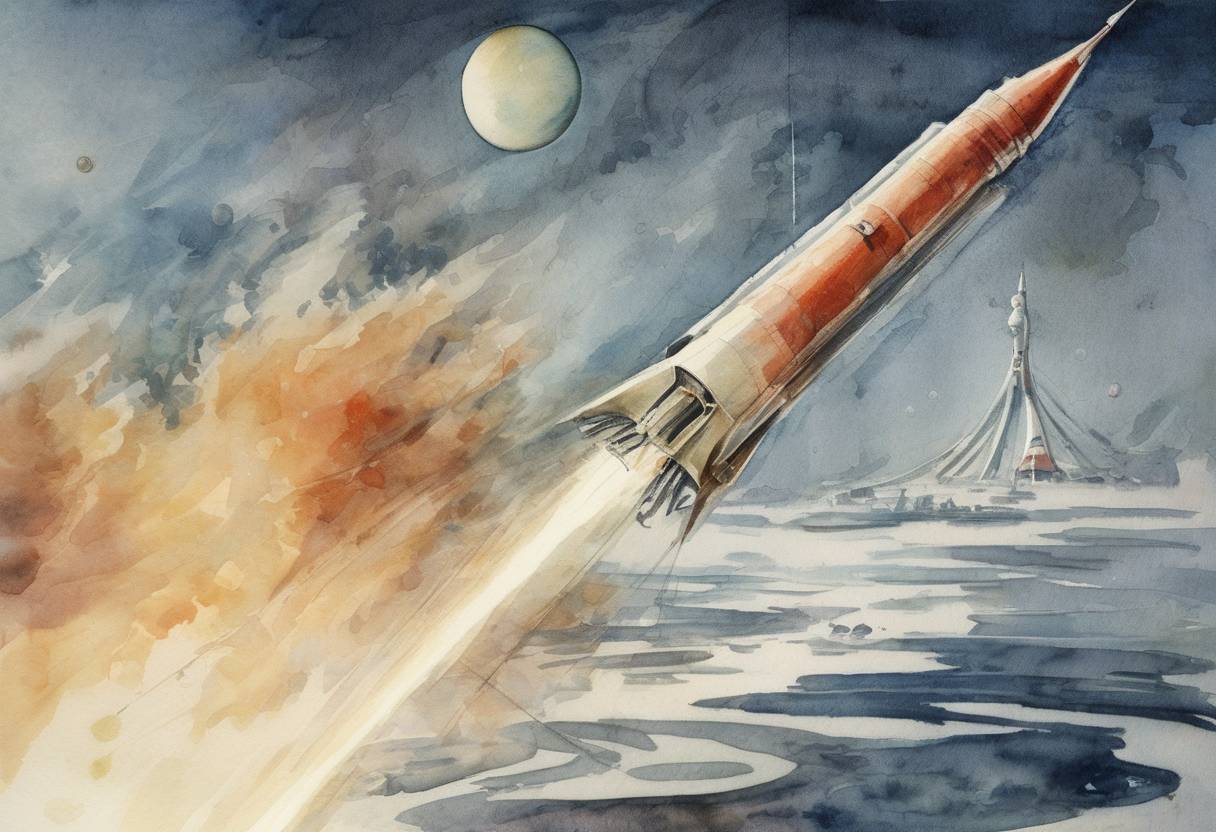
On November 3, 1957, the Soviet Union launched Sputnik 2, marking a significant milestone in the history of space exploration. This mission was notable for carrying the first living creature into orbit around the Earth—a dog named Laika.
The launch of Sputnik 2 came just a month after the Soviet Union’s successful deployment of Sputnik 1, the first artificial satellite, on October 4, 1957. This achievement had already intensified the space race between the United States and the Soviet Union, a key aspect of the Cold War era. The rapid succession of these launches demonstrated the Soviet Union’s technological prowess and its commitment to advancing space exploration.
Sputnik 2 was a more complex spacecraft than its predecessor, weighing about 508 kilograms (1,120 pounds). It was equipped with life-support systems to sustain Laika during her journey, including a pressurized cabin, food, water, and an oxygen supply. The mission aimed to gather data on the biological effects of space travel on a living organism.
Laika, a mixed-breed dog, was chosen for her calm demeanor and small size. Her mission was to provide crucial data on how living organisms react to the conditions of space travel, such as weightlessness and exposure to cosmic radiation.
Unfortunately, Sputnik 2 was not designed for recovery, and Laika’s journey was a one-way trip. Initial reports suggested that Laika survived for several days in orbit, but later accounts revealed that she likely perished within hours due to overheating caused by a malfunction in the thermal control system.
Despite the tragic outcome for Laika, the mission provided valuable scientific data that informed future human spaceflight. It highlighted the challenges of life support in space and paved the way for subsequent manned missions.
The launch of Sputnik 2 and Laika’s journey had profound implications:
In summary, the launch of Sputnik 2 on November 3, 1957, was a landmark event in space history, symbolizing both the triumphs and challenges of early space exploration efforts.
Source: en.wikipedia.org