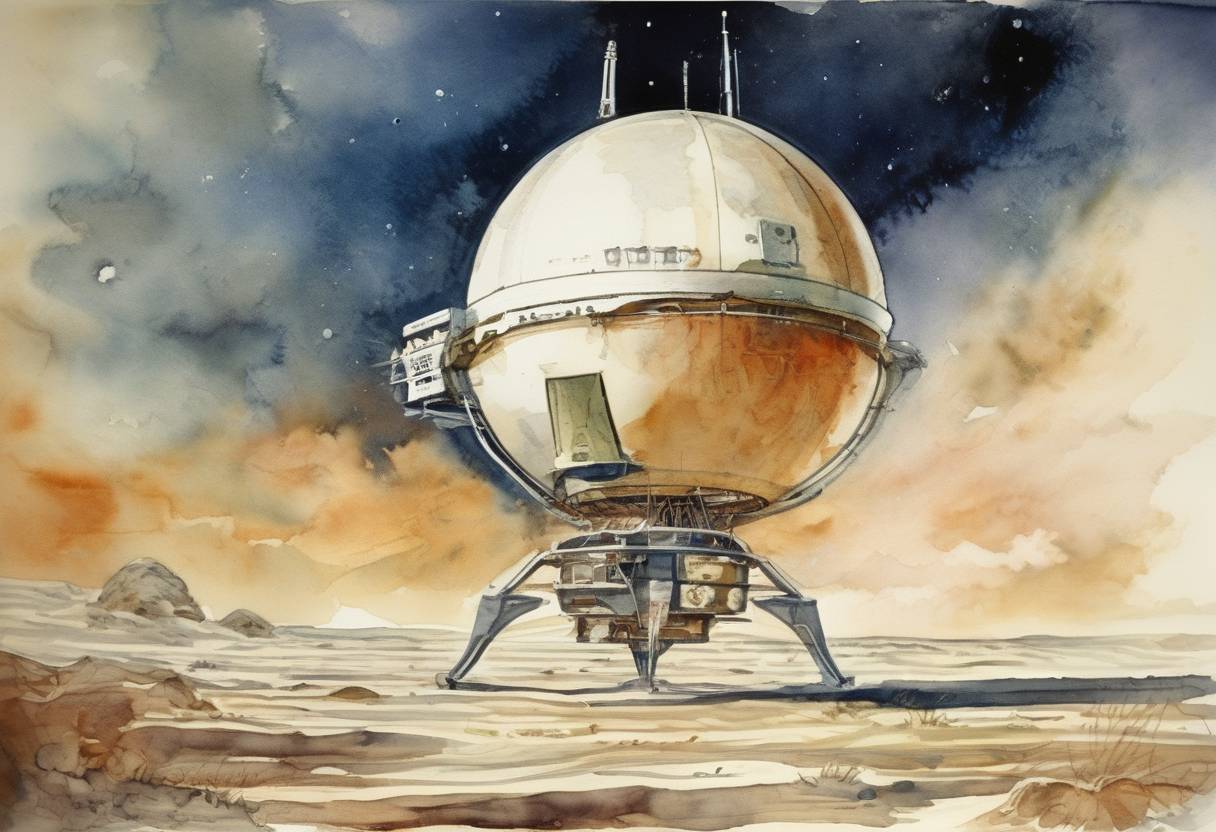
Venera 4: The First Successful Atmospheric Probe of Venus
On October 18, 1967, the Soviet spacecraft Venera 4 made history by becoming the first probe to successfully enter the atmosphere of another planet and transmit data back to Earth. This landmark achievement marked a significant milestone in space exploration and provided humanity with its first direct insights into the atmospheric conditions of Venus.
Background
The Venera program was a series of space missions conducted by the Soviet Union with the goal of exploring Venus, Earth’s closest planetary neighbor. Prior to Venera 4, several attempts had been made to study Venus, but none had successfully transmitted data from within the planet’s atmosphere.
The Mission
- Launch Date: Venera 4 was launched on June 12, 1967, from the Baikonur Cosmodrome.
- Spacecraft Design: The probe was equipped with scientific instruments designed to measure atmospheric pressure, temperature, and composition. It also carried a radio transmitter to send data back to Earth.
- Journey to Venus: After a journey of over four months, Venera 4 reached Venus on October 18, 1967.
Key Events on October 18, 1967
- Atmospheric Entry: Venera 4 entered the Venusian atmosphere at a velocity of approximately 11 kilometers per second. The spacecraft was designed to withstand the intense heat and pressure during descent.
- Data Transmission: As it descended, Venera 4 transmitted valuable data back to Earth for 93 minutes. It measured atmospheric pressure, temperature, and the chemical composition of the Venusian atmosphere.
- Findings: The probe revealed that Venus’s atmosphere was composed primarily of carbon dioxide, with only trace amounts of oxygen and water vapor. It also recorded surface temperatures of around 500 degrees Celsius (932 degrees Fahrenheit) and pressures 75 to 100 times that of Earth’s atmosphere.
Aftermath and Significance
- Scientific Impact: The data provided by Venera 4 significantly advanced our understanding of Venus, confirming that its atmosphere was much denser and hotter than previously thought. This challenged earlier assumptions about the planet’s habitability.
- Technological Achievement: Venera 4 demonstrated the feasibility of sending probes to other planets and laid the groundwork for future interplanetary exploration.
- Legacy: The success of Venera 4 paved the way for subsequent missions in the Venera series, which continued to explore Venus throughout the 1970s and 1980s, providing further insights into the planet’s surface and atmospheric conditions.
In summary, the Venera 4 mission was a pioneering achievement in space exploration, marking the first time a spacecraft successfully entered and transmitted data from the atmosphere of another planet. Its findings reshaped our understanding of Venus and underscored the potential for robotic exploration of the solar system.