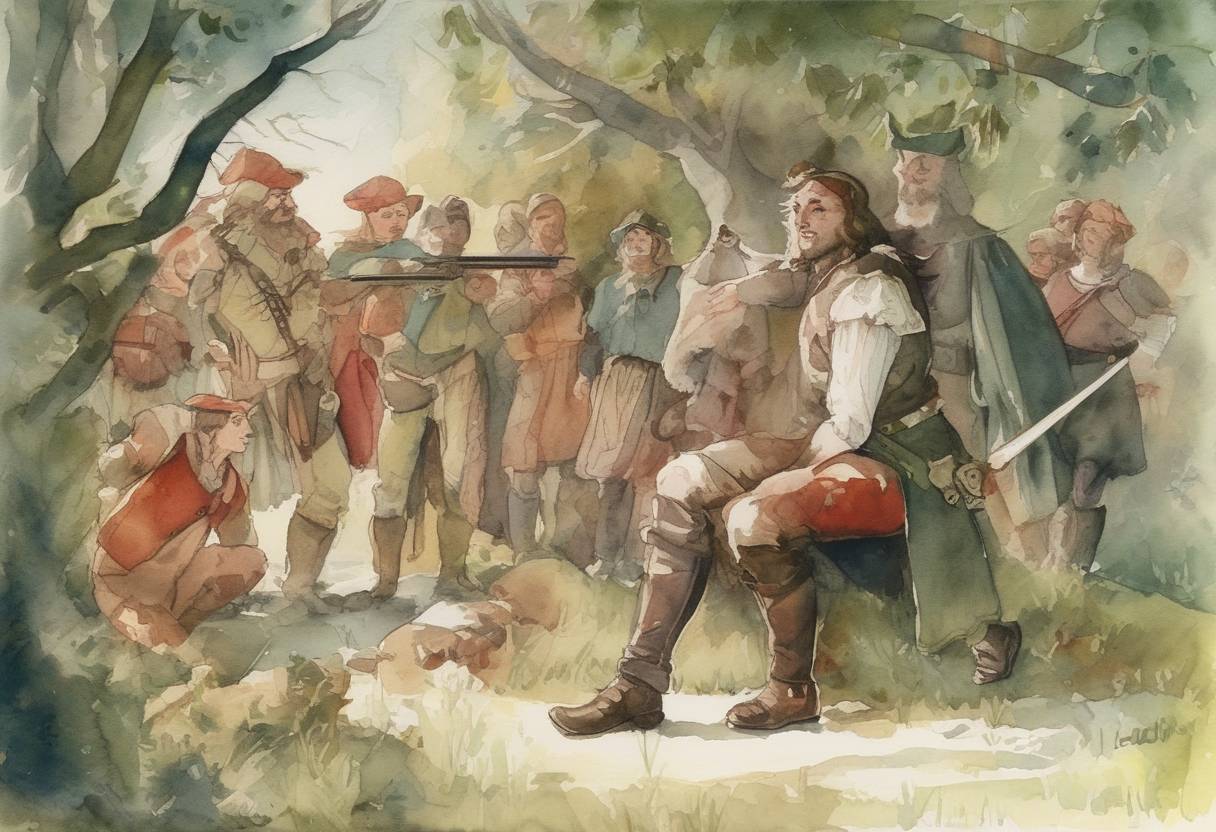
William Tell and the Apple Shot: November 18, 1307
William Tell is a legendary figure in Swiss folklore, renowned for his exceptional marksmanship and his role in the struggle for Swiss independence. The tale of William Tell is set against the backdrop of the early 14th century, a period marked by growing discontent among the Swiss people under Habsburg rule.
The Legend
According to the legend, on November 18, 1307, William Tell, a skilled crossbowman from the canton of Uri, was confronted by the tyrannical Austrian bailiff, Albrecht Gessler. Gessler had erected a pole in the village square of Altdorf, topped with his hat, and demanded that all passersby bow to it as a sign of respect for his authority.
William Tell, known for his defiance, refused to bow to the hat. As punishment, Gessler ordered Tell to shoot an apple off the head of his young son, Walter, with his crossbow. The stakes were high: failure would result in both their deaths. Demonstrating incredible skill and composure, Tell successfully shot the apple off his son’s head without harm.
The Aftermath
The story does not end with the apple shot. According to the legend, Gessler noticed that Tell had taken two arrows from his quiver. When questioned, Tell admitted that if he had harmed his son, the second arrow was meant for Gessler. This revelation led to Tell’s arrest, but he later escaped and ultimately killed Gessler, sparking a rebellion that contributed to the Swiss struggle for independence.
Historical Context and Significance
While the historical accuracy of the William Tell legend is debated, it has become a powerful symbol of resistance against tyranny and the fight for freedom. The story is set during a time when the Swiss Confederacy was beginning to form, with various cantons seeking to assert their independence from Habsburg control.
The tale of William Tell has been immortalized in literature, music, and art, most notably in Friedrich Schiller’s play “Wilhelm Tell” and Gioachino Rossini’s opera of the same name. It remains an enduring symbol of Swiss national identity and the values of courage and liberty.
Conclusion
Though the precise details of William Tell’s life and the events of November 18, 1307, may be shrouded in myth, the legend continues to resonate as a testament to the enduring human spirit and the quest for justice and autonomy.