The Signing of the Voting Rights Act of 1965
1965 · Washington, D.C., United States
U.S. President Lyndon B. Johnson signed the Voting Rights Act into law, prohibiting racial discrimination in voting.
March 15, 1965
President Lyndon B. Johnson addressed a joint session of Congress to introduce voting rights legislation, following the Selma to Montgomery marches.
Washington D.C., United States | United States Congress
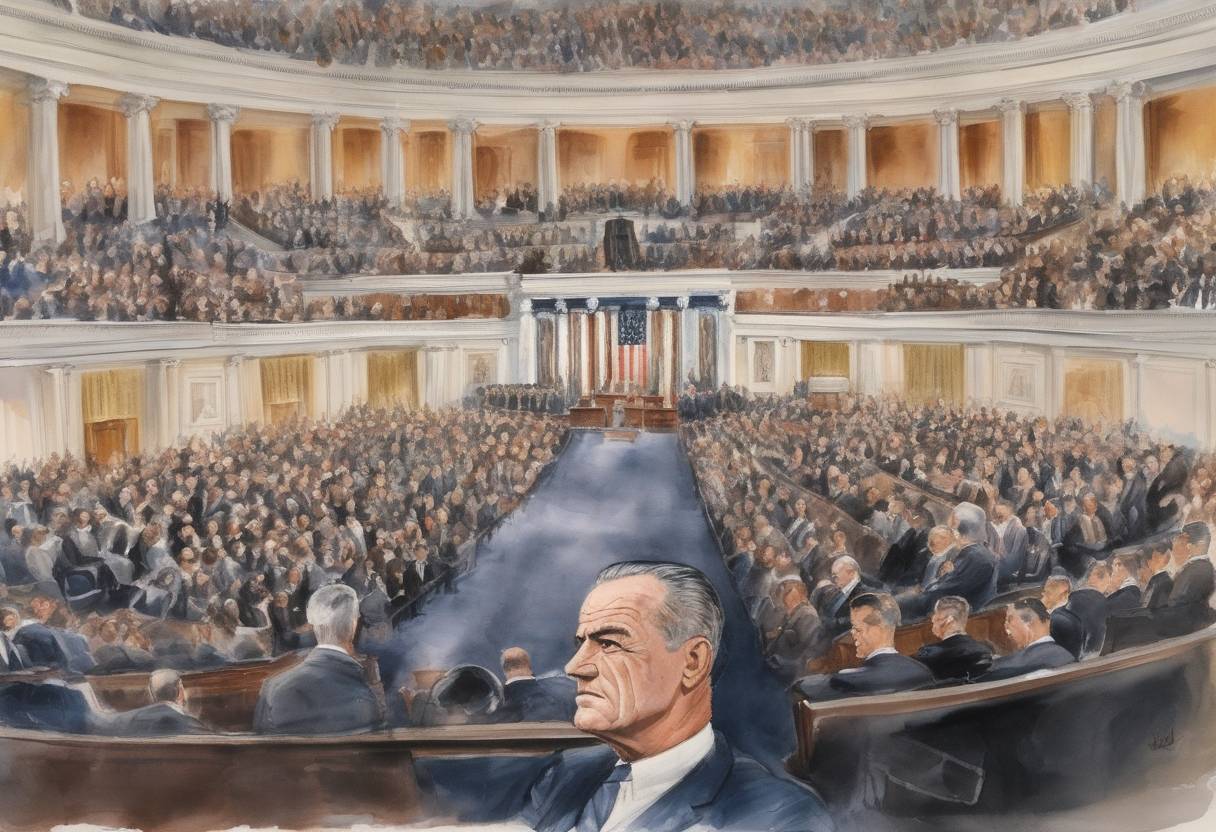
On March 15, 1965, President Lyndon B. Johnson delivered a historic address to a joint session of Congress, introducing voting rights legislation that would become a cornerstone of civil rights in the United States. This momentous speech came in the wake of the Selma to Montgomery marches, a pivotal series of events in the Civil Rights Movement.
The Selma to Montgomery marches were organized to protest racial discrimination in voting. African Americans in the South faced numerous obstacles when attempting to register to vote, including literacy tests, poll taxes, and outright intimidation. The marches were a response to these injustices and were catalyzed by the brutal events of “Bloody Sunday” on March 7, 1965, when peaceful protesters were violently attacked by law enforcement on the Edmund Pettus Bridge in Selma, Alabama.
In his address, President Johnson emphasized the moral imperative of ensuring voting rights for all Americans, regardless of race. He famously declared, “We shall overcome,” echoing the anthem of the Civil Rights Movement and signaling his administration’s commitment to the cause.
Moral and Legal Justification: Johnson framed the issue of voting rights as both a moral obligation and a legal necessity, underscoring the principles of democracy and equality enshrined in the U.S. Constitution.
Legislative Proposal: He introduced the Voting Rights Act, which aimed to eliminate the discriminatory practices that disenfranchised African American voters. The proposed legislation sought to enforce the 15th Amendment by prohibiting racial discrimination in voting.
Call to Action: Johnson urged Congress to pass the legislation swiftly, highlighting the urgency of addressing the injustices faced by African Americans in the electoral process.
The Voting Rights Act of 1965 was signed into law on August 6, 1965. It marked a significant victory for the Civil Rights Movement, leading to a dramatic increase in voter registration among African Americans in the South. The Act also empowered the federal government to oversee voter registration and elections in areas with a history of discriminatory practices.
Johnson’s address and the subsequent passage of the Voting Rights Act were pivotal in dismantling legal barriers to voting and advancing civil rights in the United States. The legislation is widely regarded as one of the most effective pieces of civil rights legislation in American history, reinforcing the nation’s commitment to equality and justice for all its citizens.
Source: en.wikipedia.org