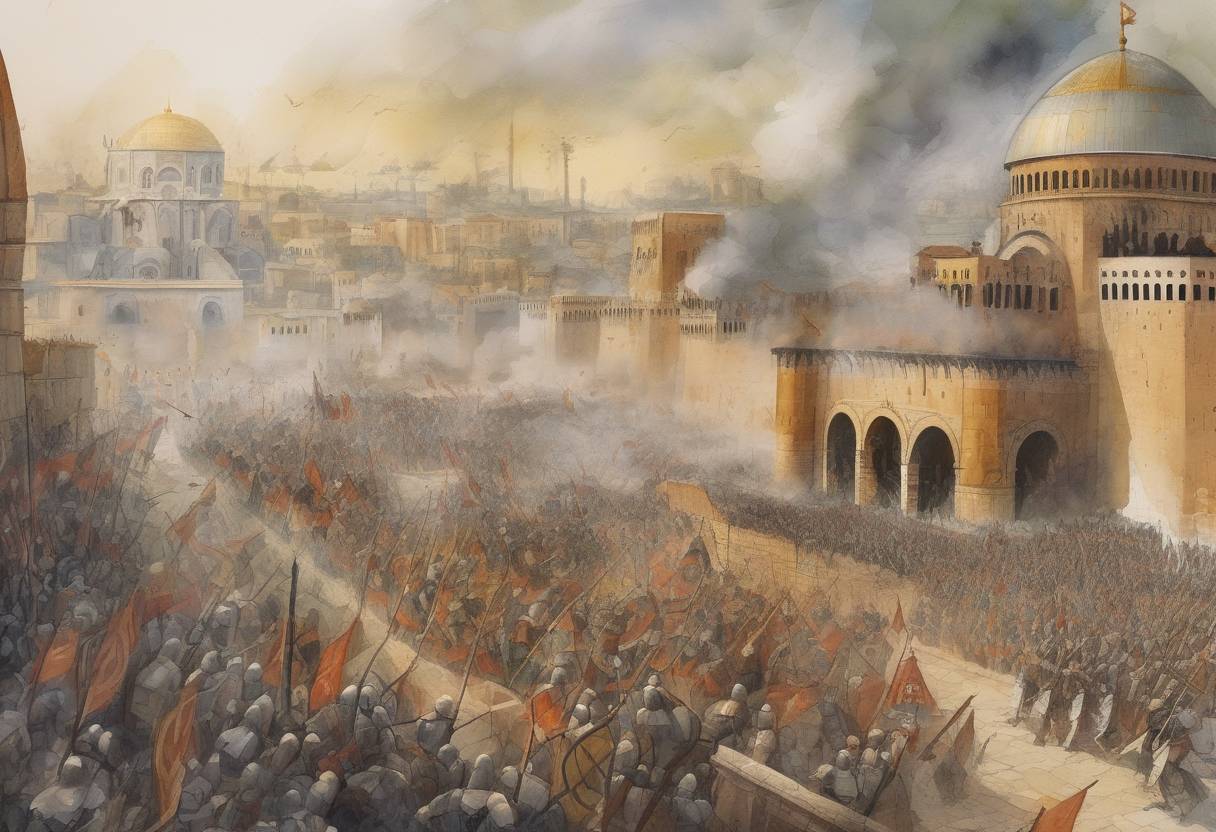
The Siege of Constantinople (674–678) and Its Lifting on September 21, 678
The Siege of Constantinople in 678 was a pivotal event in the Arab-Byzantine Wars, marking a significant moment in the defense of the Byzantine Empire against the expanding Umayyad Caliphate. This confrontation was part of a series of conflicts that spanned several centuries, as the Byzantine Empire sought to resist the territorial ambitions of the early Islamic caliphates.
Background
The Umayyad Caliphate, under the leadership of Caliph Mu’awiya I, sought to expand its territories and influence, with Constantinople, the capital of the Byzantine Empire, being a prime target. The city was not only a political and economic hub but also a symbol of Christian power in the East. The siege was part of a broader strategy by the Umayyads to weaken Byzantine control and establish dominance in the region.
The Siege
- Duration: The siege lasted from 674 to 678, with the Umayyad forces launching repeated attacks on the city.
- Byzantine Defense: The Byzantines, led by Emperor Constantine IV, employed several defensive strategies, including the use of Greek fire, a formidable incendiary weapon that proved crucial in repelling the Umayyad naval forces.
- Naval Engagements: The Byzantine navy played a critical role in defending the city, utilizing their superior knowledge of the local waters and the innovative use of Greek fire to disrupt the Umayyad fleet.
Lifting of the Siege
On September 21, 678, the siege was lifted, marking a decisive victory for the Byzantine Empire. Several factors contributed to this outcome:
- Byzantine Resilience: The effective use of Greek fire and the strategic acumen of Emperor Constantine IV were instrumental in the defense of the city.
- Logistical Challenges: The Umayyad forces faced significant logistical difficulties, including supply shortages and the harsh winter conditions, which weakened their ability to maintain the siege.
- Diplomatic Maneuvers: Constantine IV engaged in diplomatic efforts to secure peace, which eventually led to a truce with the Umayyads.
Aftermath and Significance
- Peace Treaty: Following the lifting of the siege, a peace treaty was negotiated, which included a tribute payment from the Umayyads to the Byzantines, temporarily halting hostilities.
- Strategic Impact: The successful defense of Constantinople preserved the Byzantine Empire’s territorial integrity and delayed further Umayyad advances into Europe.
- Legacy: The siege demonstrated the resilience of the Byzantine military and the strategic importance of Constantinople as a bastion against Islamic expansion into Europe.
The lifting of the siege in 678 was a testament to the Byzantine Empire’s ability to withstand external pressures and maintain its sovereignty during a period of significant geopolitical change. This event underscored the enduring strategic importance of Constantinople and set the stage for future interactions between the Byzantine Empire and the Islamic caliphates.