Joseph Welch Confronts Senator Joseph McCarthy: A Turning Point in the Red Scare
1954 · Washington D.C., United States
Joseph Welch confronts Senator Joseph McCarthy during the Army-McCarthy hearings, marking a turning point in the Red Scare.
December 2, 1954
The United States Senate voted to censure Senator Joseph McCarthy for his conduct during the anti-communist hearings.
Washington, D.C., United States | United States Senate
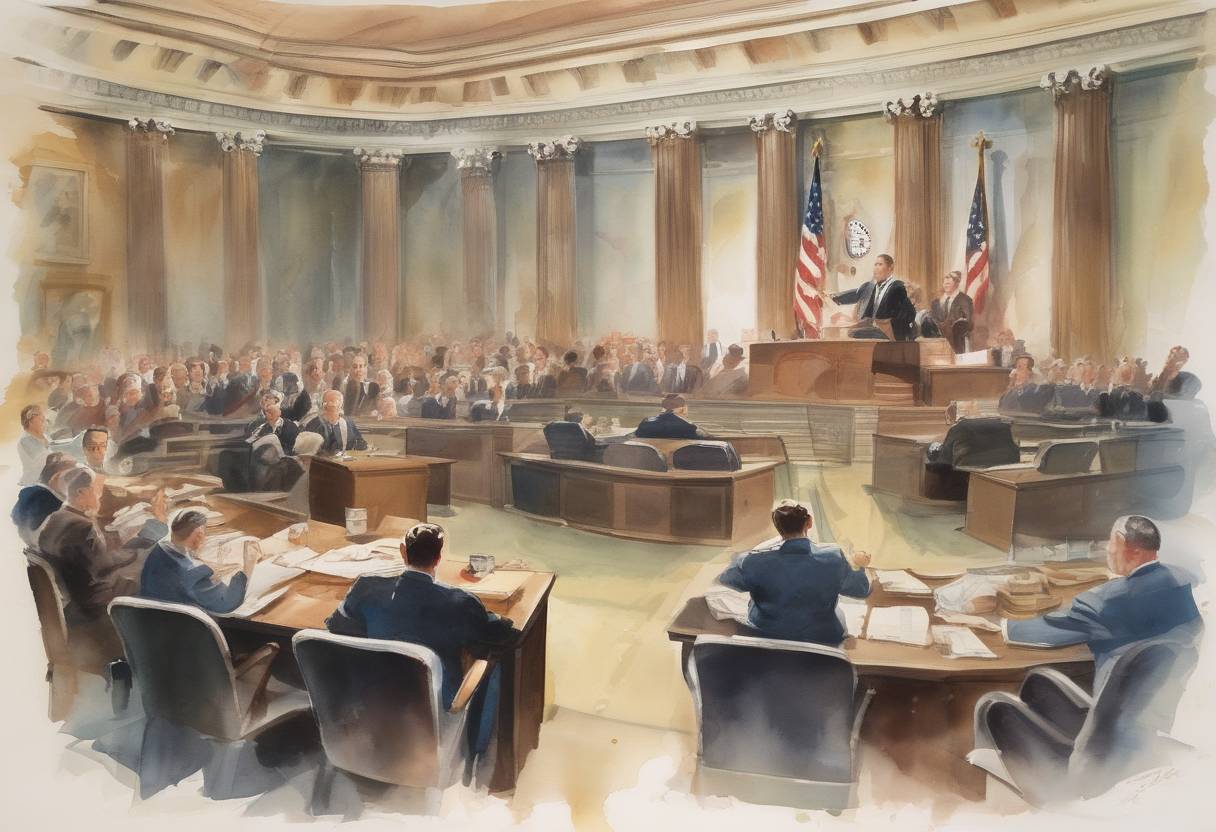
On December 2, 1954, the United States Senate voted to censure Senator Joseph McCarthy, marking a significant turning point in American political history. This censure was a formal disapproval of McCarthy’s conduct during his fervent anti-communist investigations, which had dominated the national political landscape in the early 1950s.
Senator Joseph McCarthy, a Republican from Wisconsin, rose to national prominence in 1950 when he claimed to have a list of communists working within the U.S. State Department. This assertion launched a period of intense anti-communist sentiment known as “McCarthyism,” characterized by aggressive investigations and accusations without substantial evidence. McCarthy chaired the Senate Permanent Subcommittee on Investigations, where he conducted numerous hearings aimed at rooting out alleged communists in government, military, and other sectors.
Televised Army-McCarthy Hearings: In 1954, McCarthy’s influence began to wane following the televised Army-McCarthy hearings. These hearings were intended to investigate conflicting accusations between the U.S. Army and McCarthy. The public witnessed McCarthy’s aggressive and often reckless tactics, which began to erode his support.
Public and Political Backlash: The hearings exposed McCarthy’s methods to a national audience, leading to growing public disapproval. Prominent figures, including journalist Edward R. Murrow, criticized McCarthy’s tactics, further diminishing his credibility.
Senate Investigation: The Senate established a special committee to investigate McCarthy’s conduct. The committee’s report condemned his behavior, citing abuse of power and failure to cooperate with other Senate committees.
On December 2, 1954, the Senate voted 67 to 22 to censure McCarthy. The censure resolution accused him of conduct “contrary to senatorial traditions” and criticized his abuse of the committee process. This formal rebuke significantly diminished McCarthy’s influence and marked the decline of his political career.
Decline of McCarthyism: The censure effectively ended McCarthy’s reign as a dominant political figure. Although anti-communist sentiment persisted, the era of McCarthyism began to fade as his tactics were discredited.
Impact on American Politics: The censure highlighted the importance of due process and the dangers of unchecked political power. It served as a cautionary tale about the potential for political persecution under the guise of national security.
Legacy: McCarthy’s actions and the subsequent censure left a lasting impact on American political discourse, influencing debates on civil liberties and the balance between security and freedom.
The censure of Senator Joseph McCarthy remains a pivotal moment in U.S. history, symbolizing the Senate’s commitment to uphold democratic principles and the rule of law amidst the pressures of Cold War paranoia.
Source: en.wikipedia.org