Mohamed Bouazizi and the Beginning of the Arab Spring
2010 · Sidi Bouzid, Tunisia
Mohamed Bouazizi set himself on fire in Sidi Bouzid, Tunisia, which became a catalyst for the Tunisian Revolution and the wider Arab Spring.
December 17, 2010
Mohamed Bouazizi, a Tunisian street vendor, set himself on fire in protest of police corruption and ill treatment. This act became a catalyst for the Tunisian Revolution and the wider Arab Spring.
Sidi Bouzid, Tunisia | N/A
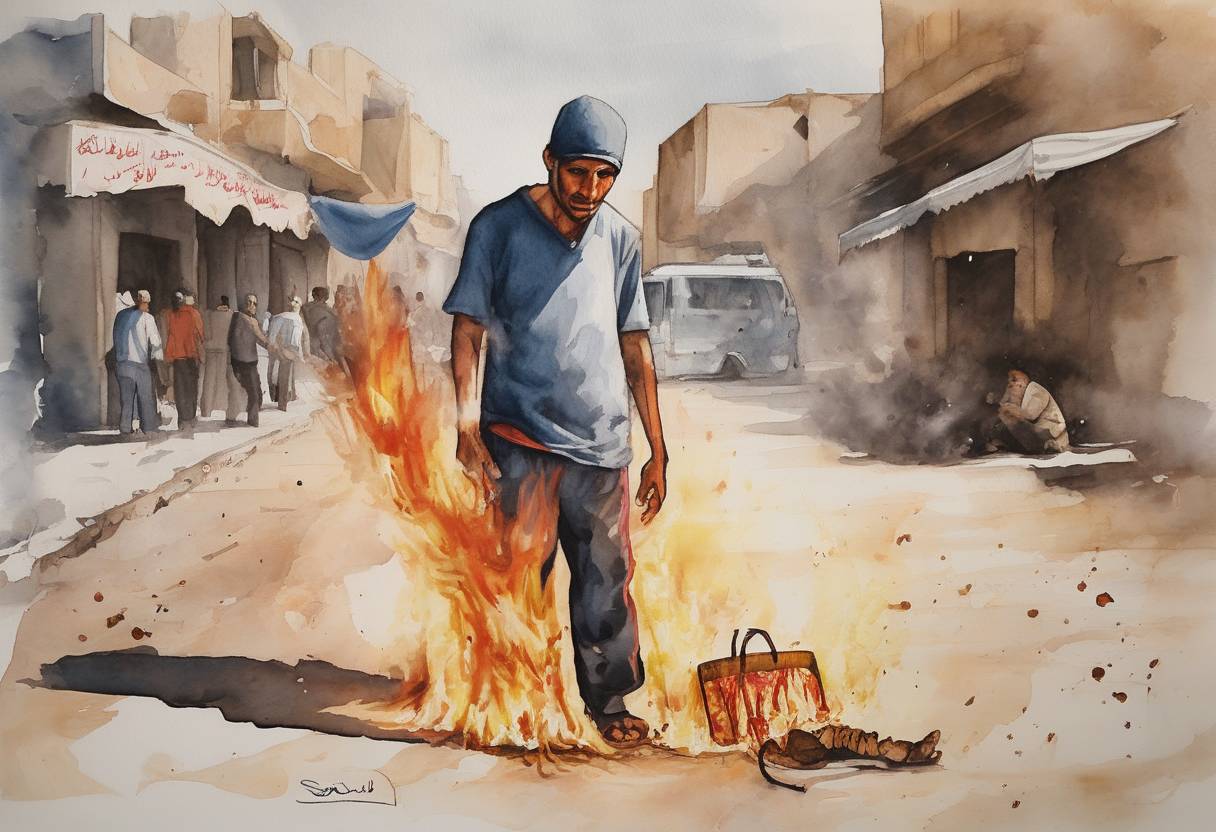
On December 17, 2010, Mohamed Bouazizi, a 26-year-old street vendor in Sidi Bouzid, Tunisia, set himself on fire in front of a local government office. This desperate act of protest was in response to the systemic police corruption and the humiliation he faced at the hands of local authorities. Bouazizi’s self-immolation became a pivotal moment, igniting the Tunisian Revolution and the broader Arab Spring movement across the Middle East and North Africa.
Mohamed Bouazizi was born on March 29, 1984, in Sidi Bouzid, a small rural town in central Tunisia. He was the primary breadwinner for his family, selling fruits and vegetables from a cart to support his mother and siblings. Like many in Tunisia, Bouazizi faced economic hardship, exacerbated by high unemployment rates and limited opportunities.
On the morning of December 17, 2010, Bouazizi’s cart was confiscated by municipal officials, reportedly because he did not have a permit. This was a common occurrence, as street vendors often faced harassment and extortion from local authorities. On this occasion, Bouazizi was allegedly slapped, insulted, and humiliated by a female municipal officer. When he attempted to lodge a complaint with the local governor, he was refused an audience.
Frustrated and humiliated, Bouazizi doused himself in gasoline and set himself alight in front of the governor’s office. His act of self-immolation was a protest against the oppressive conditions and lack of dignity faced by many Tunisians.
Bouazizi’s self-immolation resonated deeply with the Tunisian public, sparking widespread protests across the country. Demonstrations began in Sidi Bouzid and quickly spread to other cities, fueled by social media and word of mouth. Protesters demanded an end to corruption, unemployment, and the authoritarian regime of President Zine El Abidine Ben Ali.
Bouazizi succumbed to his injuries on January 4, 2011, but by then, his act had already galvanized a movement. The protests intensified, leading to President Ben Ali fleeing the country on January 14, 2011, after 23 years in power.
The success of the Tunisian Revolution inspired similar uprisings across the Arab world, collectively known as the Arab Spring. Countries such as Egypt, Libya, Yemen, Syria, and Bahrain experienced significant protests and, in some cases, regime changes. While the outcomes varied, the Arab Spring marked a significant moment in the region’s history, highlighting the power of grassroots movements and the demand for political reform.
Mohamed Bouazizi’s act of self-immolation is often seen as the catalyst for the Arab Spring, symbolizing the struggle against oppression and the quest for dignity and justice. His story underscores the profound impact that individual acts of defiance can have on the course of history, inspiring millions to seek change.
In recognition of his role in sparking the Arab Spring, Bouazizi was posthumously awarded the Sakharov Prize for Freedom of Thought by the European Parliament in 2011. His legacy continues to be a powerful reminder of the enduring human spirit in the face of adversity.
Source: en.wikipedia.org