Sinking of the USS Reuben James
1941 · off Iceland, Atlantic Ocean
The USS Reuben James is sunk by a German U-boat, becoming the first U.S. Navy ship sunk by enemy action in World War II.
October 17, 1941
The USS Kearny, a United States Navy destroyer, was torpedoed by a German U-boat near Iceland, resulting in the deaths of 11 sailors, escalating tensions between the U.S. and Germany prior to America's entry into World War II.
Near Iceland, Atlantic Ocean | United States Navy
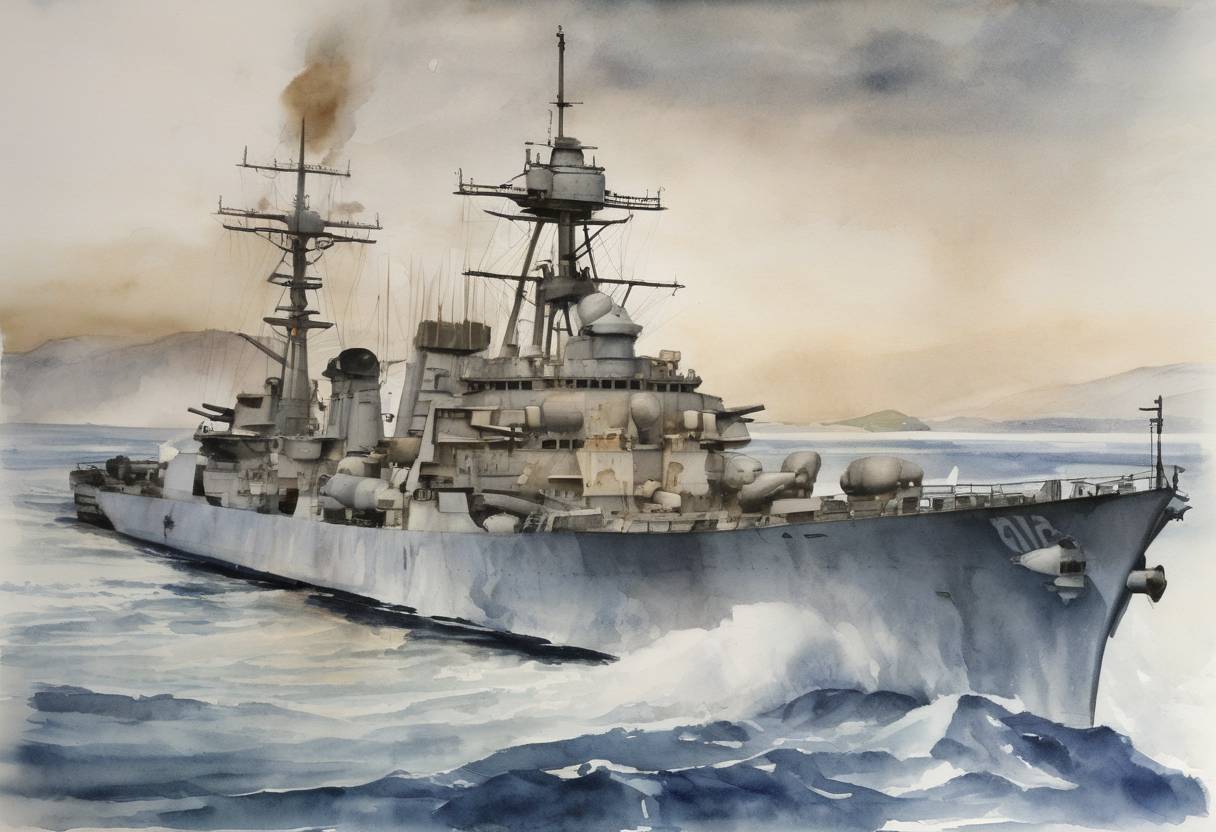
On October 17, 1941, the USS Kearny, a United States Navy destroyer, was torpedoed by a German U-boat near Iceland. This incident marked a significant escalation in tensions between the United States and Germany, occurring just months before the U.S. formally entered World War II.
Neutrality and Lend-Lease: Prior to the attack, the United States maintained a stance of neutrality in World War II. However, through the Lend-Lease Act, the U.S. was providing material support to Allied nations, particularly the United Kingdom, which was engaged in a desperate struggle against Nazi Germany.
Atlantic Charter and Naval Patrols: In August 1941, President Franklin D. Roosevelt and British Prime Minister Winston Churchill issued the Atlantic Charter, outlining their vision for a post-war world. Concurrently, Roosevelt authorized U.S. naval patrols in the Atlantic to protect shipping lanes, effectively extending American involvement in the conflict.
Attack Details: On the night of October 17, 1941, the USS Kearny was part of a convoy escorting Allied ships across the North Atlantic. While near Iceland, it was attacked by German submarine U-568. The U-boat launched a torpedo that struck the Kearny, causing significant damage and resulting in the deaths of 11 American sailors.
Immediate Aftermath: Despite the damage, the USS Kearny managed to stay afloat and was eventually repaired. The attack, however, had immediate political and public repercussions in the United States.
Escalation of Tensions: The attack on the USS Kearny intensified anti-German sentiment in the United States and was used by President Roosevelt to rally public opinion against the Axis powers. In a radio address, Roosevelt referred to the incident as an act of piracy, emphasizing the threat posed by Nazi Germany.
Prelude to War: Although the U.S. did not immediately declare war following the attack, the incident contributed to the growing support for American involvement in World War II. It highlighted the dangers faced by American forces even before the official entry into the conflict.
Pearl Harbor and Declaration of War: Less than two months later, on December 7, 1941, the Japanese attack on Pearl Harbor prompted the United States to declare war on Japan. Shortly thereafter, Germany declared war on the United States, fully drawing America into World War II.
The torpedoing of the USS Kearny stands as a pivotal moment in the lead-up to America’s active participation in World War II, illustrating the fragile state of neutrality and the increasing inevitability of conflict with the Axis powers.
Source: en.wikipedia.org