The Arrest of John T. Scopes: May 5, 1925
1925 · Dayton, United States
John T. Scopes is arrested for teaching evolution in violation of Tennessee's Butler Act, leading to the famous Scopes Trial.
May 25, 1925
John T. Scopes is indicted for teaching evolution in violation of Tennessee's Butler Act, leading to the famous Scopes Trial.
Dayton, United States | Tennessee Judiciary
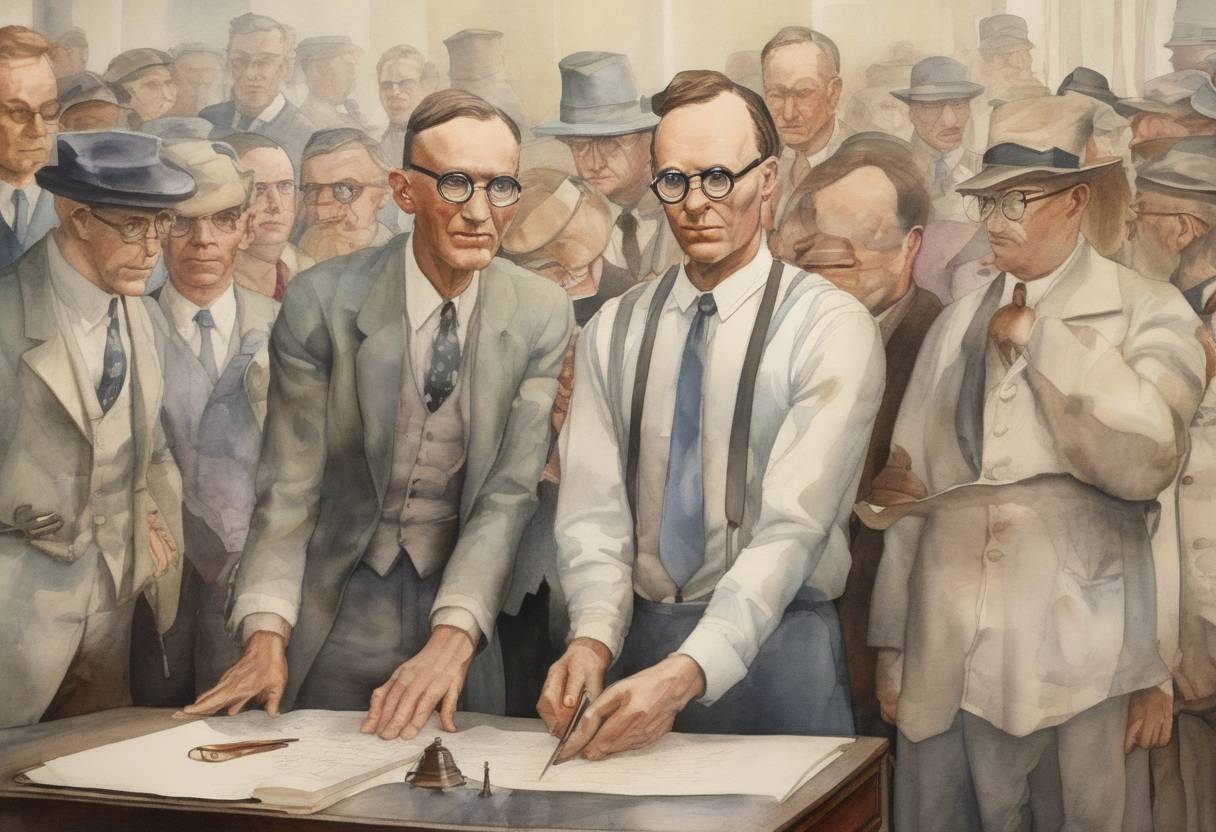
On May 25, 1925, John T. Scopes, a high school teacher in Dayton, Tennessee, was formally indicted for violating the Butler Act, a Tennessee law that prohibited the teaching of human evolution in state-funded schools. This indictment set the stage for the famous Scopes Trial, also known as the “Scopes Monkey Trial,” which became a pivotal moment in the history of American education and the debate between science and religion.
The Butler Act: Enacted in March 1925, the Butler Act was named after John W. Butler, a Tennessee farmer and legislator who was a staunch advocate for the anti-evolution movement. The law made it unlawful for teachers in public schools to “teach any theory that denies the story of the Divine Creation of man as taught in the Bible, and to teach instead that man has descended from a lower order of animals.”
The American Civil Liberties Union (ACLU): In response to the Butler Act, the ACLU sought to challenge its constitutionality. They advertised for a teacher willing to be a defendant in a test case, which led to John T. Scopes volunteering to be charged.
The Decision to Challenge: Local Dayton businessmen, seeking to generate publicity for their town, encouraged Scopes, a 24-year-old substitute teacher, to admit to teaching evolution from the textbook “Civic Biology,” which included Darwin’s theory of evolution.
The Arrest and Indictment: Scopes was arrested on May 5, 1925, and subsequently indicted on May 25, 1925, for his alleged violation of the Butler Act.
Trial Proceedings: The trial began on July 10, 1925, and quickly gained national attention. It featured two of the most prominent lawyers of the time: William Jennings Bryan for the prosecution, a three-time presidential candidate and a devout Christian, and Clarence Darrow for the defense, a famous defense attorney and agnostic.
Media Sensation: The trial was one of the first to be broadcast on the radio, drawing significant media coverage and public interest. It highlighted the cultural clash between modernist and traditionalist perspectives in America.
Verdict and Appeal: Scopes was found guilty on July 21, 1925, and fined $100. However, the verdict was later overturned on a technicality by the Tennessee Supreme Court, which ruled that the fine was excessive.
Impact on Education and Society: Although the trial did not immediately overturn the Butler Act, it sparked a national debate about science, religion, and their place in public education. It also highlighted the tensions between scientific progress and religious beliefs, a debate that continues in various forms to this day.
Legacy: The Scopes Trial remains a significant event in American history, symbolizing the ongoing struggle between scientific inquiry and religious tradition. It is often cited in discussions about academic freedom and the separation of church and state.
The indictment of John T. Scopes on May 25, 1925, was a catalyst for one of the most famous legal battles in American history, reflecting broader societal conflicts that continue to resonate in contemporary discourse.
Source: en.wikipedia.org