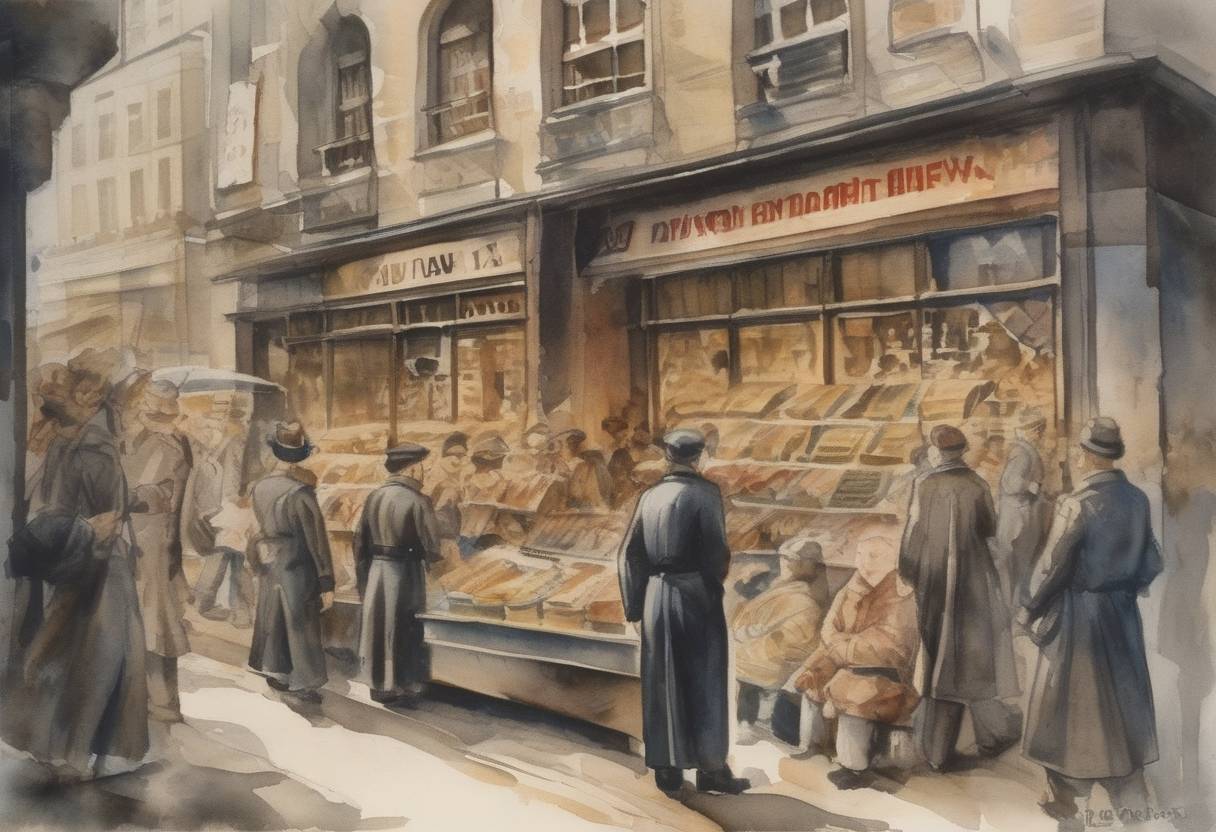
The Nazi Boycott of Jewish Businesses: April 1, 1933
On April 1, 1933, the Nazi regime in Germany initiated a nationwide boycott of Jewish-owned businesses. This event marked one of the earliest instances of state-sponsored anti-Semitism under Adolf Hitler’s rule, setting a precedent for the systemic persecution of Jews that would escalate in the years leading up to the Holocaust.
Context and Background
Rise of the Nazi Party: Adolf Hitler was appointed Chancellor of Germany on January 30, 1933. The Nazi Party, which had been gaining political power throughout the late 1920s and early 1930s, quickly moved to consolidate its control over the German state.
Anti-Semitic Ideology: Central to Nazi ideology was a virulent form of anti-Semitism. The Nazis blamed Jews for Germany’s economic woes and the perceived moral decay of society, using them as scapegoats to unify and rally support among the German populace.
Propaganda and Justification: The boycott was orchestrated by the Nazi leadership, particularly by Julius Streicher, a prominent anti-Semitic propagandist. The regime justified the boycott as a response to alleged international Jewish-led boycotts against German goods.
The Boycott
Implementation: The boycott began at 10 a.m. on April 1, 1933, and lasted for one day. Members of the SA (Sturmabteilung or Storm Detachment) and other Nazi paramilitary groups stood outside Jewish-owned shops, department stores, and businesses, preventing customers from entering.
Symbolism: Businesses were marked with the Star of David and signs reading “Don’t Buy from Jews” (in German: “Kauft nicht bei Juden”). This public display of anti-Semitism was intended to isolate and economically damage the Jewish community.
Public Reaction: The boycott received mixed reactions. While some Germans participated or passively accepted the actions, others were disturbed by the overt discrimination. Internationally, the boycott drew condemnation and concern over the direction of Nazi policies.
Consequences and Significance
Escalation of Anti-Semitic Policies: The boycott was a precursor to more severe anti-Semitic measures, including the Nuremberg Laws of 1935, which stripped Jews of German citizenship and imposed numerous social and economic restrictions.
Prelude to the Holocaust: The event foreshadowed the systematic persecution and eventual genocide of six million Jews during the Holocaust. It demonstrated the Nazi regime’s willingness to use state power to enforce racial ideology.
Historical Impact: The boycott is remembered as a significant early step in the Nazis’ campaign against the Jews, highlighting the dangers of state-sponsored discrimination and the importance of international vigilance against such actions.
In summary, the April 1, 1933, boycott of Jewish businesses was a critical moment in the history of Nazi Germany, illustrating the regime’s commitment to anti-Semitic policies and setting the stage for the atrocities that would follow.