Isabel Perón Sworn in as President of Argentina
1974 · Buenos Aires, Argentina
Isabel Perón was sworn in as the first female President of Argentina, following the illness of her husband, President Juan Perón.
July 26, 1952
Eva Perón, First Lady of Argentina, dies of cancer, leading to widespread mourning in Argentina.
Buenos Aires, Argentina | Government of Argentina
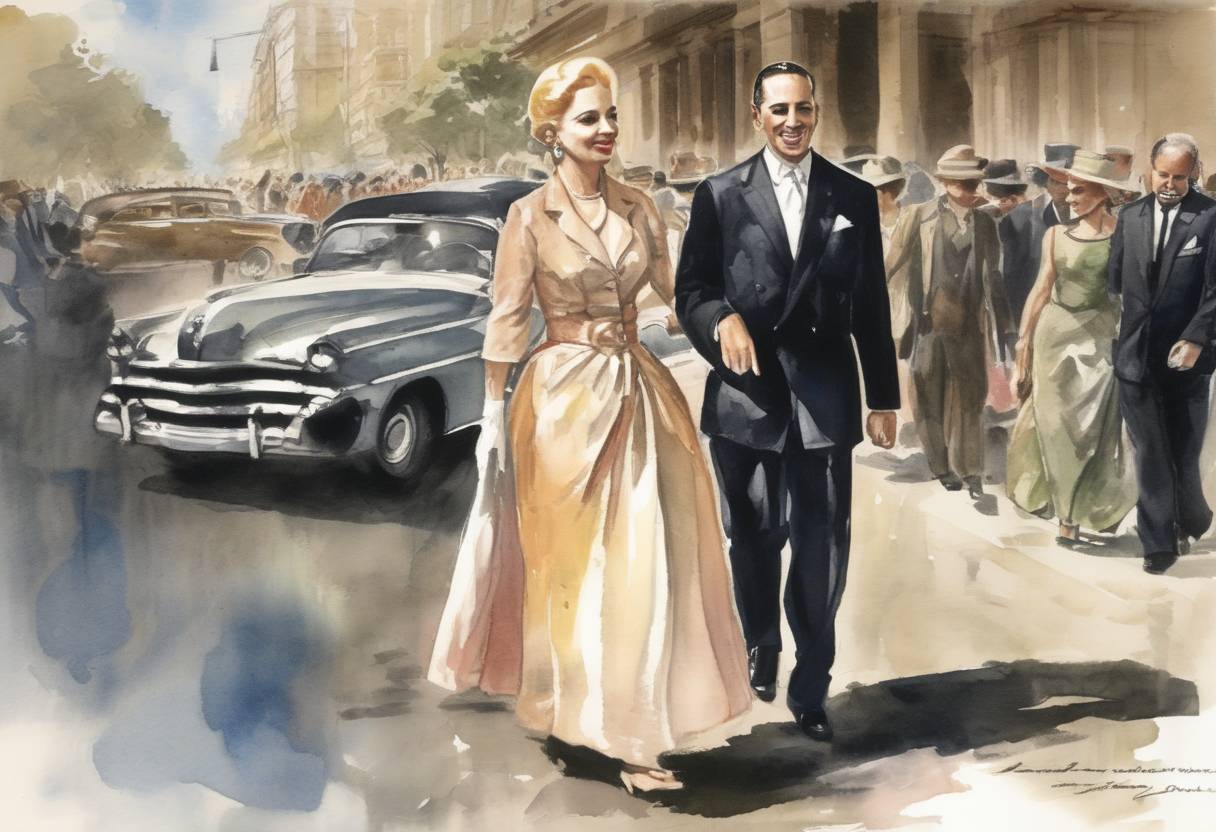
On July 26, 1952, Eva Perón, the First Lady of Argentina, passed away from cancer at the age of 33. Her death marked a significant moment in Argentine history, leading to widespread mourning across the nation. Eva Perón, affectionately known as “Evita,” was a beloved figure whose life and legacy left a lasting impact on Argentina and its people.
Eva Perón was born María Eva Duarte on May 7, 1919, in the rural village of Los Toldos, Argentina. She moved to Buenos Aires in her teens to pursue a career in acting. In 1944, she met Colonel Juan Domingo Perón, a rising political figure. They married the following year, and in 1946, Juan Perón was elected President of Argentina, making Eva the First Lady.
As First Lady, Eva Perón became a powerful political figure in her own right. She was deeply involved in social welfare and labor rights, championing the causes of the poor and working-class Argentines. She established the Eva Perón Foundation, which provided scholarships, built hospitals, and supported various charitable initiatives. Her efforts earned her immense popularity among the “descamisados” or “shirtless ones,” the working-class supporters of Perónism.
Eva also played a crucial role in advocating for women’s rights in Argentina. Her efforts were instrumental in securing women’s suffrage in 1947, allowing Argentine women to vote for the first time in the 1951 elections.
In 1950, Eva Perón was diagnosed with cervical cancer. Despite her declining health, she continued to work tirelessly for her causes. Her illness was kept largely private, and she maintained a public presence until her condition worsened significantly in 1951.
Eva Perón succumbed to cancer on July 26, 1952. Her death was met with profound grief across Argentina. Millions of Argentines mourned her passing, and her funeral was attended by throngs of people who lined the streets to pay their respects.
Eva Perón’s death had a significant impact on Argentina. Her passing left a void in the Perónist movement, and her husband, Juan Perón, faced increasing political challenges in the years that followed. Despite her relatively short life, Evita’s legacy endured. She became an enduring symbol of social justice and advocacy for the marginalized.
Her life and work have been the subject of numerous books, films, and musicals, most notably the musical “Evita” by Andrew Lloyd Webber and Tim Rice, which further cemented her status as a cultural icon.
Eva Perón remains a complex and polarizing figure in Argentine history, revered by many for her contributions to social welfare and women’s rights, while also criticized by others for her association with the authoritarian aspects of Perón’s regime. Nonetheless, her impact on Argentine society and politics is undeniable, and her legacy continues to be celebrated and debated to this day.
Source: en.wikipedia.org