Pope Sixtus III Begins His Papacy on July 31, 432
432 · Rome, Italy
Pope Sixtus III begins his papacy.
July 27, 0432
Pope Celestine I dies. He was known for his opposition to the Nestorian heresy and for sending St. Patrick to evangelize Ireland.
Rome, Italy | Catholic Church
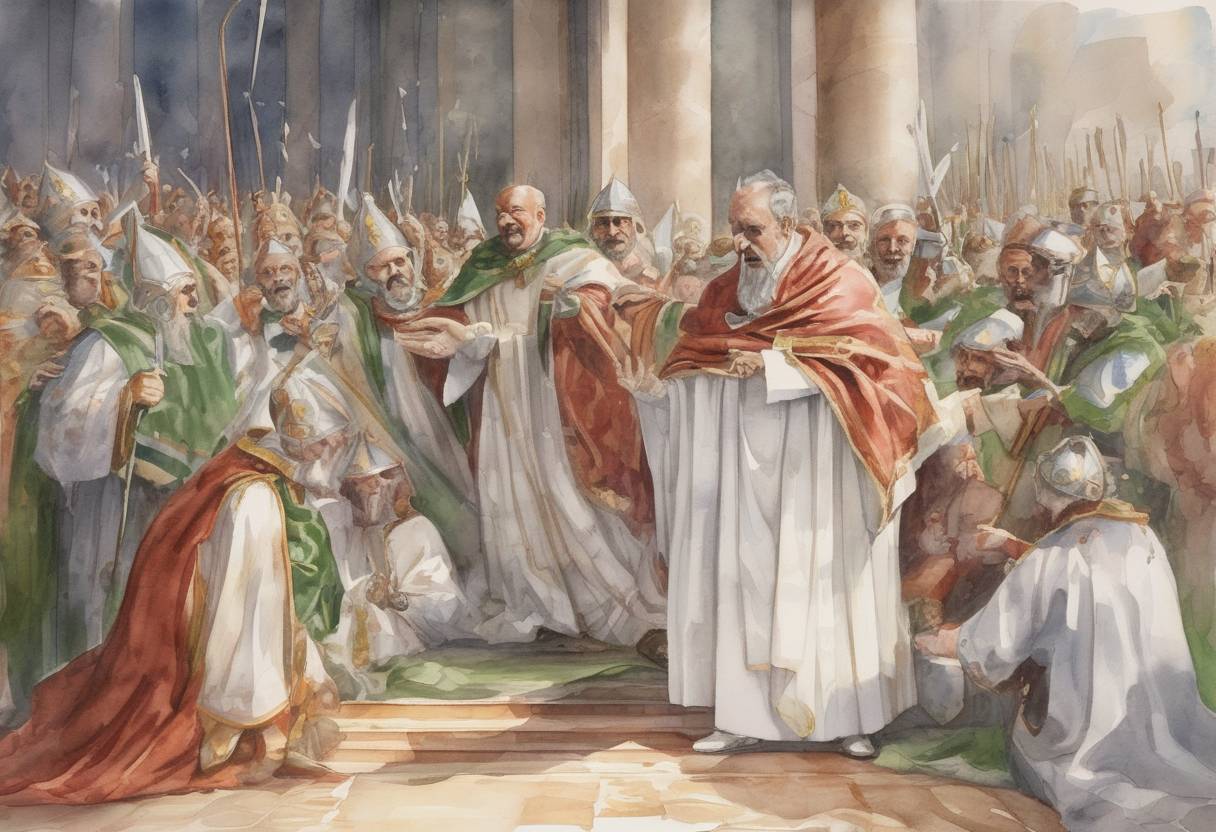
Pope Celestine I, who served as the Bishop of Rome from 422 until his death on July 27, 432, is remembered for his significant contributions to the early Christian Church, particularly his staunch opposition to the Nestorian heresy and his role in the evangelization of Ireland.
Early Life and Election: Little is known about Celestine’s early life, but he was elected pope in 422. His papacy occurred during a time of theological and political challenges within the Church.
Opposition to Nestorianism: One of Celestine’s most notable actions was his opposition to Nestorianism, a doctrine proposed by Nestorius, the Patriarch of Constantinople. Nestorianism emphasized a distinction between the human and divine natures of Jesus Christ, which was deemed heretical by many in the Church. Celestine supported Cyril of Alexandria in condemning Nestorius, leading to the Council of Ephesus in 431, where Nestorianism was officially denounced.
Evangelization of Ireland: Celestine is credited with sending St. Patrick to Ireland, a pivotal moment in the Christianization of the island. Although details are sparse, it is believed that Celestine recognized the need for a strong missionary presence in Ireland and saw Patrick as the ideal candidate to lead this effort.
Council of Ephesus (431): Celestine’s papacy was marked by his involvement in the Council of Ephesus, which was crucial in shaping the theological direction of the Church. His support for Cyril of Alexandria and the condemnation of Nestorianism solidified his legacy as a defender of orthodox Christian doctrine.
Church Administration: Celestine was also involved in various administrative reforms and efforts to strengthen the Church’s influence across the Roman Empire, particularly in Gaul and North Africa.
Theological Impact: Celestine’s actions against Nestorianism had lasting theological implications, reinforcing the doctrine of the hypostatic union, which describes the union of Christ’s human and divine natures.
Cultural and Religious Influence: By sending St. Patrick to Ireland, Celestine played a crucial role in the spread of Christianity in the British Isles, which would have profound cultural and religious impacts for centuries.
Sainthood: Celestine I was later canonized as a saint, and his feast day is celebrated on April 6. His contributions to the Church are remembered for their enduring influence on Christian theology and missionary work.
Pope Celestine I’s papacy was marked by decisive actions that helped shape the early Christian Church, leaving a legacy that would influence both theology and the spread of Christianity across Europe.
Source: en.wikipedia.org