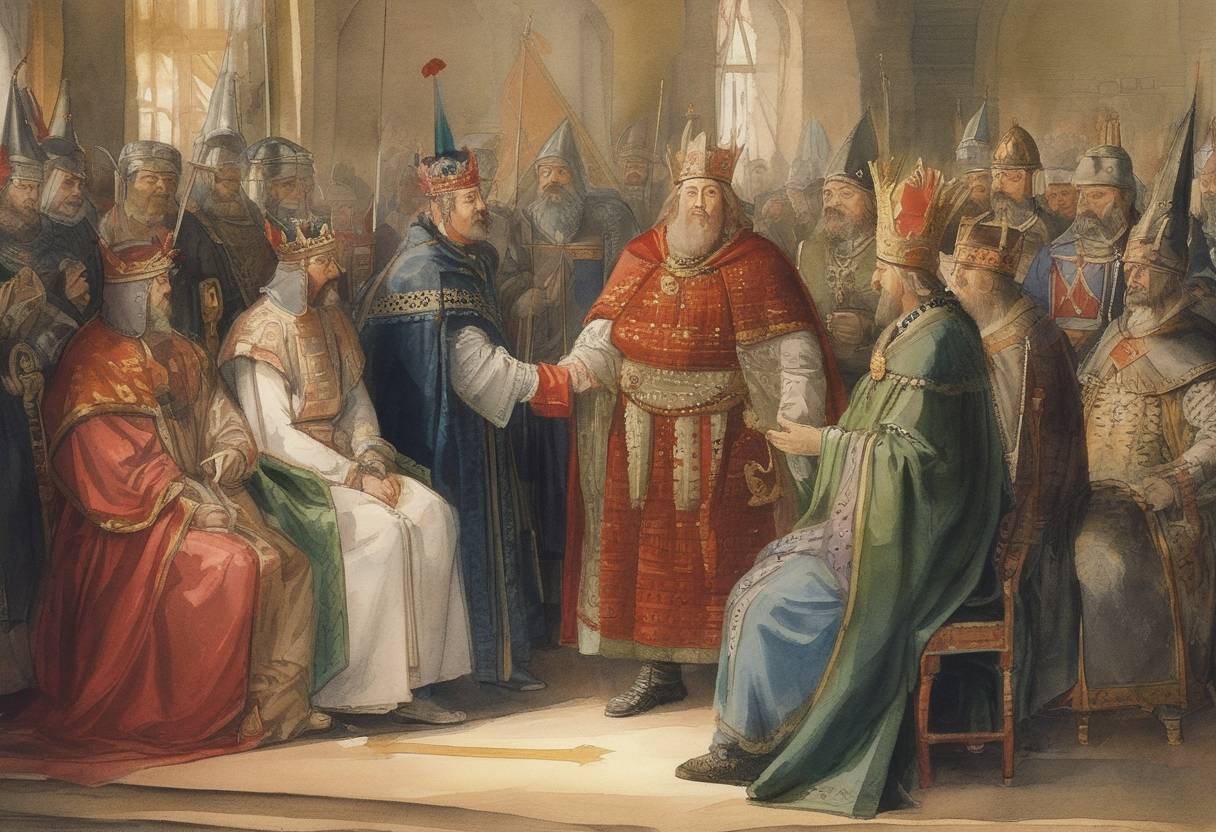
The Congress of Visegrád - November 30, 1335
The Congress of Visegrád, concluded on November 30, 1335, marked a pivotal moment in Central European diplomacy involving three significant monarchs of the era: Charles I of Hungary, Casimir III the Great of Poland, and John of Luxembourg, the King of Bohemia. This diplomatic meeting, held in the town of Visegrád in present-day Hungary, aimed to forge alliances and enhance cooperation in the face of the rising power of the Habsburg dynasty.
Background and Context
- Regional Dynamics: The early 14th century in Central Europe was characterized by shifting alliances and territorial disputes. The Austrian Habsburgs were expanding their influence, which posed a concern for neighboring states.
- Prior Relations: Poland, Hungary, and Bohemia had historically intersected through dynastic marriages, conflicts, and occasional alliances. The Congress was an opportunity to realign these relations for mutual benefit.
Key Agreements and Outcomes
- Mutual Cooperation Pact: The monarchs agreed to support each other against external aggression, specifically the growing threat of the Habsburgs. This alliance served as a counterbalance to Habsburg ambitions in the region.
- Economic Agreements: The Congress facilitated economic cooperation, including trade agreements intended to stimulate commerce and secure trade routes across their territories.
- Resolution of Disputes: Significant progress was made in resolving ongoing disputes, such as territorial claims between Poland and Bohemia, contributing to regional stability.
Historical Significance
- Impact on Habsburg Power: The alliance formed at Visegrád was instrumental in limiting the extent of Habsburg influence in Central Europe for the following decades.
- Foundation for Future Cooperation: The Congress set a precedent for diplomatic cooperation in the region and can be viewed as an early attempt at a Central European coalition, which influenced later political dynamics.
Aftermath and Legacy
- Continued Alliances: The monarchs maintained cordial relations following the Congress, which helped in confronting mutual challenges.
- Long-term Effects: The agreements forged at Visegrád underscored the importance of political unity in mitigating external threats, laying groundwork for future collaborations and the concept of regional alliances.
The Congress of Visegrád in 1335 remains a significant event in the annals of Central European history due to its role in shaping regional alliances and countering Habsburg hegemony. It is a notable example of medieval diplomacy and the intricate web of political relations in medieval Europe.