Context and Background
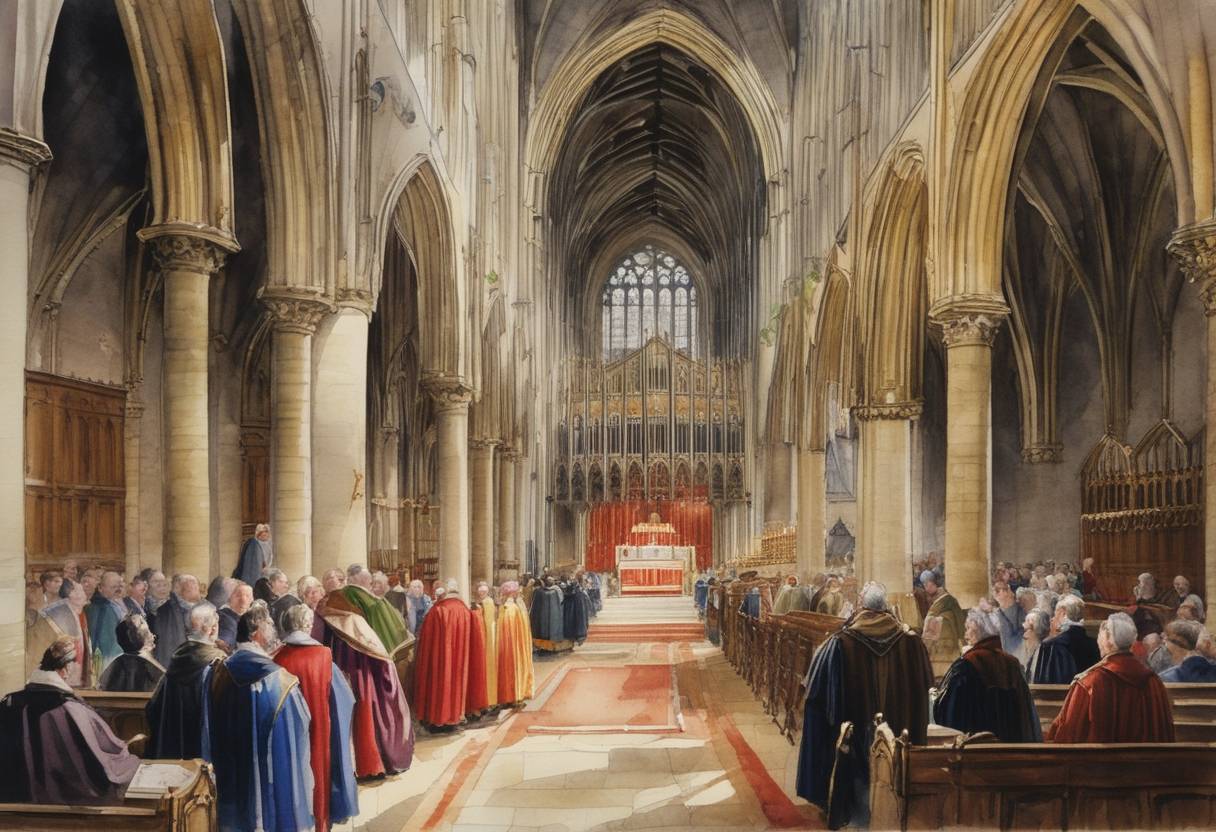
On October 8, 1075, the Synod of Winchester reached its conclusion, marking a pivotal moment in the English church’s history as it sought to align closely with the Gregorian Reforms initiated by the papacy. This synod was presided over by Lanfranc, the Archbishop of Canterbury, a key figure tasked with implementing reforms that had been a focus of the church in Rome.
Lanfranc, a former abbot of Bec in Normandy, had been appointed by William the Conqueror as the Archbishop of Canterbury in 1070. His appointment was part of a larger Norman influence in England following the Norman Conquest of 1066. Lanfranc was instrumental in reforming the English church to adhere to Roman practices and governance, which included the restructuring of clergy life and the enforcement of clerical celibacy.
Key Objectives and Achievements of the Synod
The Synod of Winchester was a central part of Lanfranc’s efforts to reform the ecclesiastical structure in England. The synod aimed to:
Enforce Clerical Celibacy: Strengthening the call for clergy to abstain from marriage in accordance with emerging church norms.
Restructure Church Governance: Aligning the administrative and structural organization of the English church with those of continental Europe, enhancing the authority of church leaders in ecclesiastical matters.
Standardize Liturgical Practices: Ensuring the uniformity of church services and rituals to reflect Roman practices, moving away from localized traditions that prevailed before the conquest.
The synod sought to address various issues, including the independence of the church from secular interference and the moral and educational standards of the clergy.
Broader Historical Significance
The Synod of Winchester played a critical role in the Gregorian Reform movement, an expansive series of church reforms initiated around the same time by Pope Gregory VII. These reforms emphasized the autonomy of the church, moral integrity, and the reformation of monastic and clerical life.
Lanfranc’s efforts at the synod represented a significant shift in England’s religious landscape, aligning it more closely with Rome and setting a precedent for subsequent reforms. The outcomes of the synod encapsulated the broader effort to refine clerical discipline and ecclesiastical governance, which would continue to influence the English church throughout the Middle Ages.
The synod was a defining moment that illustrated the increasing transnational dialogue within the Christian church, as local customs were gradually replaced by more centralized and standardized practices. These measures paved the way for deeper ecclesiastical and political changes in England and reinforced the relationship between Normandy and England, shaping the religious and cultural trajectory of the region.