The Treaty of Greenville - August 3, 1795
1795 · Greenville, United States
The Treaty of Greenville was signed, ending the Northwest Indian War in the Ohio Country.
November 27, 1778
The Treaty of Fort Pitt is signed, which was the first written treaty between the United States and the Lenape (Delaware) Native American tribe.
Fort Pitt, United States | United States of America
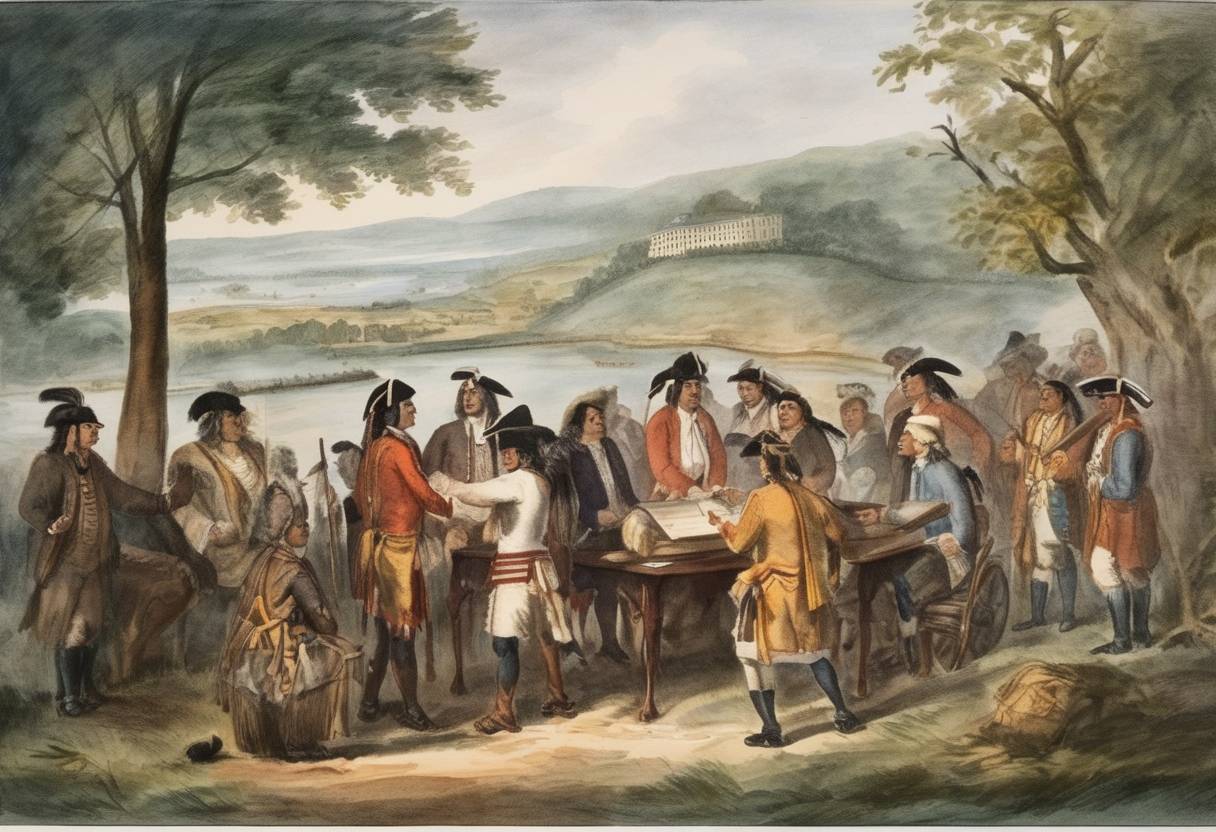
The Treaty of Fort Pitt, also known as the Treaty with the Delawares, was signed on September 17, 1778. It stands as the first formal written agreement between the fledgling United States and the Lenape (Delaware) Native American tribe, rather than November 27, 1778. This document was crucial to the United States’ efforts during the American Revolutionary War, establishing an alliance with the Delaware, who were geographically positioned in a strategic area between British and American forces.
During the American Revolutionary War, the United States sought alliances with various Native American tribes, who held significant sway over key regions. The Lenape were seen as potential allies due to their location along the Ohio River, which was a critical transportation route.
The treaty stipulated the following:
The treaty was signed by representatives of both parties. On behalf of the United States, figures such as Andrew Lewis and Thomas Lewis signed, while White Eyes, Captain Pipe, and John Kill Buck represented the Delaware.
Despite its initial promise, the treaty did not bring the expected cooperation or benefits for the Lenape. The promises made, particularly regarding the establishment of a Native American state, were not honored. The U.S. military’s construction and use of the fort did not favor the Lenape as anticipated, leading to tensions and eventual hostilities.
The Treaty of Fort Pitt highlights the often complex and fraught relationships between the United States and Native American tribes, characterized by broken promises and unmet expectations. The treaty serves as an early example of the challenging diplomacy that would continue to occur between the U.S. government and Native American nations throughout American history.
Source: en.wikipedia.org