Sinking of the SMS Dresden: March 14, 1915
1915 · off the coast of Chile, Chile
The British Royal Navy sinks the German cruiser SMS Dresden off the coast of Chile during World War I.
December 8, 1914
The Battle of the Falkland Islands took place during World War I, resulting in a decisive victory for the British Royal Navy over the Imperial German Navy.
Falkland Islands, Falkland Islands | British Royal Navy
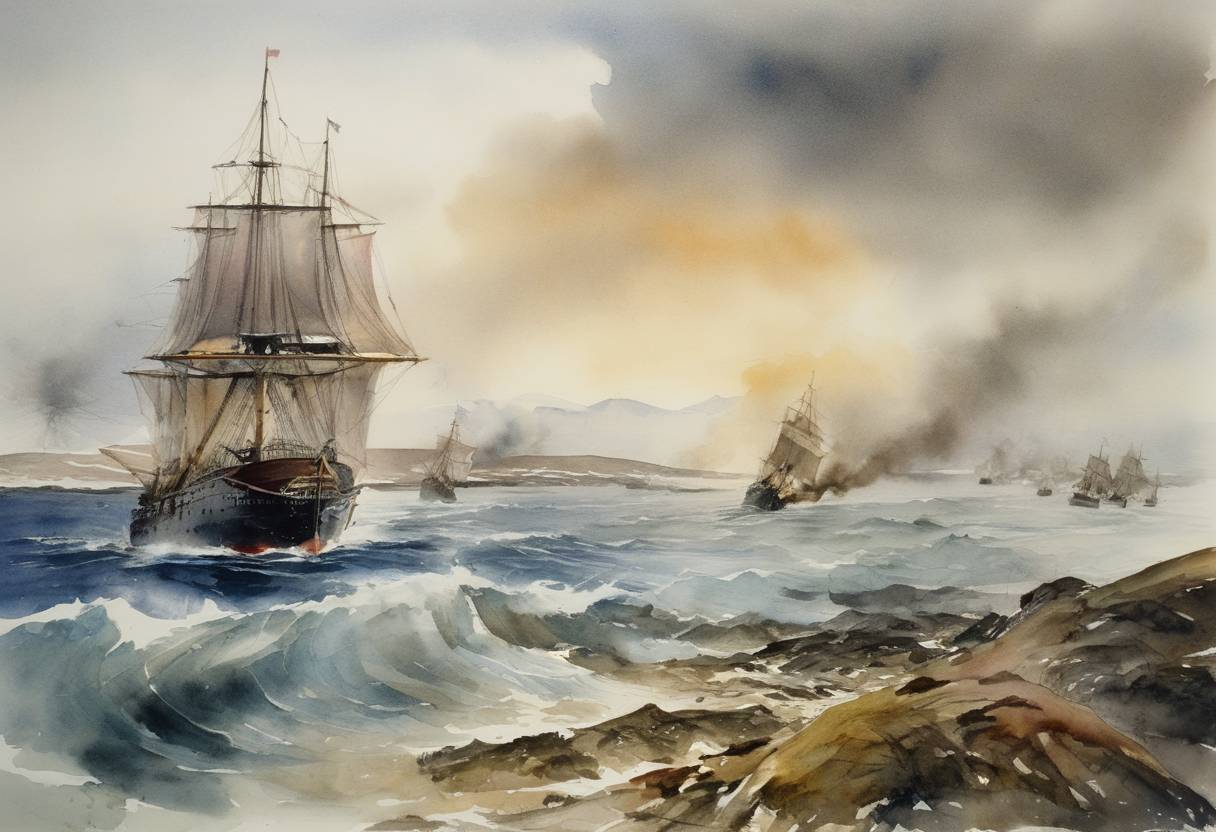
The Battle of the Falkland Islands was a significant naval engagement during World War I, marking a decisive victory for the British Royal Navy over the Imperial German Navy. This battle took place on December 8, 1914, in the South Atlantic near the Falkland Islands.
The battle followed the earlier success of the German East Asia Squadron, commanded by Vice-Admiral Maximilian von Spee, in the Battle of Coronel on November 1, 1914. At Coronel, Spee’s forces defeated a British squadron, prompting the British Admiralty to send reinforcements to the South Atlantic, determined to deal a retaliatory blow.
British Royal Navy:
Imperial German Navy:
On the morning of December 8, the German squadron approached the Falkland Islands aiming to raid the British coaling station. However, they were surprised to find Sturdee’s fleet stationed there, having arrived a few days earlier.
The British battlecruisers quickly moved to engage the German forces. Spee attempted to flee in an attempt to outpace the superior British ships, but the battlecruisers’ speed and firepower proved decisive. Sturdee’s forces were able to overhaul the German squadron, engaging them in a running battle.
The engagement resulted in the sinking of the Scharnhorst and Gneisenau, along with the Nürnberg and Leipzig. The Dresden managed to escape temporarily but was later hunted down and scuttled in March 1915. The British lost only ten confirmed dead and additional thirty wounded, demonstrating their overwhelming naval prowess.
The victory at the Falkland Islands significantly bolstered British morale following their defeat at Coronel. It reasserted British naval dominance in the South Atlantic and effectively neutralized the threat of the East Asia Squadron, ensuring the security of crucial maritime supply routes around Cape Horn.
Strategically, the battle underscored the importance of naval power and communication in wartime. It also marked one of the last significant open-sea clashes of the armored cruiser era, emphasizing the growing role of battlecruisers and other modern ships in naval warfare.
Source: en.wikipedia.org