Emperor Shōmu's Ascension to the Throne of Japan
724 · Nara, Japan
Emperor Shōmu ascended to the throne of Japan, marking the beginning of his reign.
February 11, 0660
Traditional date for the founding of Japan by Emperor Jimmu, according to the Nihon Shoki, a classical Japanese history text.
Nara, Japan
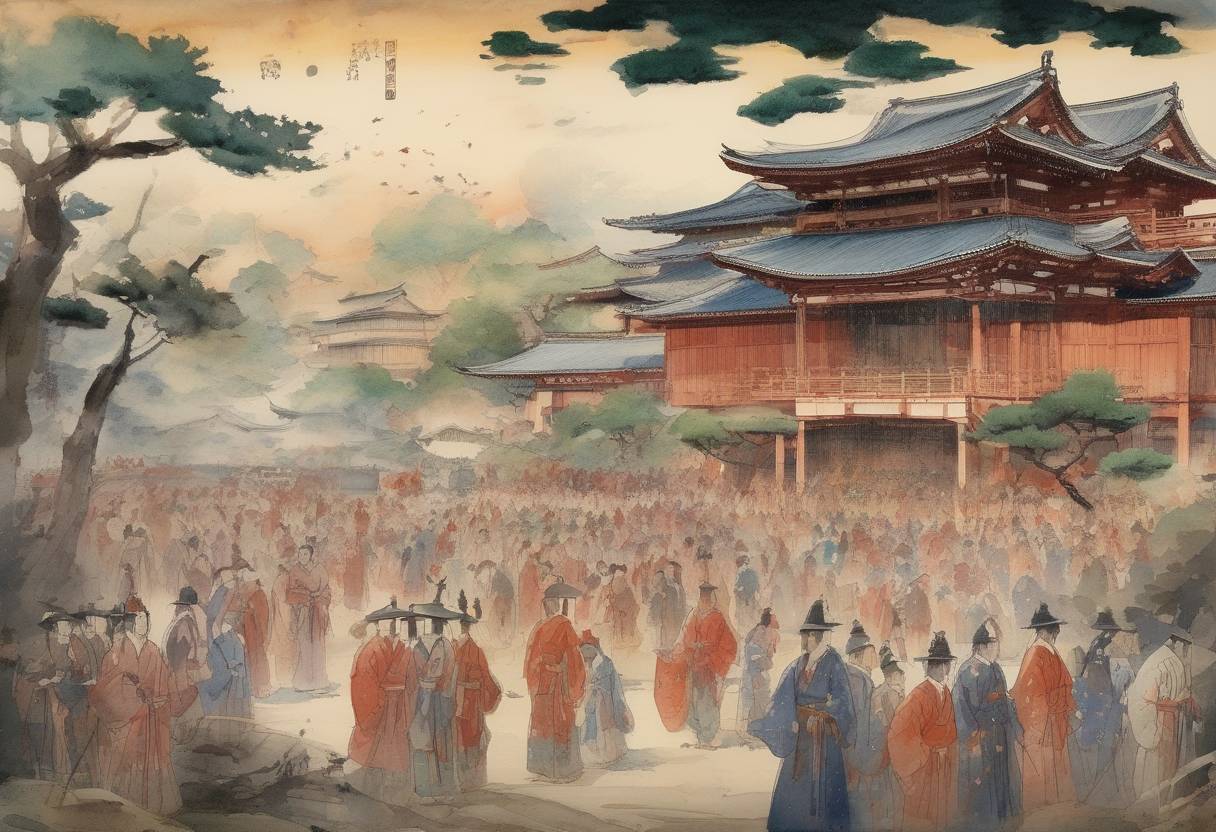
According to the “Nihon Shoki” (Chronicles of Japan), one of Japan’s oldest historical texts, the traditional date for the founding of Japan by Emperor Jimmu is February 11, 660 BCE. This date is celebrated as National Foundation Day in Japan, known as “Kenkoku Kinen no Hi.”
Nihon Shoki: Compiled in the 8th century, the “Nihon Shoki” is a key source of early Japanese history and mythology. It provides a narrative of Japan’s origins, including the mythological descent of the imperial family from the sun goddess Amaterasu.
Emperor Jimmu: Regarded as the first Emperor of Japan, Jimmu is a legendary figure whose existence is rooted in mythology. He is said to be a direct descendant of Amaterasu, establishing the divine lineage of Japan’s emperors.
Descent from the Heavens: According to legend, Jimmu’s ancestors descended from the heavens to rule over Japan, signifying the divine origin of the imperial line.
Eastern Expedition: Jimmu is believed to have embarked on an eastern expedition from Kyushu, overcoming various challenges and unifying the regions under his rule.
Ascension to the Throne: On February 11, 660 BCE, Jimmu is said to have ascended to the throne, marking the establishment of the Yamato state, which laid the foundation for the Japanese nation.
Cultural Identity: The story of Emperor Jimmu is a cornerstone of Japanese cultural identity, emphasizing themes of divine right and national unity.
National Foundation Day: February 11 is celebrated as a national holiday in Japan, reflecting on the country’s origins and the continuity of the imperial lineage.
Historical Debate: While the historicity of Emperor Jimmu is debated among scholars, his story remains a vital part of Japan’s mytho-historical narrative.
Imperial Lineage: The imperial family of Japan traces its lineage back to Jimmu, reinforcing the cultural and historical significance of the emperor’s role in Japanese society.
In summary, the traditional founding of Japan by Emperor Jimmu on February 11, 660 BCE, as recorded in the “Nihon Shoki,” is a blend of myth and history that continues to influence Japan’s national identity and cultural heritage.