The Occupation of Alcatraz Island by Indians of All Tribes
1969 · San Francisco, United States
The occupation of Alcatraz Island by the group Indians of All Tribes begins, lasting for 19 months.
February 27, 1973
The American Indian Movement occupies Wounded Knee, South Dakota, to protest the United States government's failure to fulfill treaties with Native American people.
Wounded Knee, United States | American Indian Movement
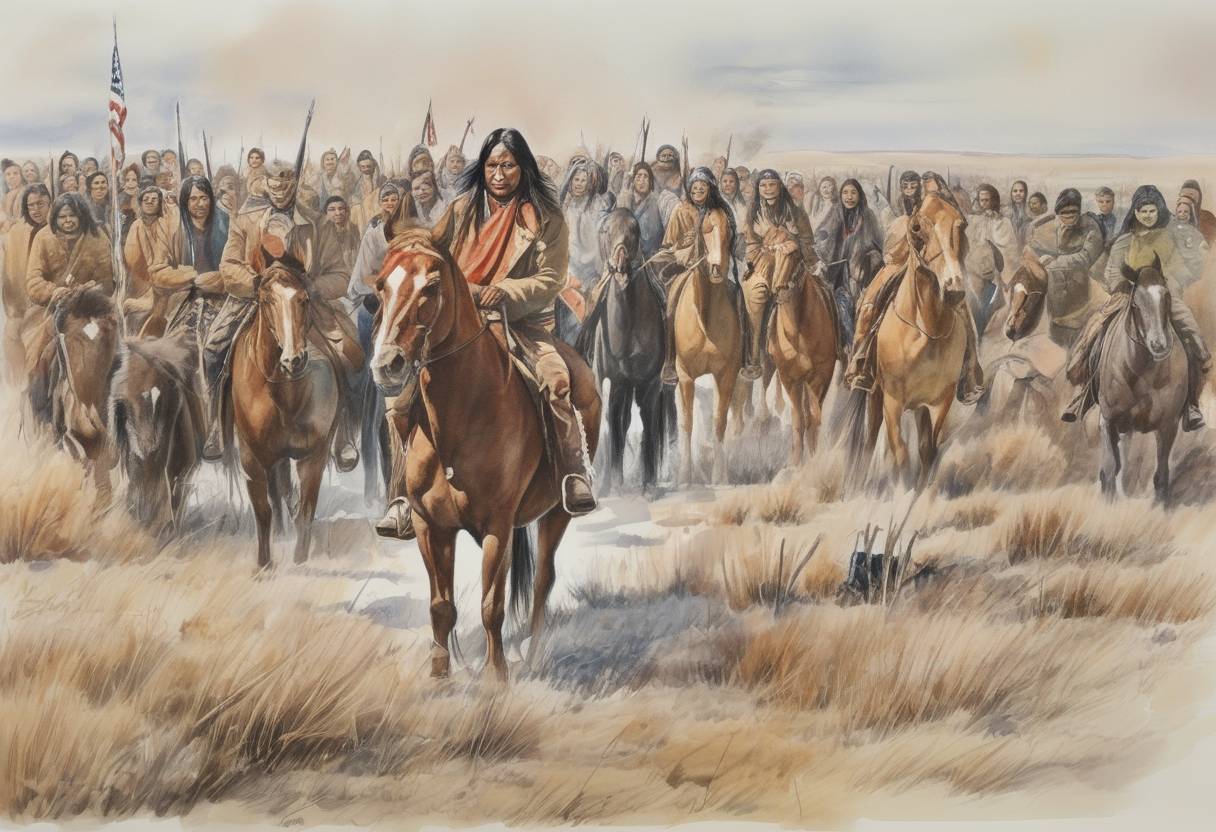
On February 27, 1973, members of the American Indian Movement (AIM) and their supporters began a 71-day occupation of Wounded Knee, South Dakota. This protest was a pivotal moment in Native American activism, drawing attention to the United States government’s failure to honor treaties with Native American tribes and addressing broader issues of civil rights and sovereignty.
The American Indian Movement was founded in 1968 in Minneapolis, Minnesota, as a grassroots organization advocating for the rights of Native Americans. AIM sought to address issues such as poverty, discrimination, and police harassment faced by Native American communities. By the early 1970s, AIM had become a prominent force in the Native American civil rights movement.
The choice of Wounded Knee as the site for the protest was deeply symbolic. Wounded Knee was the location of the 1890 massacre where hundreds of Lakota Sioux were killed by the U.S. Army, marking the end of the Indian Wars. The site had become a symbol of the injustices faced by Native Americans.
The occupation was partly a response to the internal governance issues on the Pine Ridge Reservation, where Wounded Knee is located. Many residents were dissatisfied with the leadership of Richard Wilson, the tribal chairman, whom they accused of corruption and authoritarianism. Tensions were exacerbated by Wilson’s alleged favoritism towards the U.S. government and his use of a private militia, the “Guardians of the Oglala Nation” (GOONs), to suppress dissent.
In this context, AIM was invited by traditional Oglala Lakota elders to assist in addressing these grievances. The occupation was intended to draw national and international attention to the plight of Native Americans and to demand the fulfillment of treaties made with the U.S. government.
The occupation began on February 27, 1973, when approximately 200 AIM activists and Oglala Lakota took control of the town of Wounded Knee. They declared it the “Independent Oglala Nation” and demanded that the U.S. government honor its treaties with Native American tribes, investigate corruption on the reservation, and address broader issues of Native American rights.
The protest quickly escalated into a standoff with federal authorities, including the FBI and U.S. Marshals. The government set up roadblocks and cut off supplies to the occupiers, leading to a tense and sometimes violent confrontation. During the 71-day siege, there were exchanges of gunfire, resulting in the deaths of two Native Americans and injuries to several others.
The occupation ended on May 8, 1973, after negotiations between AIM leaders and federal authorities. While the immediate demands of the occupiers were not met, the protest succeeded in raising awareness about Native American issues and inspired a new generation of activism.
The Wounded Knee occupation highlighted the ongoing struggles of Native Americans for sovereignty, self-determination, and civil rights. It also led to increased scrutiny of the U.S. government’s policies towards Native American tribes and contributed to subsequent legislative and policy changes aimed at improving the lives of Native Americans.
The legacy of the Wounded Knee occupation remains significant in the history of Native American activism, symbolizing both the resilience of Native American communities and the ongoing challenges they face in their quest for justice and equality.
Source: en.wikipedia.org