Captain James Cook Crosses the Antarctic Circle - January 17, 1773
1773 · Antarctic Circle, Antarctica
Captain James Cook becomes the first known European to cross the Antarctic Circle.
June 11, 1770
British explorer Captain James Cook ran aground on the Great Barrier Reef, leading to the first recorded European contact with the reef.
Great Barrier Reef, Australia | British Royal Navy
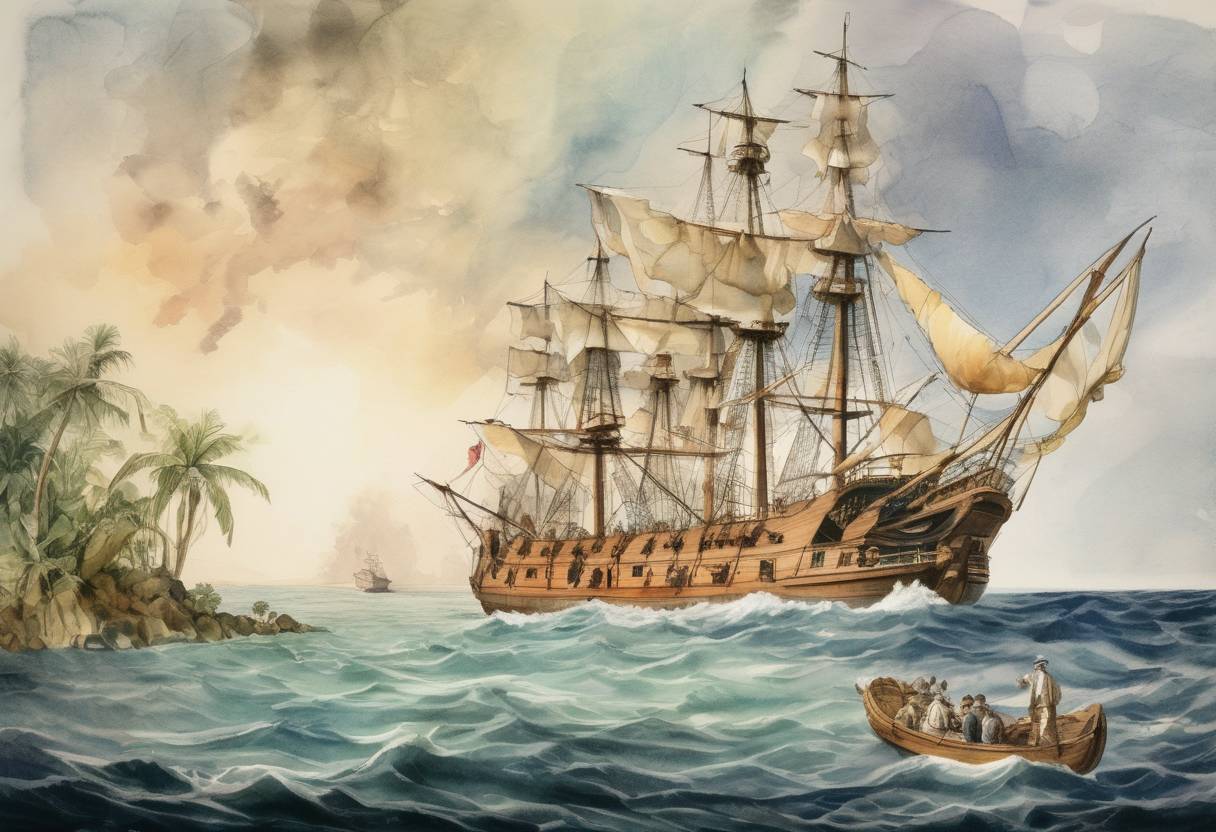
On June 11, 1770, the British explorer Captain James Cook experienced a significant and challenging event during his first voyage of discovery aboard the HMS Endeavour. This incident marked the first recorded European contact with the Great Barrier Reef, a pivotal moment in maritime exploration history.
Captain James Cook embarked on his first voyage in 1768, commissioned by the Royal Society and the British Admiralty. The primary objective was to observe the transit of Venus across the sun from Tahiti, which would help calculate the distance between the Earth and the Sun. A secondary, secret mission was to seek the fabled southern continent, Terra Australis.
After successfully observing the transit in 1769, Cook sailed westward, charting the coasts of New Zealand before heading towards the eastern coast of Australia, then known as New Holland.
On the night of June 11, 1770, while navigating the treacherous waters of the Coral Sea, the Endeavour struck the Great Barrier Reef. The collision occurred near what is now known as Cooktown, Queensland. The ship ran aground on a submerged coral outcrop, causing severe damage to its hull.
Emergency Repairs: The crew worked tirelessly to prevent the ship from sinking. They threw overboard ballast and other heavy items to lighten the ship and used a technique called “fothering,” where a sail was wrapped around the hull to plug the leak temporarily.
Finding Safe Harbor: After 23 hours of continuous effort, the Endeavour was refloated. Cook and his crew managed to navigate to the mouth of the Endeavour River, where they beached the ship for more extensive repairs.
Repairs and Recovery: The crew spent nearly seven weeks repairing the ship. During this time, they interacted with the indigenous Guugu Yimithirr people, marking one of the first encounters between Europeans and Aboriginal Australians.
Scientific Observations: The enforced stay allowed the ship’s botanist, Joseph Banks, and naturalist, Daniel Solander, to collect and document numerous plant and animal species, contributing significantly to European scientific knowledge.
Continued Exploration: Once repairs were completed, Cook continued his journey northward, eventually claiming the eastern coast of Australia for Great Britain at Possession Island on August 22, 1770.
Mapping and Navigation: Cook’s detailed charts of the Australian coastline were invaluable for future navigators and explorers. His encounter with the Great Barrier Reef highlighted the need for careful navigation in these waters.
Cultural Exchange: The interactions between Cook’s crew and the indigenous peoples laid the groundwork for future, albeit complex and often troubled, relations between Europeans and Aboriginal Australians.
Legacy: Cook’s voyages significantly expanded European knowledge of the Pacific region, influencing subsequent exploration and colonization efforts.
Captain James Cook’s grounding on the Great Barrier Reef remains a testament to the challenges of exploration and the resilience of those who ventured into the unknown during the Age of Discovery.
Source: en.wikipedia.org