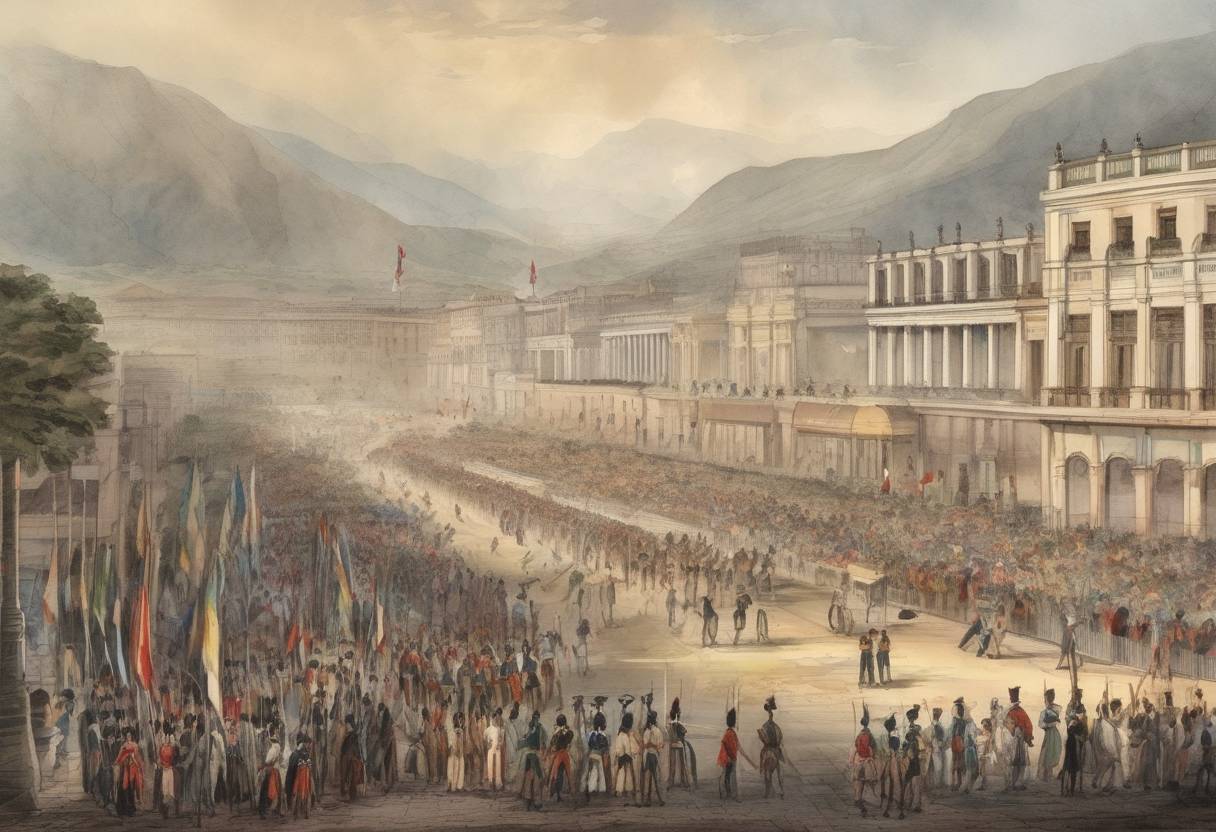
Peru Declares Independence from Spain: July 28, 1821
On July 28, 1821, Peru declared its independence from Spanish rule, marking a pivotal moment in the Latin American wars of independence. This event was part of a broader movement across the continent as various regions sought to break free from colonial domination and establish sovereign nations.
Context and Background
The struggle for independence in Latin America was influenced by several factors:
- Enlightenment Ideas: The spread of Enlightenment ideals advocating liberty, equality, and fraternity inspired many in Latin America to challenge colonial rule.
- Napoleonic Wars: The Napoleonic invasion of Spain in 1808 weakened Spanish authority and provided an opportunity for colonial uprisings.
- Economic Exploitation: The colonies faced heavy taxation and economic exploitation, fueling discontent among the local population.
In Peru, the movement for independence was initially slow due to the strong presence of Spanish loyalists and the strategic importance of Lima, the capital, as a center of Spanish power in South America.
Key Events Leading to Independence
- Arrival of José de San Martín: In 1820, Argentine general José de San Martín led the Liberation Army of the Andes into Peru. His strategy involved both military campaigns and diplomatic efforts to gain support from local elites and the general populace.
- Occupation of Lima: By July 1821, San Martín’s forces had successfully occupied Lima, the capital of the Viceroyalty of Peru, after Spanish forces retreated.
- Proclamation of Independence: On July 28, 1821, in the Plaza Mayor of Lima, San Martín proclaimed the independence of Peru. He declared, “Peru is, from this moment, free and independent, by the general will of the people and by the justice of their cause that God defends.”
Aftermath and Significance
- Continued Conflict: Despite the declaration, the struggle for independence continued, as Spanish forces remained active in the region. It wasn’t until the Battle of Ayacucho in 1824 that Spanish power was decisively defeated in Peru.
- Role of Simón Bolívar: Following San Martín’s departure from Peru, Simón Bolívar, another key figure in the Latin American independence movement, played a crucial role in securing the final victory against Spanish forces.
- Legacy: Peru’s independence was a significant milestone in the broader Latin American wars of independence, contributing to the eventual liberation of the entire continent from Spanish colonial rule.
The declaration of independence in Peru not only marked the birth of a new nation but also underscored the widespread desire for self-determination and freedom that characterized the era. This event remains a cornerstone of Peruvian national identity and is celebrated annually as a symbol of the country’s sovereignty and resilience.