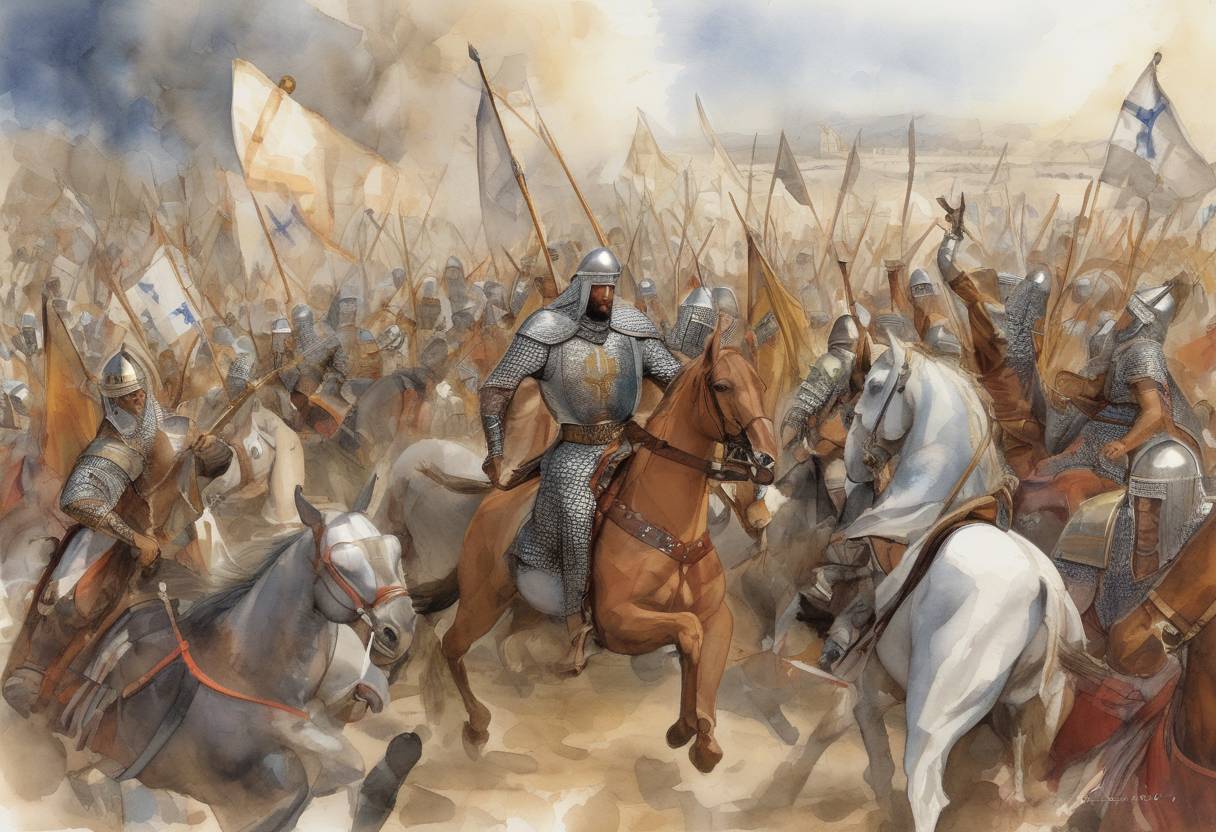
The Battle of Ascalon: August 12, 1099
The Battle of Ascalon, fought on August 12, 1099, marked the final significant military engagement of the First Crusade. This battle was pivotal in securing the Crusaders’ control over Jerusalem, which they had captured just a month earlier.
Context and Prelude
First Crusade Background: Initiated in 1096, the First Crusade was a response to Pope Urban II’s call to aid the Byzantine Empire and reclaim Jerusalem from Muslim control. It culminated in the capture of Jerusalem on July 15, 1099, by the Crusader forces.
Fatimid Threat: Following the fall of Jerusalem, the Fatimid Caliphate of Egypt, which had controlled the city before the Crusaders, sought to reclaim it. The Fatimid army, led by Vizier al-Afdal Shahanshah, advanced towards the Crusader-held territories.
The Battle
Location: The battle took place near Ascalon, a coastal city in present-day Israel, which was a strategic point for controlling the region.
Crusader Forces: The Crusader army was led by Godfrey of Bouillon, one of the key leaders of the First Crusade. Other notable leaders included Raymond IV of Toulouse and Robert II of Flanders.
Fatimid Army: The Fatimid forces were substantial, comprising a diverse array of troops, including infantry, cavalry, and a contingent of Sudanese soldiers.
Engagement: The Crusaders launched a surprise attack on the Fatimid camp. Despite being outnumbered, the Crusaders’ tactical advantage and the element of surprise led to a decisive victory.
Aftermath and Significance
Crusader Victory: The victory at Ascalon effectively ended the immediate Fatimid threat to Jerusalem and solidified the Crusaders’ hold on the city.
Strategic Impact: Although Ascalon itself remained under Fatimid control for several more decades, the battle ensured that the Crusader states could establish themselves in the Levant.
Legacy: The success of the First Crusade and the subsequent establishment of the Kingdom of Jerusalem had long-lasting implications for Christian-Muslim relations and the geopolitics of the region.
The Battle of Ascalon is remembered as a critical moment in the history of the Crusades, demonstrating the Crusaders’ resilience and strategic acumen in the face of formidable opposition.