Defrocking of Former Cardinal Theodore McCarrick
2019 · Vatican City, Vatican City
The Vatican announced that it had defrocked former Cardinal Theodore McCarrick after finding him guilty of sexual abuse.
May 13, 1981
Pope John Paul II is shot and critically wounded by Mehmet Ali Ağca in St. Peter's Square, Vatican City.
Vatican City, Vatican City | Catholic Church
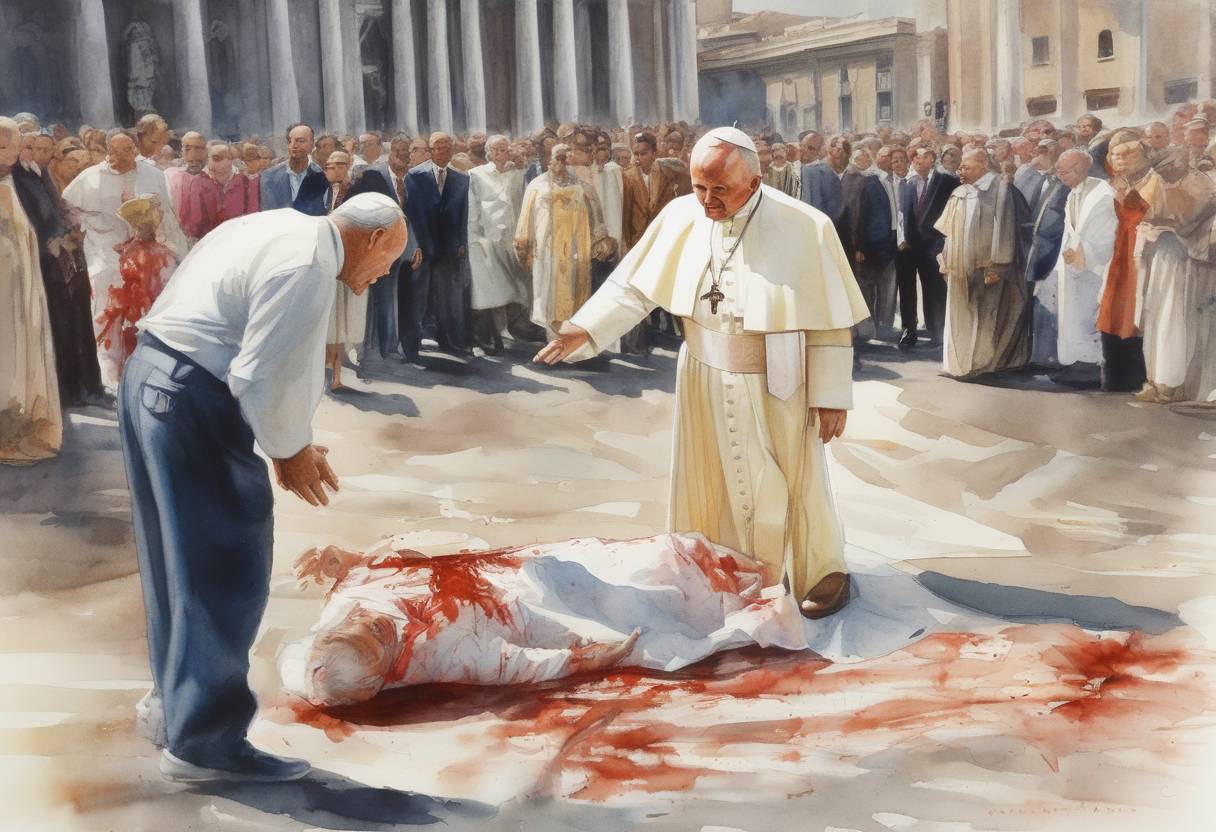
On May 13, 1981, Pope John Paul II was shot and critically wounded in St. Peter’s Square, Vatican City. This event marked a significant moment in modern history, drawing global attention and concern.
Date and Location: The assassination attempt took place on May 13, 1981, in St. Peter’s Square, Vatican City, during a public audience.
The Assailant: The shooter was Mehmet Ali Ağca, a Turkish national and member of the militant group known as the Grey Wolves. Ağca had escaped from a Turkish prison, where he was serving time for the murder of a journalist, before making his way to Rome.
The Attack: As Pope John Paul II was greeting the crowd from an open vehicle, Ağca fired four shots at close range. Two bullets struck the Pope, one in the abdomen and another in his right hand, while two other individuals in the crowd were also injured.
Immediate Aftermath: The Pope was rushed to the Agostino Gemelli University Polyclinic, where he underwent emergency surgery. Despite the severity of his injuries, he survived the attack, attributing his survival to the intervention of the Virgin Mary, as the date coincided with the anniversary of the first apparition of Our Lady of Fátima.
Political and Religious Impact: The assassination attempt had profound implications, both politically and religiously. It highlighted the vulnerabilities of public figures and the potential threats posed by extremist groups during the Cold War era.
Papal Response: In a remarkable act of forgiveness, Pope John Paul II later visited Ağca in prison in 1983, offering him forgiveness and establishing a personal rapport. This act was widely publicized and admired as a testament to the Pope’s commitment to peace and reconciliation.
Investigation and Theories: The motives behind the attack have been the subject of much speculation and investigation. Various theories have been proposed, including potential involvement by the Soviet Union’s KGB or Bulgaria, though definitive evidence has never been established.
Legacy: The event underscored the Pope’s influence and the geopolitical tensions of the time. It also reinforced his message of peace and forgiveness, which became central themes of his papacy.
The attempted assassination of Pope John Paul II remains a pivotal moment in the history of the Catholic Church and the 20th century, illustrating the complex interplay of faith, politics, and international relations.
Source: www.britannica.com