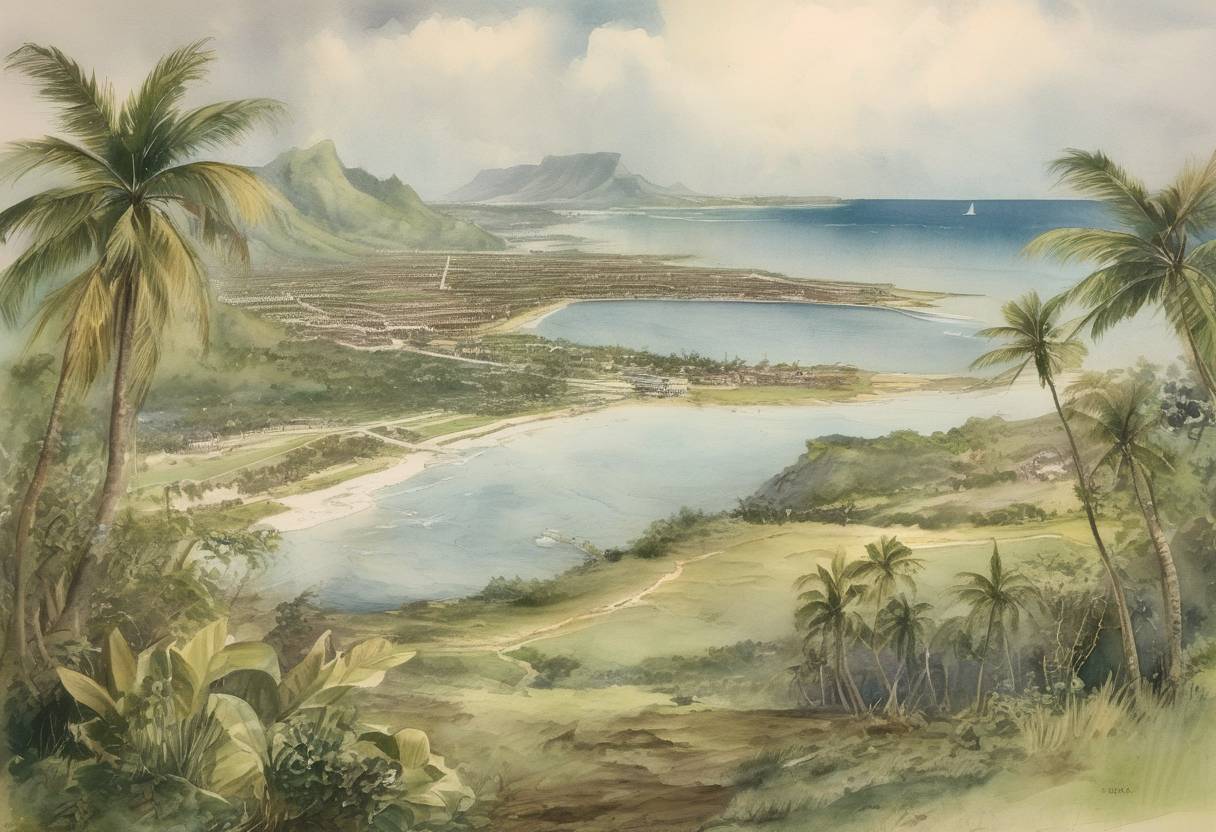
Capture of Guam: June 21, 1898
On June 21, 1898, during the Spanish-American War, the United States captured the island of Guam from Spain, marking the beginning of American control over the territory. This event was part of a broader conflict between the United States and Spain, primarily driven by the U.S. intervention in the Cuban War of Independence and the explosion of the USS Maine in Havana Harbor.
Context and Background
Spanish-American War: The war began in April 1898, following the U.S. declaration of war against Spain. The conflict was fueled by American support for Cuban independence and the mysterious sinking of the USS Maine, which was blamed on Spain.
Strategic Importance: Guam, located in the Pacific Ocean, was a strategic location for naval operations and served as a coaling station for ships. Its capture was part of the U.S. strategy to weaken Spanish influence in the Pacific and secure American interests in the region.
Key Events Leading to the Capture
Orders to Capture: The U.S. Navy was tasked with capturing Guam as part of its Pacific campaign. The cruiser USS Charleston, under the command of Captain Henry Glass, was dispatched to the island with orders to seize it from Spanish control.
Arrival at Guam: On June 20, 1898, the USS Charleston arrived off the coast of Guam. The ship fired a few warning shots at the island’s fortifications, which were not returned, as the Spanish garrison was unaware that a state of war existed between Spain and the United States.
Surrender: The next day, June 21, Captain Glass sent a delegation to the island to demand its surrender. The Spanish authorities, surprised and unprepared for conflict, surrendered without resistance. The small Spanish garrison, consisting of fewer than 60 men, was taken prisoner.
Aftermath and Consequences
American Control: The capture of Guam was swift and bloodless, resulting in the island’s transfer to American control. This marked the beginning of a new era for Guam, which would later become an unincorporated territory of the United States.
Treaty of Paris: The Spanish-American War officially ended with the signing of the Treaty of Paris on December 10, 1898. Under the treaty, Spain ceded Guam, along with Puerto Rico and the Philippines, to the United States, significantly expanding American influence and territorial holdings.
Strategic Role: Over the years, Guam has played a crucial role as a military base and strategic outpost for the United States in the Pacific, especially during World War II and the Cold War.
The capture of Guam was a significant event in the Spanish-American War, highlighting the United States’ emerging role as a global power and its strategic interests in the Pacific region.