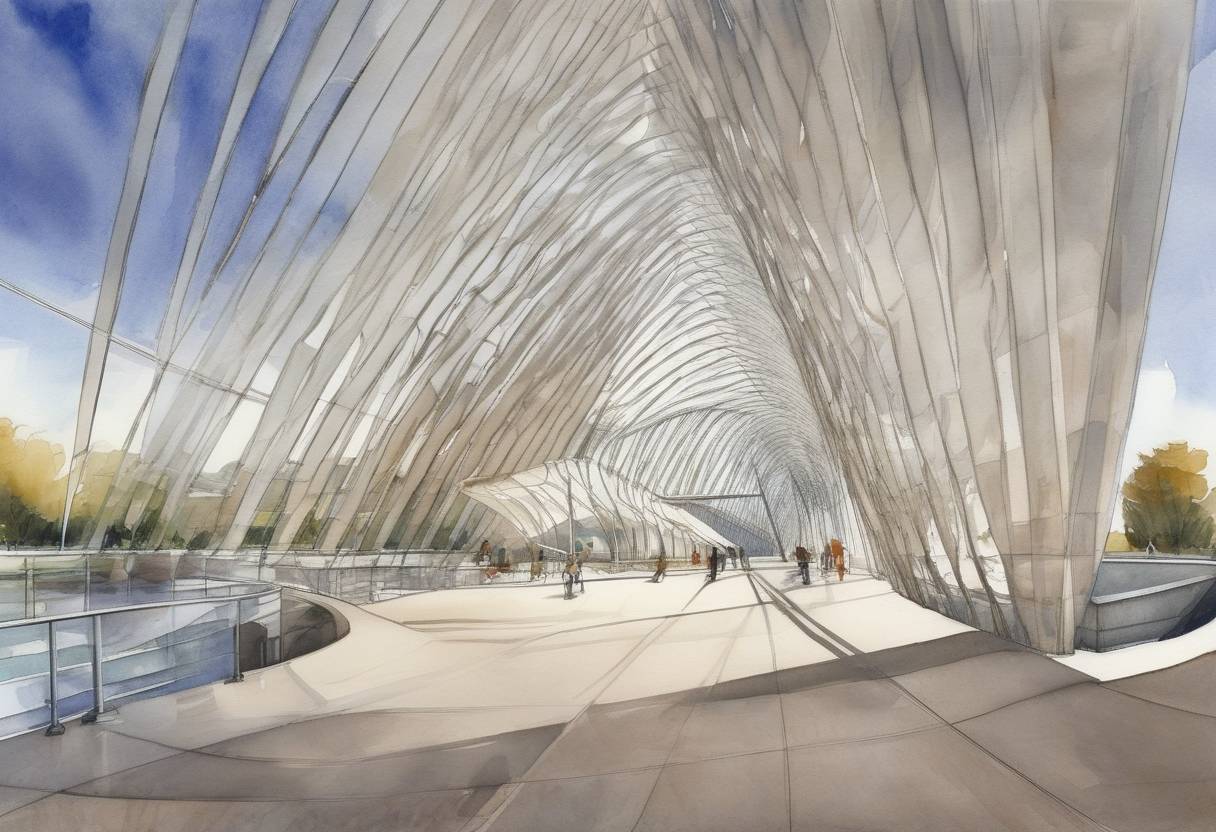
The Opening of the Quadracci Pavilion at the Milwaukee Art Museum
On May 4, 2001, the Milwaukee Art Museum in Wisconsin unveiled its new addition, the Quadracci Pavilion, a striking architectural masterpiece designed by the renowned Spanish architect Santiago Calatrava. This event marked a significant moment in the museum’s history and the architectural landscape of the United States.
Background
The Milwaukee Art Museum, established in 1888, has been a cultural cornerstone in Wisconsin, housing an extensive collection of art spanning centuries. By the late 20th century, the museum sought to expand its facilities to accommodate its growing collection and enhance its public spaces. The decision to commission Santiago Calatrava, known for his innovative and futuristic designs, was part of a broader vision to create a landmark that would elevate the museum’s profile on the global stage.
Design and Features
The Quadracci Pavilion is celebrated for its bold and dynamic design, characterized by:
- The Burke Brise Soleil: A movable, wing-like sunscreen that spans 217 feet and opens and closes daily, resembling a bird in flight. This feature not only serves a functional purpose by controlling light but also adds a kinetic element to the building’s aesthetic.
- The Glass-Enclosed Windhover Hall: A grand, cathedral-like space with a vaulted ceiling that reaches 90 feet at its peak, offering panoramic views of Lake Michigan.
- The Reiman Bridge: A pedestrian suspension bridge that connects the museum to downtown Milwaukee, enhancing accessibility and integrating the museum into the city’s urban fabric.
Impact and Significance
The opening of the Quadracci Pavilion was a transformative moment for the Milwaukee Art Museum. It:
- Boosted Tourism: The pavilion quickly became a major attraction, drawing visitors from around the world and significantly boosting local tourism.
- Cultural Landmark: The structure is considered one of the most important works of contemporary architecture in the United States, showcasing Calatrava’s signature blend of engineering and artistry.
- Community Engagement: The pavilion’s opening was accompanied by a series of public events and exhibitions, fostering greater community engagement and participation in the arts.
Aftermath
Since its opening, the Quadracci Pavilion has continued to serve as a symbol of innovation and creativity. It has hosted numerous exhibitions and events, contributing to the museum’s mission of enriching lives through art. The pavilion’s design has inspired subsequent architectural projects and remains a testament to the transformative power of visionary architecture.
In summary, the unveiling of the Quadracci Pavilion on May 4, 2001, was a pivotal event that not only enhanced the Milwaukee Art Museum’s facilities but also cemented its status as a cultural and architectural icon.