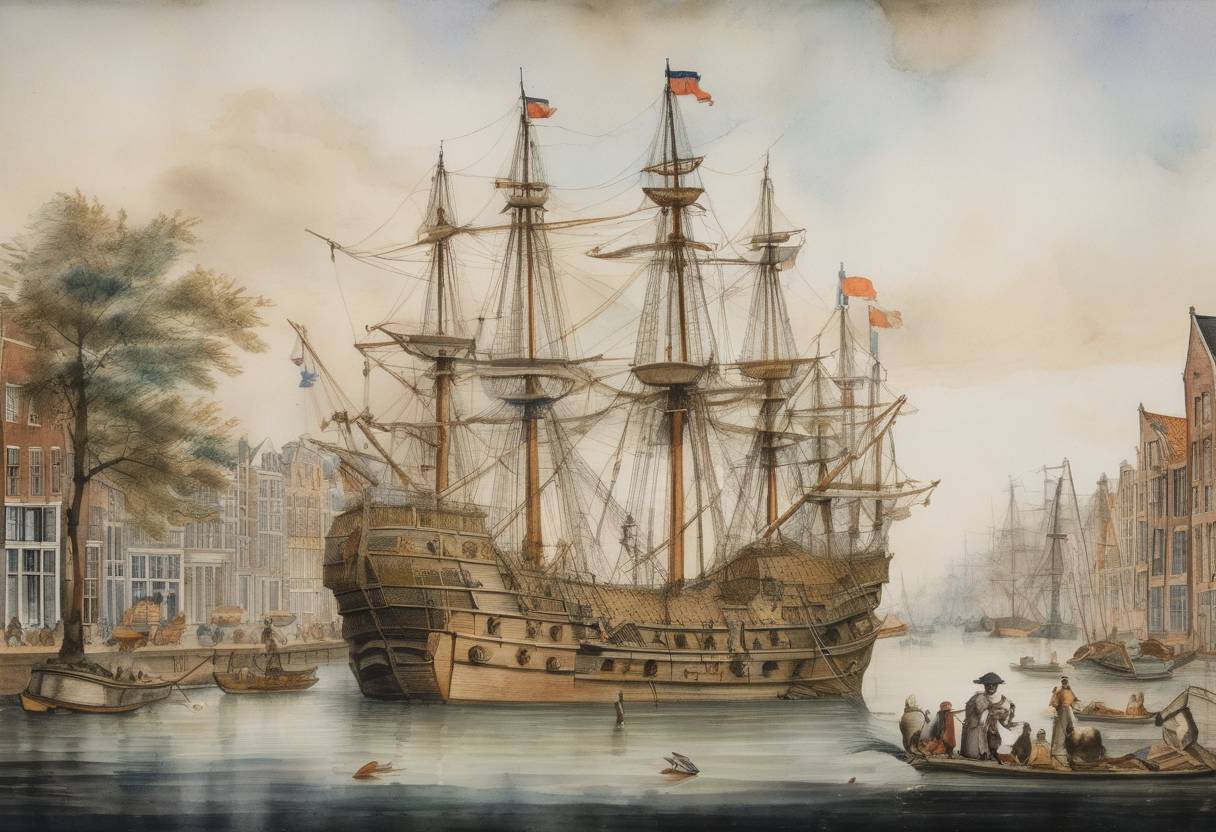
Establishment of the Dutch East India Company (VOC)
On March 20, 1602, the Dutch East India Company, known as the Vereenigde Oostindische Compagnie (VOC), was officially established. This marked the beginning of a significant era of Dutch colonial expansion and trade dominance, particularly in Asia.
Background
In the late 16th century, the Dutch were seeking to break the Portuguese and Spanish monopoly on the spice trade in Asia. Several small, independent trading companies had been sending expeditions to the East Indies, but competition among them was fierce, and profits were inconsistent.
To consolidate resources and reduce competition, the States General of the Netherlands granted a charter to the VOC, merging these smaller companies into a single entity. The VOC was given a 21-year monopoly on Dutch trade in Asia, with the authority to:
- Establish colonies and forts.
- Maintain a private army.
- Negotiate treaties with local rulers.
- Wage war if necessary.
Structure and Operations
The VOC was one of the world’s first multinational corporations and the first company to issue stock, making it a pioneer in modern corporate finance. It was structured with a board of directors known as the “Heeren XVII” (the Lords Seventeen), representing various chambers across the Netherlands.
The company established a vast network of trade routes and outposts, with its headquarters in Batavia (modern-day Jakarta, Indonesia). It traded in spices, silk, tea, and other valuable goods, significantly contributing to the wealth and power of the Dutch Republic.
Impact and Legacy
- Economic Influence: The VOC played a crucial role in the Dutch Golden Age, helping the Netherlands become one of the world’s leading economic powers in the 17th century.
- Colonial Expansion: It laid the groundwork for Dutch colonial rule in Indonesia and other parts of Asia, influencing local economies and societies.
- Innovation: The VOC’s practices in corporate governance, finance, and international trade set precedents for future global businesses.
The VOC operated until 1799, when it was dissolved due to financial difficulties and corruption. Its legacy, however, remains significant in the history of global trade and colonialism.