Amelia Earhart's Historic Solo Transatlantic Flight
1932 · Newfoundland, Canada
Amelia Earhart took off from Newfoundland, Canada, on her solo flight across the Atlantic Ocean, becoming the first woman to achieve this feat.
July 2, 1937
Aviator Amelia Earhart and navigator Fred Noonan disappear over the Pacific Ocean during an attempt to make a circumnavigational flight of the globe.
Pacific Ocean, International Waters | Earhart's Flight
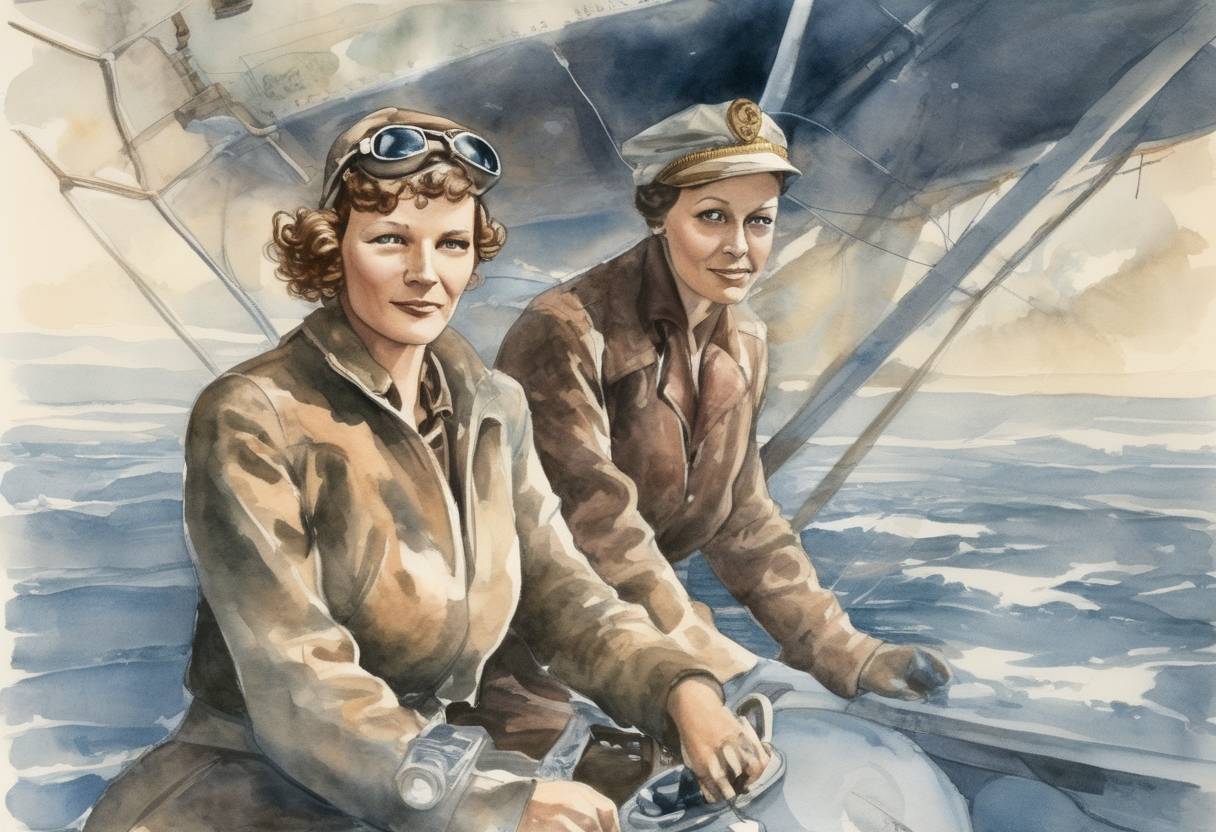
On July 2, 1937, the world was captivated by the mysterious disappearance of famed aviator Amelia Earhart and her navigator, Fred Noonan, over the Pacific Ocean. This event occurred during their ambitious attempt to complete a circumnavigational flight around the globe.
Amelia Earhart was already a celebrated aviator by the time of her disappearance. She had achieved numerous aviation milestones, including being the first woman to fly solo across the Atlantic Ocean in 1932. Her navigator, Fred Noonan, was an experienced pilot and navigator, known for his expertise in long-distance flights over water.
The circumnavigational flight was intended to be Earhart’s most significant achievement. The journey was planned to cover approximately 29,000 miles, following an equatorial route. Earhart and Noonan departed from Oakland, California, on May 20, 1937, in a Lockheed Electra 10E aircraft.
By July 2, 1937, Earhart and Noonan had successfully completed most of their journey, having flown 22,000 miles. They departed from Lae, New Guinea, on what was one of the final legs of their trip, heading towards Howland Island, a small island in the central Pacific Ocean.
The flight from Lae to Howland Island was approximately 2,556 miles and was expected to take around 18 hours. However, the flight was fraught with challenges, including overcast skies, which made celestial navigation difficult, and radio communication issues.
As they neared Howland Island, Earhart and Noonan lost radio contact with the U.S. Coast Guard cutter Itasca, which was stationed near the island to assist with navigation. Despite repeated attempts to establish communication, the Itasca was unable to guide the aircraft to the island.
A massive search effort was launched by the United States government, involving naval ships and aircraft, but no trace of Earhart, Noonan, or their aircraft was ever found. The search was one of the most extensive in history at the time, but it was called off after two weeks.
The disappearance of Amelia Earhart and Fred Noonan remains one of the greatest unsolved mysteries of the 20th century. Numerous theories have been proposed over the years, ranging from a crash into the ocean to landing on a remote island, but none have been conclusively proven.
Amelia Earhart’s disappearance captured the imagination of people worldwide and has continued to be a subject of fascination and speculation. Her legacy as a pioneering aviator and a symbol of courage and determination endures. Earhart’s life and career have inspired countless individuals, particularly women, to pursue careers in aviation and other fields traditionally dominated by men.
The mystery of her disappearance also highlighted the challenges of early aviation and the limitations of technology at the time, prompting advancements in navigation and communication systems for future aviators.
Source: www.history.com