Consecration of St. Peter's Basilica
1626 · Vatican City, Vatican City
St. Peter's Basilica in Vatican City was consecrated by Pope Urban VIII.
April 18, 1506
The cornerstone of St. Peter's Basilica was laid in Vatican City, marking the beginning of the construction of one of the most renowned works of Renaissance architecture.
Vatican City, Vatican City | Catholic Church
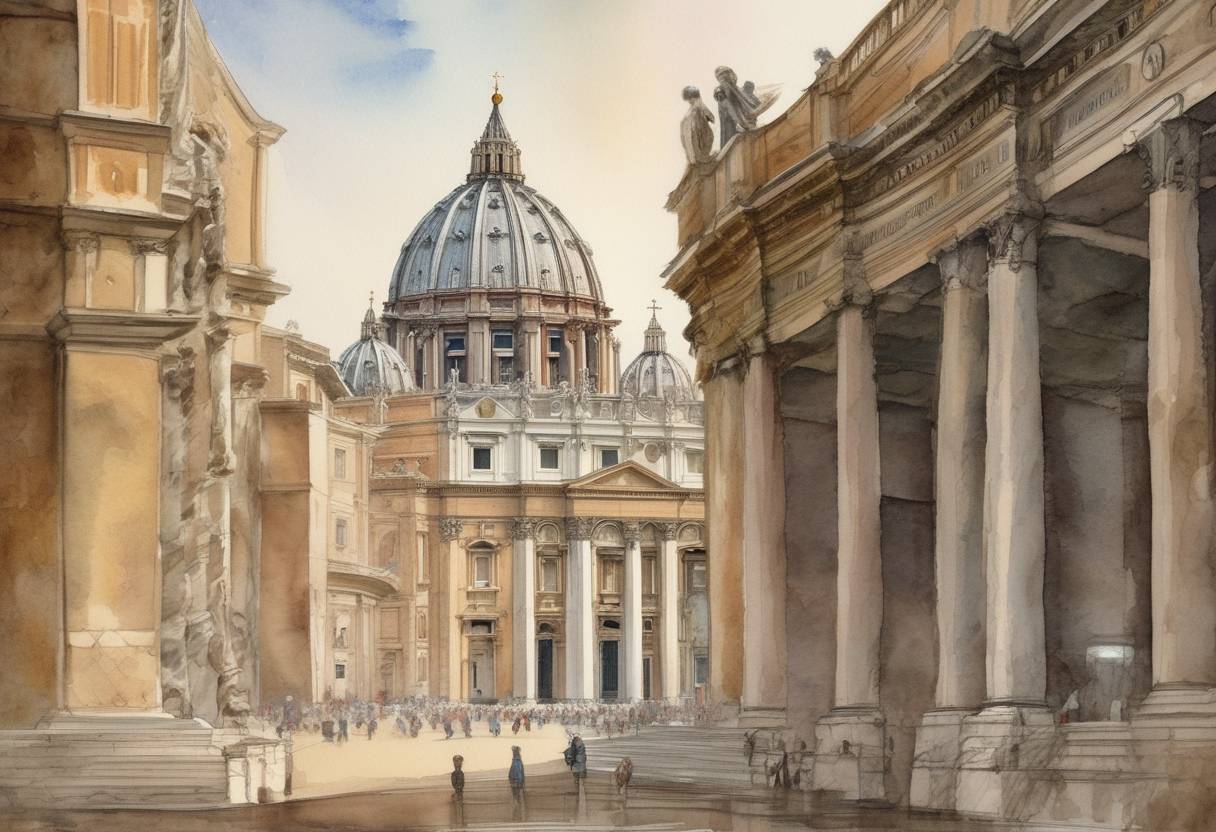
On April 18, 1506, a significant event in the history of architecture and the Catholic Church took place: the laying of the cornerstone of St. Peter’s Basilica in Vatican City. This marked the beginning of the construction of one of the most renowned works of Renaissance architecture, a project that would span over a century and involve some of the greatest artists and architects of the time.
St. Peter’s Basilica is located in Vatican City, the spiritual and administrative center of the Roman Catholic Church. The site has been of religious significance since ancient times, believed to be the burial place of Saint Peter, one of Jesus Christ’s apostles and the first Pope. The original basilica, known as Old St. Peter’s Basilica, was constructed in the 4th century under Emperor Constantine the Great.
By the 15th century, the original structure was in disrepair, prompting Pope Julius II to commission a new basilica that would reflect the glory and power of the Church. This ambitious project was part of a broader movement during the Renaissance to revive classical art and architecture.
The initial design for the new basilica was created by Donato Bramante, a leading architect of the High Renaissance. Bramante’s plan was revolutionary, featuring a Greek cross layout with a large central dome, inspired by the Pantheon in Rome. This design set the stage for the basilica’s iconic silhouette.
Over the years, several other renowned artists and architects contributed to the project, including:
The construction of St. Peter’s Basilica was a monumental task that spanned over 120 years, involving numerous changes in design and leadership. The project was not only an architectural endeavor but also a symbol of the Catholic Church’s influence and ambition during the Renaissance.
The basilica was finally consecrated on November 18, 1626, by Pope Urban VIII. It remains one of the largest churches in the world and a masterpiece of Renaissance architecture, attracting millions of visitors and pilgrims each year.
St. Peter’s Basilica is more than just an architectural marvel; it represents the intersection of art, religion, and power during the Renaissance. The project exemplified the Church’s role as a patron of the arts and its desire to assert its spiritual and temporal authority.
The basilica continues to serve as a central place of worship and a symbol of the Catholic faith, hosting significant religious ceremonies and papal events. Its construction reflects the dynamic cultural and historical shifts of the Renaissance, making it a lasting testament to human creativity and devotion.
Source: en.wikipedia.org