The Battle of Marton: April 23, 871
871 · Marton, England
The Battle of Marton, where the forces of King Æthelred of Wessex and his brother Alfred (later known as Alfred the Great) fought against the invading Danish Vikings.
January 6, 0871
The Battle of Ashdown took place, where the West Saxons, led by King Æthelred and his brother Alfred the Great, defeated the invading Danish Viking army, marking a significant victory in the Viking invasions of England.
Berkshire, England | West Saxon Kingdom
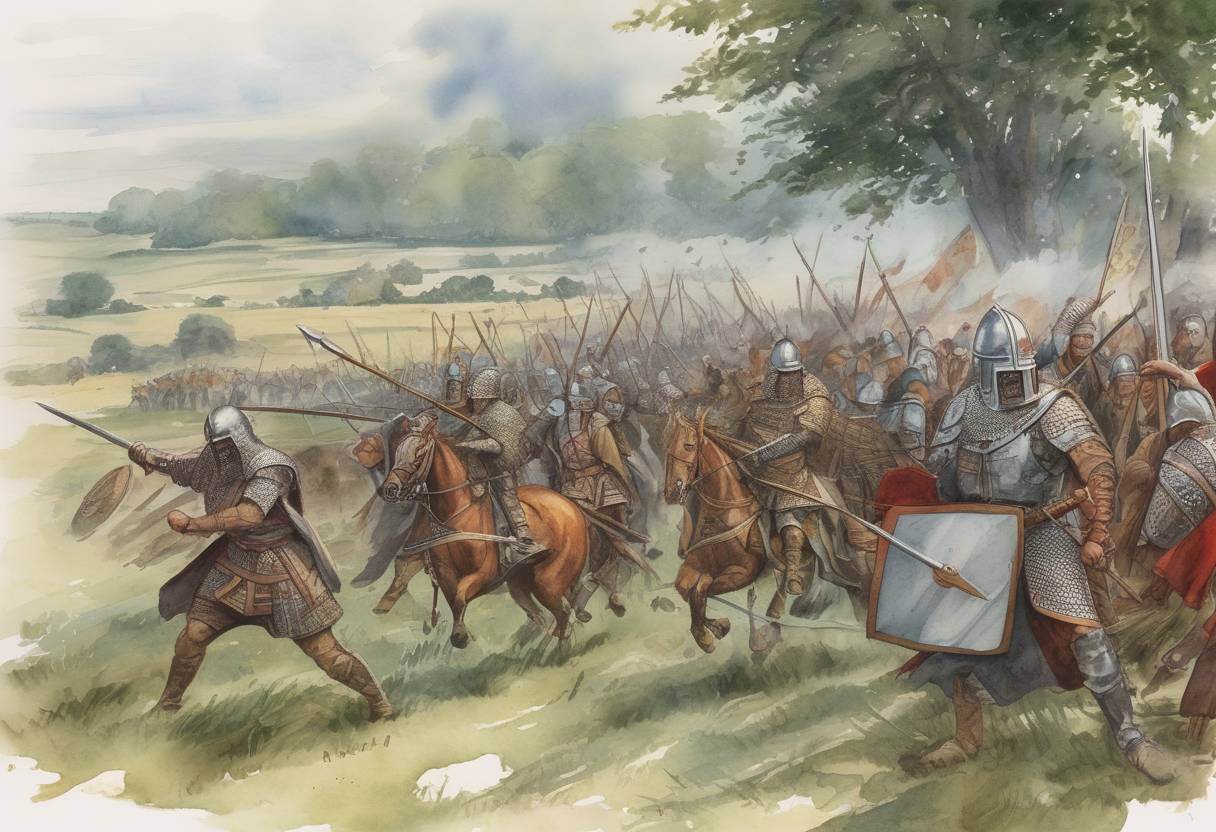
The Battle of Ashdown, fought on January 6, 871, was a pivotal encounter during the Viking invasions of England. This battle saw the forces of the West Saxons, led by King Æthelred and his younger brother Alfred, later known as Alfred the Great, achieve a significant victory against the invading Danish Viking army.
In the late 9th century, England was under constant threat from Viking incursions. The Great Heathen Army, a coalition of Norse warriors, had been campaigning across England since 865, capturing territories and establishing a strong presence. By 870, the Vikings had turned their attention to Wessex, one of the remaining Anglo-Saxon kingdoms that had resisted their advances.
In late 870, the Vikings had achieved a series of victories, including the capture of Reading, which they fortified as a base. The West Saxons, under King Æthelred and Alfred, were determined to halt the Viking advance. Prior to Ashdown, the two sides had clashed at the Battle of Englefield on December 31, 870, where the West Saxons managed a minor victory.
The Battle of Ashdown took place on the Berkshire Downs, though the exact location remains debated among historians. The West Saxon army was divided into two contingents, one led by King Æthelred and the other by Alfred. According to historical accounts, notably the “Anglo-Saxon Chronicle” and Asser’s “Life of King Alfred,” Æthelred was delayed in prayer, leaving Alfred to initially lead the charge against the Vikings.
Alfred’s forces engaged the Vikings in a fierce battle, reportedly fighting uphill. Despite the challenging terrain and the formidable Viking shield wall, the West Saxons managed to break through, causing significant casualties among the Viking ranks. Æthelred eventually joined the fray, and together, the brothers secured a decisive victory.
The victory at Ashdown was a crucial morale booster for the West Saxons. It demonstrated that the Vikings could be defeated and temporarily halted their advance into Wessex. However, the struggle was far from over, as the Vikings regrouped and continued their campaigns throughout England.
The battle also marked an important moment in the rise of Alfred the Great. His leadership and tactical acumen during the battle laid the groundwork for his future successes as king, where he would continue to defend Wessex and eventually lay the foundations for a unified England.
In summary, the Battle of Ashdown was a significant event in the Viking invasions of England, showcasing the resilience and strategic capabilities of the West Saxons under the leadership of Æthelred and Alfred.
Source: en.wikipedia.org