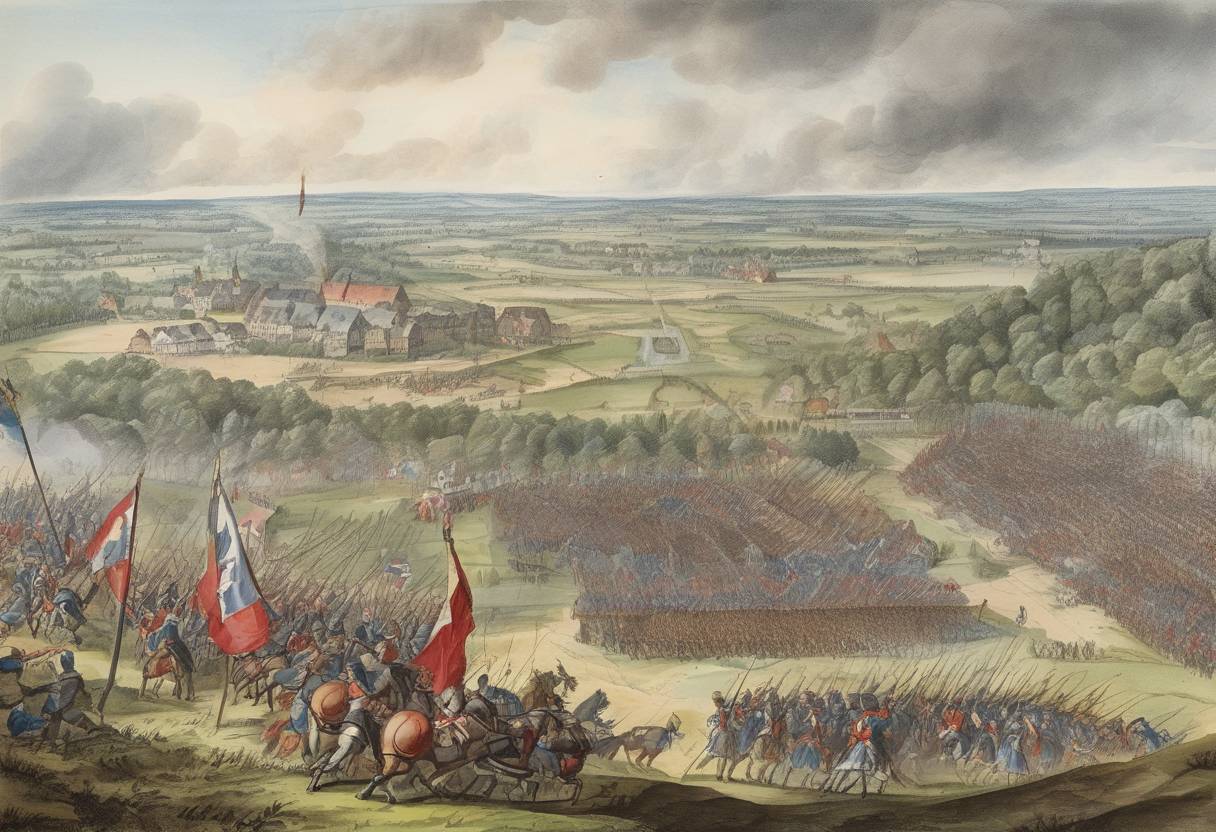
The Battle of Dettingen: June 27, 1743
The Battle of Dettingen, fought on June 27, 1743, was a significant engagement during the War of the Austrian Succession. This battle is particularly notable as it marked the last time a reigning British monarch personally led troops into battle. King George II commanded the British forces, which were part of the Pragmatic Army, a coalition that included Hanoverian and Austrian troops, against the French.
Context and Prelude
The War of the Austrian Succession (1740-1748) was a complex conflict involving most of the great powers of Europe. It was triggered by the death of Emperor Charles VI and the subsequent ascension of his daughter, Maria Theresa, to the Habsburg thrones. The Pragmatic Sanction, which was supposed to ensure her succession, was contested by several European powers, leading to widespread warfare.
By 1743, the British, under the leadership of King George II, had joined the coalition supporting Maria Theresa. The French, opposing the Pragmatic Sanction, sought to weaken the Habsburgs and expand their influence.
The Battle
- Location: The battle took place near the village of Dettingen, in the Electorate of Mainz, part of modern-day Germany.
- Forces Involved: The Pragmatic Army, numbering around 50,000, faced a French force of approximately 23,000 troops under the command of the Duc de Noailles and his nephew, the Duc de Grammont.
Key Events
Strategic Positioning: The French initially had a strong position, intending to trap the Pragmatic Army by cutting off their retreat and supply lines. However, a miscommunication led the French to engage prematurely.
The Battle Unfolds: The French forces, led by the impetuous Duc de Grammont, attacked the allied forces without waiting for the full deployment of their troops. This decision disrupted the French strategy and allowed the allies to exploit the situation.
King George II’s Leadership: King George II, despite being a monarch, took an active role in the battle. His presence on the battlefield was a morale booster for the troops. He reportedly led a cavalry charge, demonstrating personal bravery.
Outcome: The Pragmatic Army successfully repelled the French assault, forcing them to retreat. The allied victory at Dettingen was a significant morale boost and demonstrated the effectiveness of the coalition forces.
Aftermath and Significance
- Military Impact: The victory at Dettingen did not lead to a decisive strategic advantage but showcased the capability and resolve of the Pragmatic Army.
- Political Consequences: The battle reinforced British commitment to the war effort and solidified alliances within the coalition.
- Historical Note: King George II’s participation in the battle was the last instance of a British monarch leading troops in combat, marking an end to a historical tradition.
The Battle of Dettingen remains a notable event in military history, illustrating the complexities of 18th-century warfare and the intricate alliances that characterized the War of the Austrian Succession.