New Zealand and Newfoundland Become Dominions within the British Empire
1907 · London, United Kingdom
New Zealand and Newfoundland become dominions within the British Empire.
February 6, 1840
The Treaty of Waitangi was signed in New Zealand, establishing British sovereignty over the islands.
Waitangi, New Zealand | British Empire
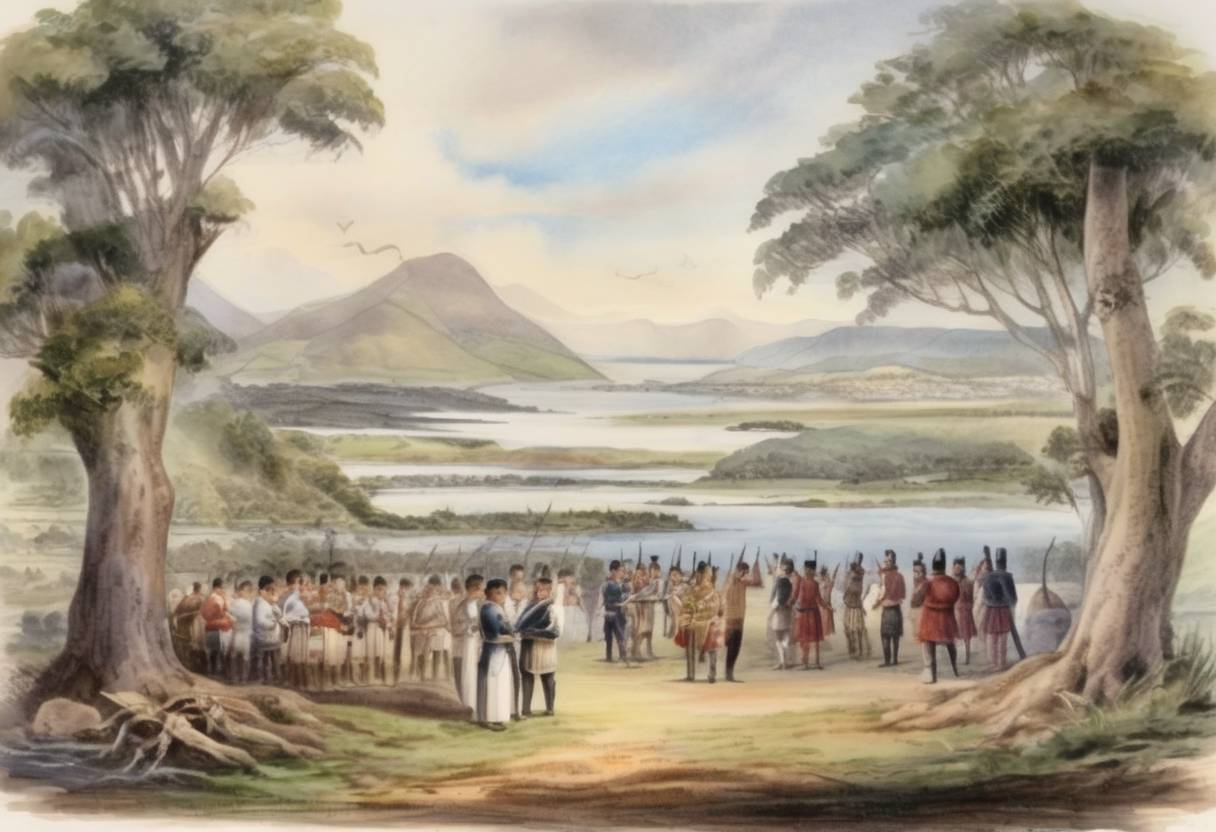
The Treaty of Waitangi, signed on February 6, 1840, is a foundational document in the history of New Zealand, marking the establishment of British sovereignty over the islands. This treaty was an agreement between representatives of the British Crown and various Māori chiefs from the North Island of New Zealand.
In the early 19th century, New Zealand was a land of diverse Māori tribes, each with its own distinct culture and governance. European settlers and traders had begun to arrive, leading to increased interactions and, at times, conflicts. The British government, concerned about the growing lawlessness and the potential for other European powers to establish a foothold, sought to formalize its influence.
The British appointed Captain William Hobson as consul to New Zealand, tasked with negotiating a treaty with the Māori to ensure British sovereignty while recognizing Māori land rights.
The Treaty of Waitangi consists of three main articles, with significant differences between the English and Māori versions:
Article One: In the English version, Māori chiefs ceded sovereignty to the British Crown. The Māori version, however, uses the term “kawanatanga,” which is often interpreted as governance rather than complete sovereignty.
Article Two: This article guaranteed Māori full possession of their lands, forests, fisheries, and other properties, with the Crown having the exclusive right to purchase lands.
Article Three: Māori were granted the rights and privileges of British subjects, promising protection and equality under British law.
The treaty was first signed at Waitangi in the Bay of Islands by over 40 Māori chiefs and representatives of the British Crown, including Captain Hobson. Over the following months, additional signatures were gathered from chiefs across the country.
Despite its intentions, the Treaty of Waitangi has been a source of controversy and conflict. The differing interpretations of the treaty’s terms, particularly regarding sovereignty and land rights, have led to disputes and grievances that persist to this day.
The Treaty of Waitangi is considered New Zealand’s founding document and is central to the country’s legal and political framework. It laid the groundwork for the relationship between the Māori and the Crown, influencing New Zealand’s development as a nation.
In modern times, the Waitangi Tribunal was established in 1975 to address grievances related to breaches of the treaty, providing a platform for Māori to seek redress and recognition of their rights.
The Treaty of Waitangi remains a vital symbol of New Zealand’s bicultural foundation, representing both the challenges and opportunities in the ongoing relationship between Māori and the Crown.
Source: www.britannica.com