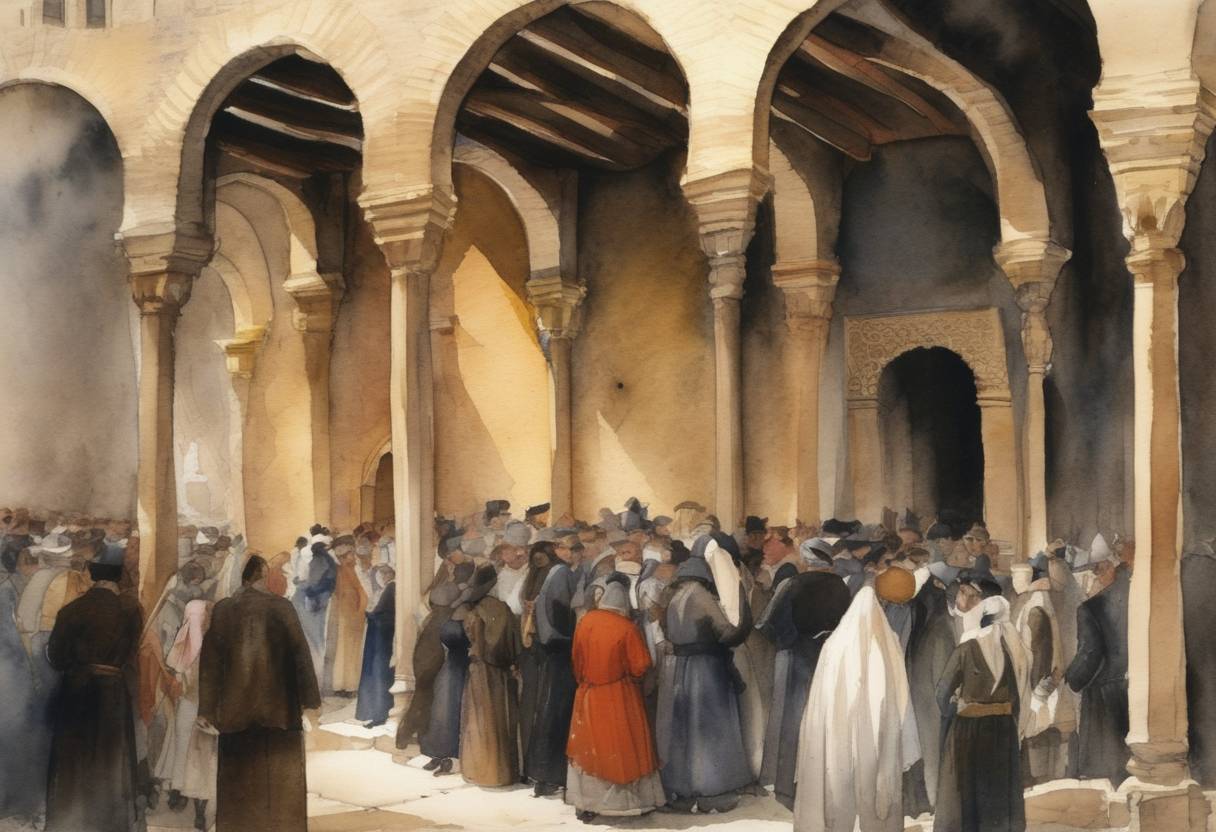
Anti-Jewish Pogroms in Seville, Spain - June 4, 1391
On June 4th, 1391, one of the most devastating anti-Jewish pogroms in medieval Spain commenced in Seville. This outbreak of violence marked the beginning of a series of organized and spontaneous attacks against Jewish communities across multiple Spanish cities, profoundly impacting the Iberian Jewish population.
Context and Background
The late 14th century was a period of intense social and religious tension in Spain. The Christian kingdoms of the Iberian Peninsula were grappling with internal strife, economic hardship, and the aftermath of the Black Death, which had devastated Europe’s population in previous decades. Jews, who often served as a scapegoat during times of crisis, were targets of increasing hostility and resentment.
Tensions were further inflamed by a preaching campaign led by Ferrand Martínez, Archdeacon of Écija, who instigated public animosity against Jews. His inflammatory sermons and calls for violence exacerbated existing antisemitic sentiments among the populace.
The Pogrom in Seville
The pogrom in Seville began on June 4th, 1391, following Martínez’s continual incitement. Enraged mobs descended upon the Jewish quarter of Seville, known as the Judería, looting homes, destroying property, and massacring inhabitants. Many Jews were killed, while others were forcibly converted to Christianity or captured and sold into slavery.
Spread Across Spanish Cities
The violence initiated in Seville rapidly spread to other cities, including Córdoba, Toledo, and Valencia, over subsequent months. Each attack followed a similar pattern of looting, destruction, and massacre. The virulence of these pogroms varied, but together they marked one of the darkest periods for Jews in medieval Spain.
Aftermath and Consequences
The 1391 pogroms had profound and lasting effects on the Jewish communities of Spain. A significant part of the Jewish population either converted to Christianity under duress or fled abroad in search of safety. Those who converted, known as “conversos,” and their descendants faced ongoing suspicion and discrimination, eventually leading to greater scrutiny during the Spanish Inquisition.
Historical Significance
The pogroms of 1391 were a pivotal moment in the history of Jewish Spain. They significantly weakened the Jewish presence, which had been a vibrant and integral part of medieval Spanish society. This wave of anti-Jewish violence foreshadowed later expulsions and persecution, culminating in the Alhambra Decree of 1492, which ordered the expulsion of all Jews from Spain.
The events of June 4, 1391, serve as a stark reminder of the perils of religious fanaticism and social unrest, highlighting the vulnerability of minority populations during periods of societal upheaval.