The Writing of "Defence of Fort M'Henry"
1814 · Baltimore, United States
Francis Scott Key wrote the poem "Defence of Fort M'Henry," which later became the lyrics to "The Star-Spangled Banner," the national anthem of the United States.
May 11, 1813
In the War of 1812, the siege of Fort Meigs was lifted as the British and Native American forces under the command of General Henry Procter and Shawnee leader Tecumseh withdrew.
Perrysburg, United States | United States Army
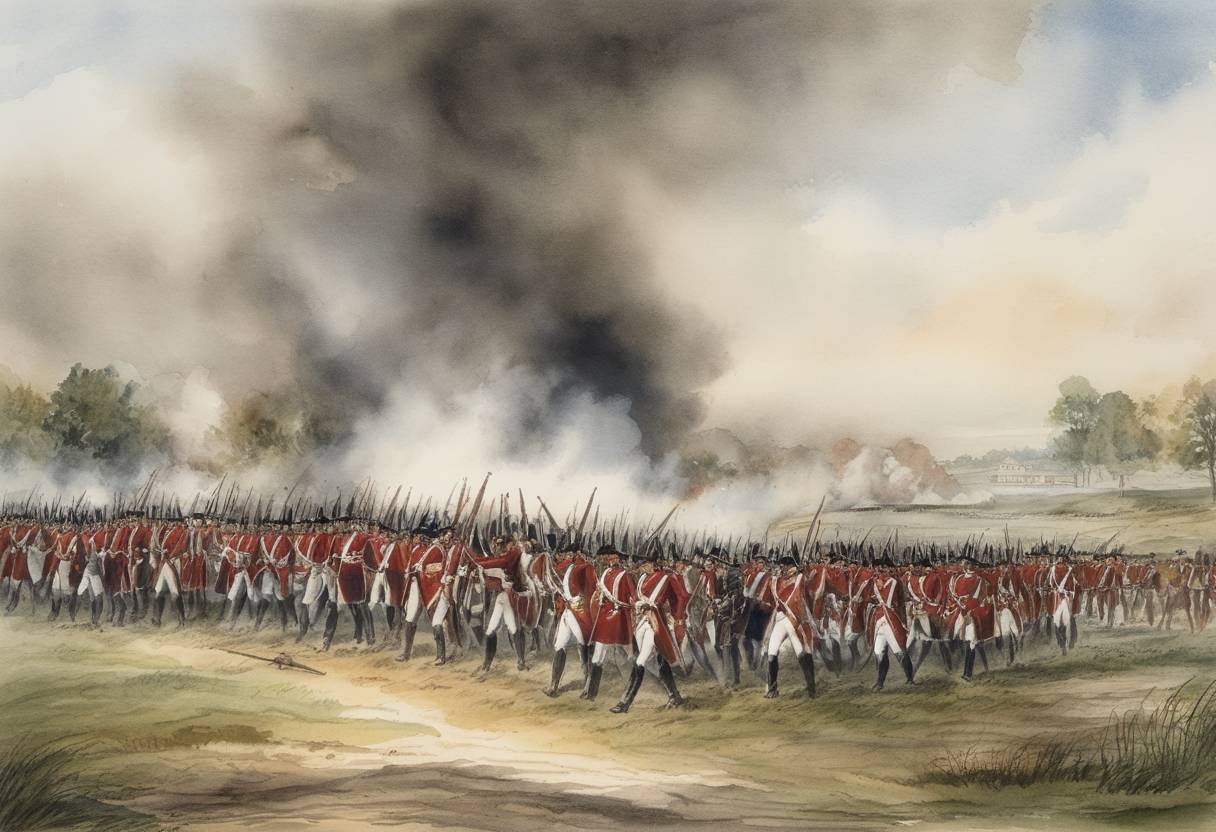
During the War of 1812, the Siege of Fort Meigs was a pivotal confrontation involving United States forces against a coalition of British troops and Native American warriors. The siege began on April 28, 1813, near the Maumee River in present-day Perrysburg, Ohio. British forces were commanded by General Henry Procter, with significant support from Shawnee leader Tecumseh, who rallied Native American allies to the British cause.
Fort Meigs was a strategically important military stronghold for the Americans, serving as a key defense point against British incursions into the Northwest Territory. The fort had been constructed under the orders of General William Henry Harrison, commander of the American Northwestern Army, who anticipated a British advance following their previous successes in the region.
With a contingent of around 2,000 men, British and Native American forces launched a siege on Fort Meigs, employing artillery bombardments in an attempt to breach the American defenses. General Procter aimed to weaken American control and secure British dominance in the region. Inside the fort, approximately 1,200 American troops, commanded by Harrison, faced the threat of dwindling supplies and the constant danger of attack.
On May 5, American reinforcements led by General Green Clay managed to break through to the fort despite suffering losses, providing much-needed supplies and additional manpower. The arrival of these reinforcements increased the defensive capability of the American forces and allowed Harrison to organize successful counterattacks.
Faced with escalating American resistance and growing logistical challenges, General Henry Procter decided to lift the siege and withdrew his forces on May 11, 1813. Tecumseh, though a staunch ally, recognized the practicality of retreat given the unfavorable circumstances and concurred with Procter’s decision to withdraw. The lifting of the siege marked a significant American defensive victory, bolstering morale and securing Fort Meigs as a critical supply base for the remainder of the war.
The successful defense of Fort Meigs hindered British plans to dominate the Northwest Territory and provided a strategic advantage to American forces. It demonstrated the ability of American troops to withstand prolonged sieges and resistance under high pressure. Moreover, the continued resistance at Fort Meigs contributed to forming the basis for future American offensives, including the successful campaigns that eventually led to the defeat of the British at the Battle of the Thames later that year.
The lifting of the siege not only marked a tactical retreat for Procter’s forces but also solidified Tecumseh’s resolve to maintain the Native American alliance against American expansion, proving his significance as a leader during the conflict. This event underscored the complex interplay of military strategy and alliances that characterized the War of 1812.
Source: www.nps.gov