The End of the Second Seminole War: August 14, 1842
1842 · Tampa, United States
The Second Seminole War ended with the United States Army declaring victory over the Seminole tribe in Florida.
January 30, 1858
Halleck Tustenuggee, a leading Seminole warrior, agreed to emigrate to the Indian Territory west of the Mississippi River after being persuaded by General William S. Harney during the Third Seminole War.
Fort Myers, United States | U.S. Army
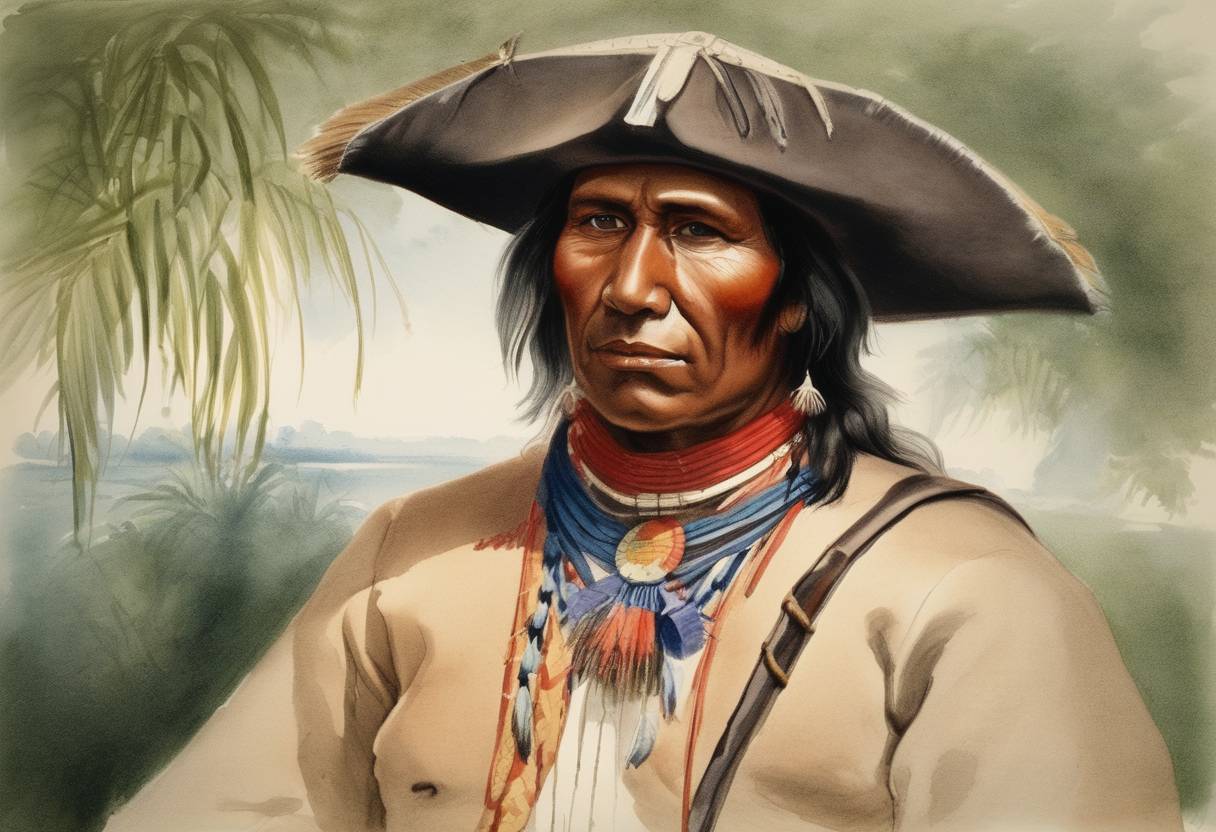
On January 30, 1858, Halleck Tustenuggee, a prominent warrior of the Seminole tribe, consented to relocate to the Indian Territory west of the Mississippi River. This decision was made during the Third Seminole War, a conflict that formed part of the longer Seminole Wars waged between the United States and the Seminole tribes of Florida.
The Third Seminole War (1855–1858) was a continuation of the struggle that began decades earlier as the U.S. government sought to remove the Seminoles from Florida. Previous wars had left the Seminole population diminished and dispersed, yet a resistant group led by figures like Halleck Tustenuggee continued to fight for their homeland.
General William S. Harney’s Role: General Harney, a seasoned military leader involved in multiple conflicts with different Native American tribes, played a pivotal role in negotiating the agreement. Harney’s strategies aimed at both military engagement and negotiation, recognizing that continued hostilities were unsustainable.
Demoralization and Persuasion: After years of guerrilla warfare and relocation pressure, the Seminole resistance was severely weakened. General Harney’s approach included assurances of safe passage and settlement in the Indian Territory, which finally persuaded Tustenuggee to agree to emigrate.
Emigration: Following the agreement, Tustenuggee and his band were some of the last Seminole groups to leave Florida, marking an essential phase in the U.S. government’s efforts to relocate Native Americans. This movement effectively concluded the Third Seminole War in early 1858.
Impact on the Seminoles: The relocation to the Indian Territory (present-day Oklahoma) was a significant transition for the Seminoles. It involved adapting to new environments and integrating into a society of various relocated tribes, fundamentally altering their traditional way of life.
The removal of Halleck Tustenuggee and other Seminoles symbolized the enduring effects of the U.S. policies of Native American removal. It highlighted the complexities of forced relocation and negotiations as tools utilized by the U.S. government to assert dominance and control over indigenous lands in the 19th century. This event served as a poignant conclusion to one of the series of conflicts that marked the troubling era of the Seminole Wars, underscoring the extensive human and cultural costs associated with these confrontations.
Source: www.nps.gov