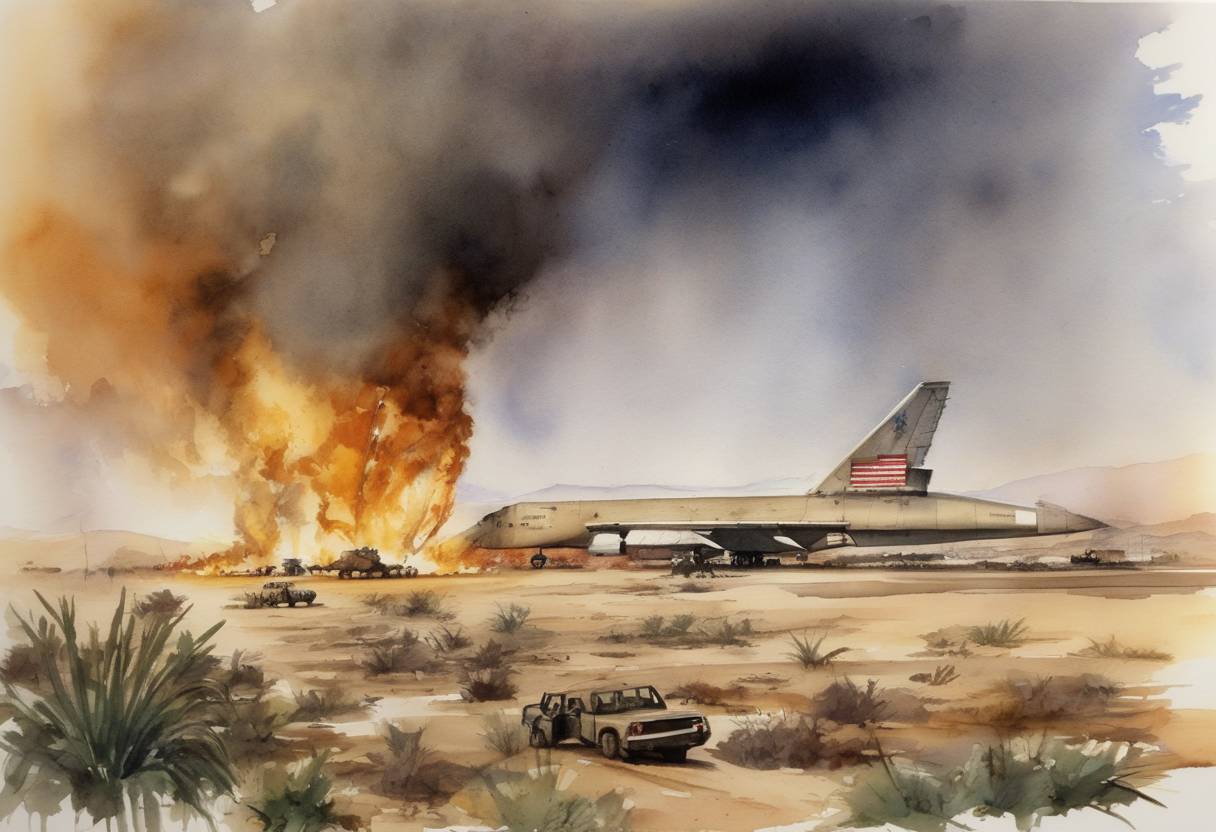
Operation Infinite Reach - August 20, 1998
On August 20, 1998, the United States, under the leadership of President Bill Clinton, launched Operation Infinite Reach. This military operation entailed a series of cruise missile strikes targeting al-Qaeda camps in Afghanistan and a pharmaceutical factory in Sudan. The action was a direct response to the terrorist bombings of U.S. embassies in Nairobi, Kenya, and Dar es Salaam, Tanzania, which occurred on August 7, 1998.
Context and Prelude
The bombings of the embassies resulted in the deaths of 224 people, including 12 Americans, and injured thousands. These coordinated attacks highlighted the growing threat posed by al-Qaeda, a militant Islamist organization led by Osama bin Laden. In the wake of the attacks, U.S. intelligence identified al-Qaeda as the responsible party, prompting the need for a swift and decisive response.
The Attacks
Operation Infinite Reach was executed as a retaliation against the perpetrators. The U.S. Navy fired Tomahawk cruise missiles from ships in the Arabian Sea. The primary targets were:
Al-Qaeda Training Camps in Afghanistan: Located in the Khost province, these camps were used to train terrorists and plan operations. The missile strikes were designed to disrupt al-Qaeda’s operational capabilities by destroying infrastructure and killing key operatives.
Al-Shifa Pharmaceutical Factory in Khartoum, Sudan: The factory was suspected by the United States to be involved in the production of chemical weapons and allegedly linked to al-Qaeda. This targeting was based on intelligence that later came under scrutiny for its accuracy and reliability.
Aftermath and Consequences
The strikes had significant military, political, and diplomatic impacts:
Military Impact: While the operation succeeded in demonstrating U.S. military reach, it failed to achieve its primary objective of neutralizing Osama bin Laden or significantly crippling al-Qaeda’s operating capacity. Key al-Qaeda leaders survived the attacks.
Political Repercussions: The decision to target the factory in Sudan, specifically, was heavily criticized both domestically and internationally. Subsequent investigations questioned the validity of the intelligence linking the factory to chemical weapons, with some suggesting it was a legitimate pharmaceutical plant.
Diplomatic Strain: The strikes heightened tensions in the region and caused significant diplomatic repercussions between the United States and Sudan, which denied any involvement with al-Qaeda.
Historical Significance
Operation Infinite Reach marked one of the first significant direct military responses to international terrorism by the United States. It underscored the challenges of responding to non-state actors and prefigured later U.S. military strategies against terrorism. The operation highlighted the complexities of intelligence assessment and the geopolitical intricacies involved in targeting international terrorist networks.
These events played a crucial role in shaping U.S. counterterrorism policies leading up to the more comprehensive military campaigns following the September 11 attacks in 2001.