Kissing Ban in England to Prevent the Spread of the Plague - July 16, 1439
1439 · London, England
Kissing is banned in England to prevent the spread of the plague.
November 1, 1348
The Black Death reaches London, England, having a devastating impact on the city and contributing to one of the most catastrophic public health crises in European history.
London, England | none
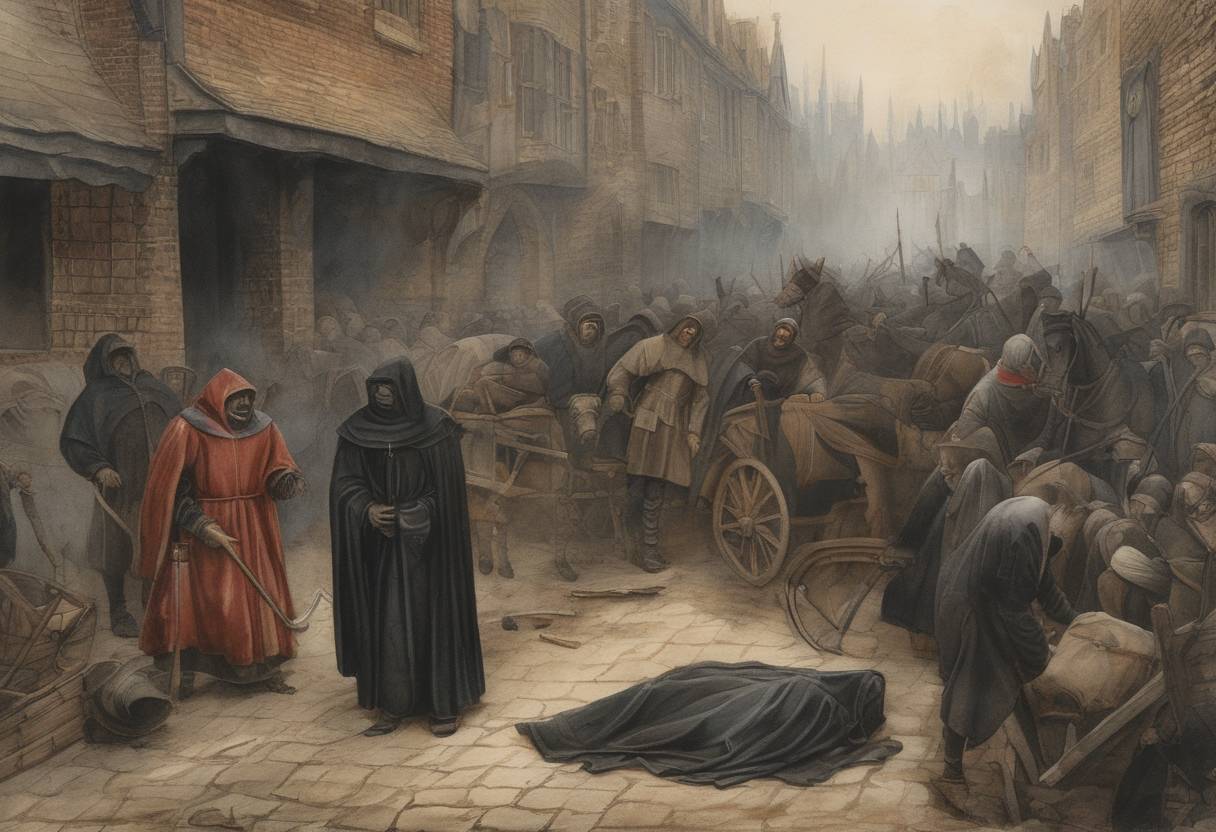
On November 1, 1348, the Black Death, a catastrophic pandemic, reached London, England, marking the beginning of its devastating impact on the city. This pandemic was one of the most severe in human history and brought significant social, economic, and demographic consequences.
The Black Death, caused by the bacterium Yersinia pestis, originated in Asia. It spread along trade routes via fleas on rats, reaching Europe by 1347. The disease traveled rapidly due to the interconnectedness of trade networks, arriving first in major ports and then spreading inland.
London, bustling with trade and densely populated, became an early epicenter of the outbreak in England. On November 1, 1348, as the disease manifested in the city, it triggered widespread panic. The symptoms were gruesome: high fever, swollen lymph nodes (buboes), and skin turning black due to subdermal hemorrhages, hence the name “Black Death.”
The densely packed living conditions in London, with poor sanitation, facilitated the rapid spread of the disease. Within months, the population was decimated, with death tolls reaching catastrophic numbers. Historical estimates suggest that up to 60% of London’s residents perished within a year.
The Black Death’s impact went beyond the immediate health crisis. With a significant portion of the population dead, labor shortages ensued, disrupting agriculture and trade. This led to an economic crisis, with inflation and a decrease in the availability of essential goods. Landowners faced difficulties maintaining their lands, resulting in changes in feudal obligations and contributing to the decline of the manorial system.
The pandemic also profoundly affected cultural and religious life. The high mortality rates and seemingly random nature of the disease led to a loss of faith for some and heightened religious fervor for others. The church faced criticism as it struggled to explain or control the situation, shaking people’s trust in traditional religious institutions.
The Black Death inadvertently spurred significant long-term transformations in European society. With the labor market drastically altered, wages for laborers increased, improving living conditions for some peasants. These changes planted early seeds for movements towards social reform and contributed to the eventual end of medieval feudalism.
The arrival of the Black Death in London on November 1, 1348, serves as a critical juncture in European history, ushering in profound demographic, economic, and social transformations. It reshaped the course of European demographics and left an indelible mark on human history, serving as a grim reminder of the vulnerabilities of urban centers to pandemics.
Source: en.wikipedia.org