Founding of Arequipa on August 15, 1540
1540 · Arequipa, Peru
Arequipa, now one of Peru's major cities, is founded by Garcí Manuel de Carbajal, an emissary of Spanish conquistador Francisco Pizarro.
August 15, 1537
The city of Asunción is founded by explorer Juan de Salazar y Espinosa, becoming the capital of the Governorate of Paraguay and later the capital of Paraguay.
Asunción, Paraguay
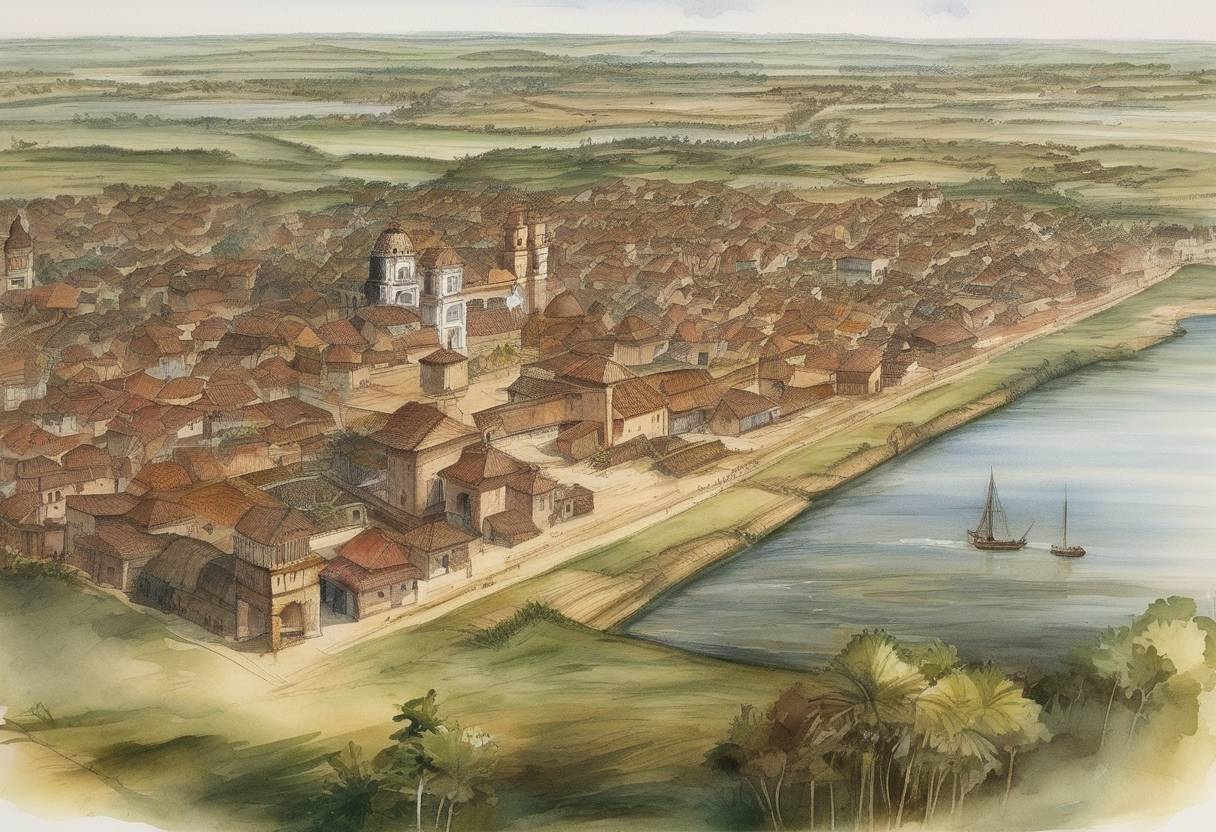
On August 15, 1537, the city of Asunción was founded by the Spanish explorer Juan de Salazar y Espinosa. This moment marked a significant development in the history of South America, as Asunción would become an essential colonial hub and later the capital of Paraguay.
Asunción’s establishment occurred during Spain’s early colonial endeavors in the Americas, a period characterized by exploration and conquests driven by the desire for territorial expansion and resource acquisition. The broader area, which the Spanish called the Governorate of New Andalusia, was contested and explored by various Spanish expeditions seeking to establish strongholds and trade routes.
Juan de Salazar y Espinosa, part of Pedro de Mendoza’s larger expedition to the Río de la Plata, ventured upriver and reached a site chosen for its strategic location on the Paraguay River. Salazar’s decision to settle there and construct a fort, named “Nuestra Señora Santa María de la Asunción,” was influenced by both its defensible position and the fertile surrounding lands. The name “Asunción” was selected to commemorate the Feast of the Assumption, which fell on the day of its founding.
Asunción rapidly developed into a focal point for Spanish colonial administration and settlement in the region. The city became crucial for maintaining Spanish influence in the interior of South America, serving as a launchpad for further exploration and expansion into neighboring territories.
In time, Asunción became renowned as the “Mother of Cities” due to many expeditions that departed from there to establish other settlements across South America. This included the founding of cities such as Buenos Aires, which would later eclipse Asunción in regional prominence.
Today, Asunción stands as the vibrant capital of Paraguay. Its founding set in motion events and developments that shaped the nation’s history. It remains symbolic of the era of exploration and colonization that significantly altered the continent’s cultural and political landscape.
Understanding the foundation and evolution of Asunción provides insights into the larger forces of European colonial history in South America and the development of modern Paraguayan identity.