1856 · Paris, France
The Treaty of Paris was signed, ending the Crimean War between Russia and an alliance of the Ottoman Empire, France, Britain, and Sardinia.
June 9, 1667
The first documented successful blood transfusion took place in Paris when Jean-Baptiste Denys, a French physician, transfused blood from a sheep into a 15-year-old boy.
Paris, France | None
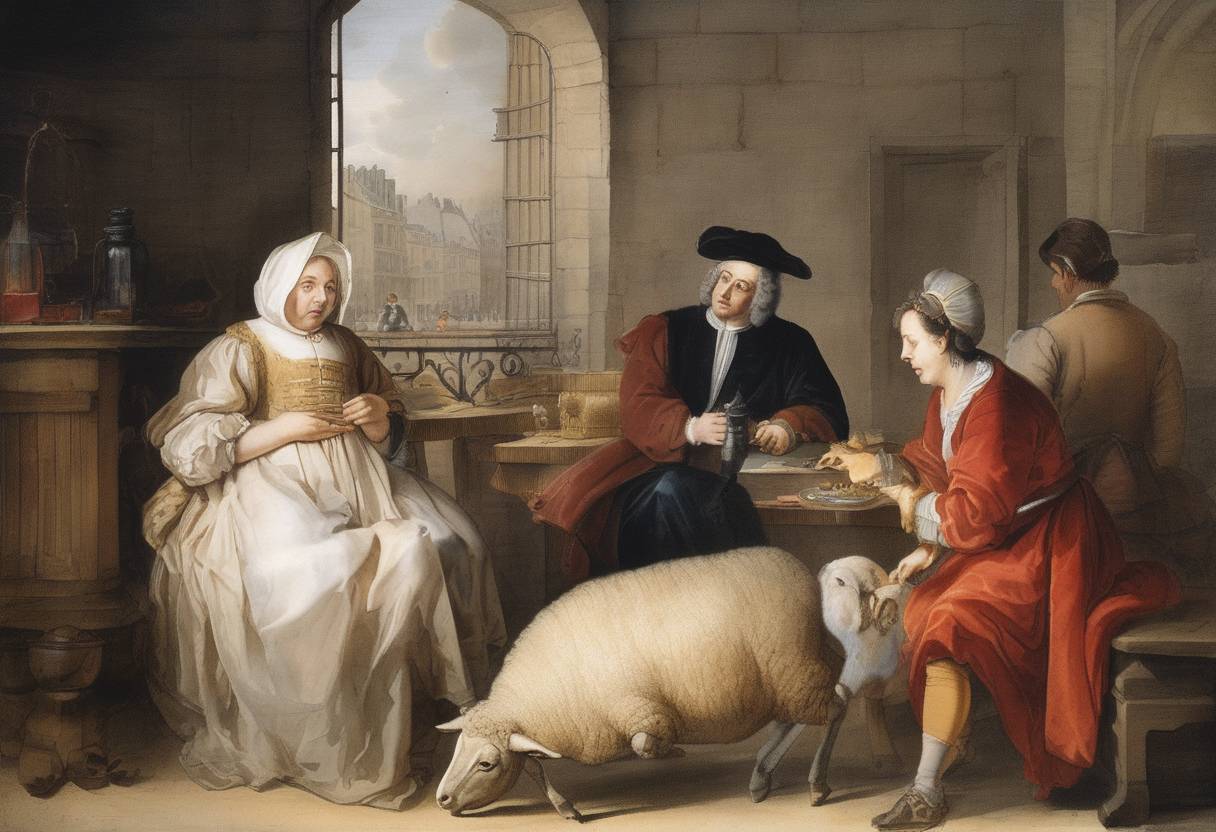
On June 9, 1667, Jean-Baptiste Denys, a French physician, performed the first documented successful blood transfusion in Paris. This event marked a significant milestone in the history of medicine, laying the groundwork for modern transfusion techniques, despite reflecting the scientific misunderstandings of the era.
During the 17th century, scientific exploration and experimentation were gaining momentum across Europe. Among these advances was the burgeoning field of blood transfusion, spurred by the discovery of the circulatory system by William Harvey in 1628. This knowledge prompted scientists to explore the possibility of transferring blood between living organisms as a therapeutic treatment.
Jean-Baptiste Denys, the personal physician to King Louis XIV, was at the forefront of these experiments in France. His work coincided with similar undertakings by English natural philosophers such as Richard Lower and Robert Boyle. Denys aimed to treat patients suffering from various ailments, believing that fresh animal blood could serve as a therapeutic agent.
On June 9, 1667, Denys transfused approximately 9 ounces of blood from a sheep into a 15-year-old boy suffering from a fever. The choice of a sheep was grounded in the belief that the docile nature of the animal would imbue the recipient with calm and healing qualities.
Remarkably, the transfusion did not have immediate adverse effects, leading Denys to proclaim it a success. This event is credited as the first documented successful transfusion between a human and an animal. Despite this apparent success, the understanding of blood compatibility and immune response was nonexistent at the time, leading to varied results in subsequent transfusions, often with fatal outcomes.
The practice of blood transfusion from animals to humans came under scrutiny following several unsuccessful attempts and subsequent mortalities. In 1668, a French court prohibited such experiments following the death of a patient due to a transfusion performed by Denys. This led to a significant decline in transfusion practices until the advent of safer methods in the 19th century when the discovery of blood types by Karl Landsteiner in 1901 eventually transformed transfusion into a reliable medical procedure.
Denys’ experiment on June 9, 1667, remains a noteworthy historical moment, symbolizing both the boldness of early medical experimentation and the ongoing journey toward safer, science-based medical treatments.
Source: www.britannica.com