1924 · Santo Domingo, Dominican Republic
American soldiers leave the Dominican Republic after eight years of occupation that began in 1916. The occupation was initially aimed at ensuring political stability and safeguarding foreign interests.
August 16, 1863
The Dominican Restoration War begins as Gregorio Luperón declares the independence of the Dominican Republic from Spanish annexation.
Capotillo, Dominican Republic
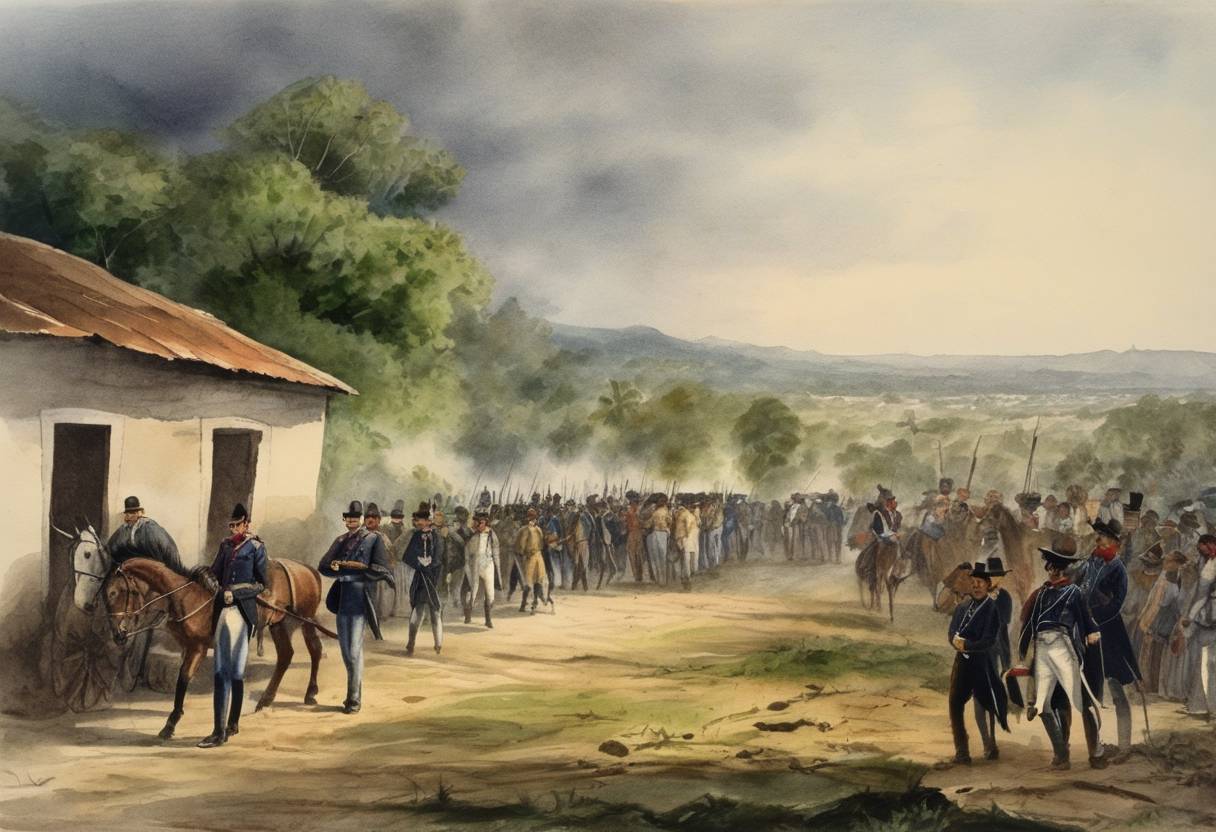
On August 16, 1863, the Dominican Restoration War began, marking a pivotal chapter in the Dominican Republic’s struggle for sovereignty. This conflict arose from growing discontent with the re-annexation of the Dominican Republic by Spain, which had been formalized in 1861.
Spanish Annexation: In 1861, the Dominican Republic, under the leadership of General Pedro Santana, was annexed by Spain. This move was initially favored by some factions as a means of protection against neighboring Haiti and internal instability. However, it soon led to widespread dissatisfaction due to the loss of national sovereignty and harsh Spanish colonial policies.
Resentment and Resistance: A significant portion of the Dominican population opposed the Spanish re-annexation. The imposition of higher taxes, reduction of regional autonomy, and economic exploitation fueled unrest. Cultural and nationalistic sentiments also played a crucial role in the growing resistance.
On August 16, 1863, a native rebellion was ignited when Gregorio Luperón and other Dominican nationalists declared independence from Spanish rule in the town of Capotillo, marking the formal commencement of the Restoration War. This event is often referred to as the “Grito de Capotillo,” or “Shout of Capotillo.”
Guerrilla Warfare: The early phase of the Restoration War was characterized by guerrilla tactics. Dominican forces, although outnumbered and less equipped than their Spanish counterparts, leveraged their knowledge of the local terrain and popular support to orchestrate effective resistance campaigns.
Expansion of the Rebellion: The success at Capotillo encouraged other towns and cities to rise against Spanish control. The insurrection quickly spread across the northern part of the island, creating significant challenges for Spanish authorities.
The initiation of the Dominican Restoration War on August 16, 1863, was a defining moment in the journey toward reclaiming Dominican independence. The conflict lasted until 1865, culminating in the withdrawal of Spanish troops and the restoration of Dominican sovereignty.
Legacy: The war established a legacy of resilience and national pride among the Dominican people. It highlighted the unyielding demand for self-determination and laid the groundwork for future leaders to build and protect the nation.
Impact on Spain: The war also had repercussions for Spain, exposing the vulnerabilities of its colonial endeavors and contributing to a broader reevaluation of its imperial strategy in the Caribbean.
The commencement of the Dominican Restoration War represents a significant pursuit of autonomy and exemplifies the broader movements for independence and decolonization in the nineteenth century.
Source: www.britannica.com