The First Geneva Convention: August 22, 1864
1864 · Geneva, Switzerland
The First Geneva Convention was adopted, establishing the rules for the treatment of wounded soldiers and the protection of medical personnel during war.
August 23, 1864
The Geneva Convention for the Amelioration of the Condition of the Wounded in Armies in the Field, the first of the Geneva Conventions, is signed. This treaty formed the basis for international humanitarian law in wartime.
Geneva, Switzerland | International Committee of the Red Cross
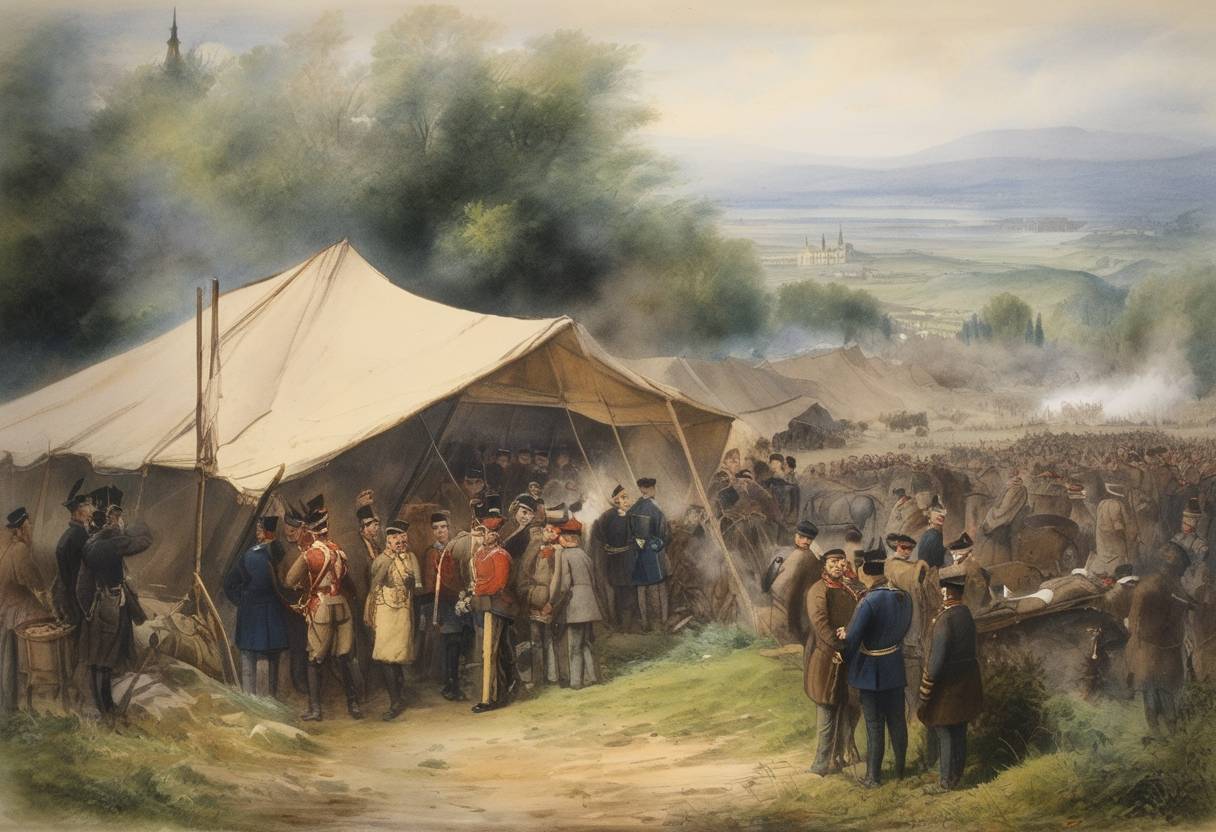
On August 22, 1864, the first Geneva Convention, formally known as the “Geneva Convention for the Amelioration of the Condition of the Wounded in Armies in the Field,” was signed. This landmark treaty marked the foundational step in establishing international humanitarian law applicable during times of war.
The mid-19th century witnessed several brutal conflicts in Europe, from the Crimean War to the Italian Wars of Independence, highlighting the need for greater humanitarian consideration in warfare. The inadequacies in the care of soldiers wounded in battle were vividly illustrated during the Battle of Solferino in 1859, witnessed by Jean-Henri Dunant, a Swiss businessman. Dunant’s experiences led him to author “A Memory of Solferino,” which advocated for volunteer groups to tend to the wounded on battlefields.
Dunant’s book spurred action, and in 1863, the Geneva Society for Public Welfare formed the International Committee for Relief to the Wounded—what is now known as the International Committee of the Red Cross (ICRC). The Committee organized an international conference in October 1863, bringing together 16 states to discuss the humanitarian issues in warfare.
The Geneva Convention of 1864 was signed by 12 European states, creating a legal framework for the treatment of military personnel who are wounded on the battlefield, irrespective of nationality. Its key provisions included:
This first treaty has since become the cornerstone of what is now known as the Geneva Conventions, a pivotal component in international law and humanitarian ethics. It established principles that would evolve and expand, eventually encompassing civilians, prisoners of war, and the protections against war crimes.
The impact of the first Geneva Convention extends beyond its immediate humanitarian aim; it laid the groundwork for wider acceptance of the moral dimensions of military conduct. By institutionalizing the protection of the sick and wounded, it initiated a legacy of international treaties striving to moderate the horrors of war, expand human rights, and ameliorate suffering resulting from armed conflict.
Source: www.icrc.org