2022 · Rotherham, United Kingdom
Italy won the European women's soccer championship for the first time as they defeated the Netherlands in the UEFA Women's Euro final.
June 18, 2005
The 2005 UEFA Women's Championship concludes with Germany defeating Norway 3-1 in the final, securing their sixth title.
Blackburn, United Kingdom | UEFA
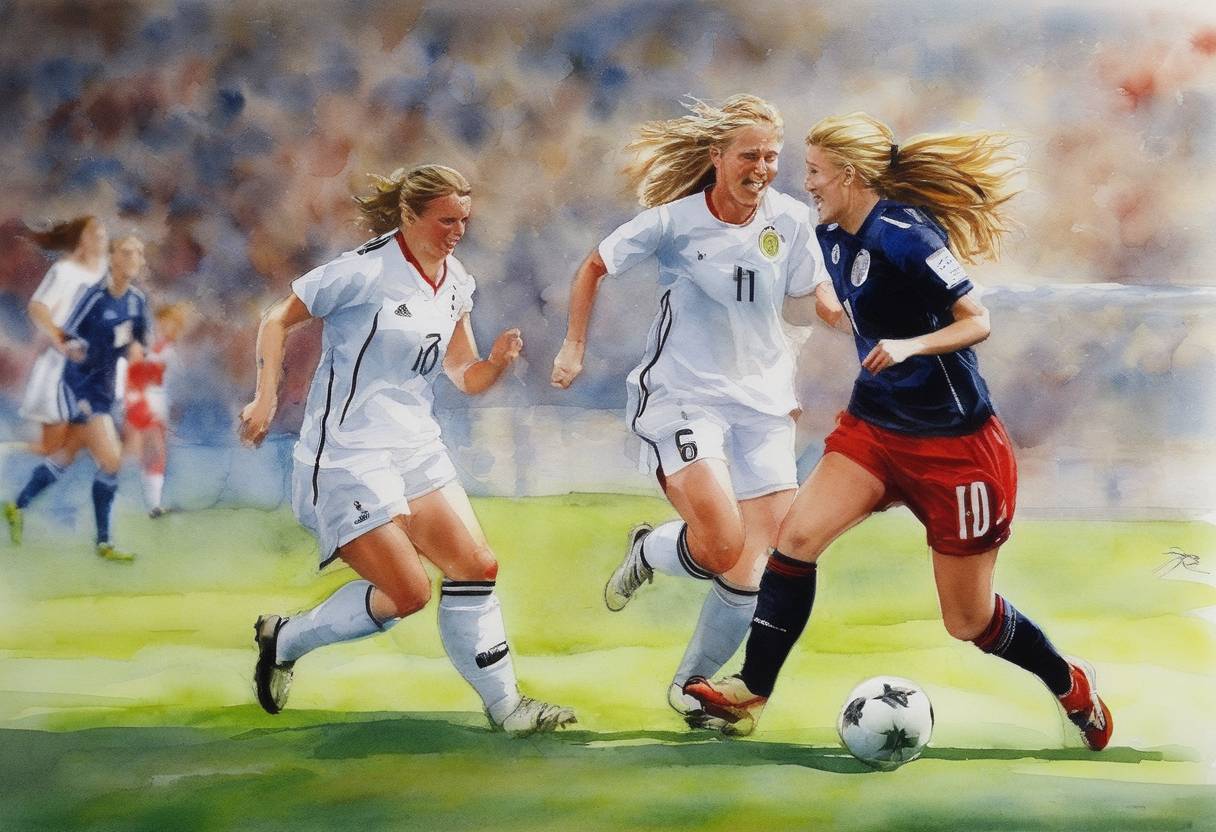
On June 18, 2005, the UEFA Women’s Championship concluded with an impressive victory for Germany, who defeated Norway 3-1 in the final. Held at Ewood Park in Blackburn, England, this match secured Germany’s sixth title in the history of the tournament, further cementing their dominance in women’s European football.
The 2005 UEFA Women’s Championship, commonly referred to as the Women’s Euro 2005, was hosted by England from June 5 to June 19. The event brought together the top national teams from across Europe, competing for the title over a series of group stage matches and knockout rounds. Germany entered the tournament as the dominant force, having won five of the previous seven championships.
Both teams had demonstrated outstanding performance throughout the tournament to reach the final. Germany, under the leadership of coach Tina Theune-Meyer, showcased exceptional skill and determination.
Germany quickly took control of the game, displaying their technical superiority and strategic prowess:
Germany’s victory in 2005 marked their fourth consecutive UEFA Women’s Championship win, underscoring their exceptional status in women’s football at the time. The win bolstered Germany’s reputation and inspired a new generation of female footballers not only in Germany but across Europe.
Germany’s consistent performance in women’s football has had a long-lasting impact, influencing the development and popularity of the sport globally.
Following their victory, the German team continued to dominate women’s football at both the European and world stages. This particular win in 2005 was a key moment in their sports legacy, demonstrating the importance of a strong domestic league and investment in women’s sports for sustainable success.
Source: www.uefa.com