Treaty Between Valdemar IV of Denmark and the Hanseatic League - August 15, 1363
1363 · Helsingborg, Sweden
A treaty is signed between Valdemar IV of Denmark and the Hanseatic League, easing trade tensions and establishing cooperative relations.
April 22, 1370
The Treaty of Stralsund is signed, ending the war between Denmark and the Hanseatic League, with the League's position in the Baltic Sea becoming significantly strengthened.
Stralsund, Holy Roman Empire | Hanseatic League
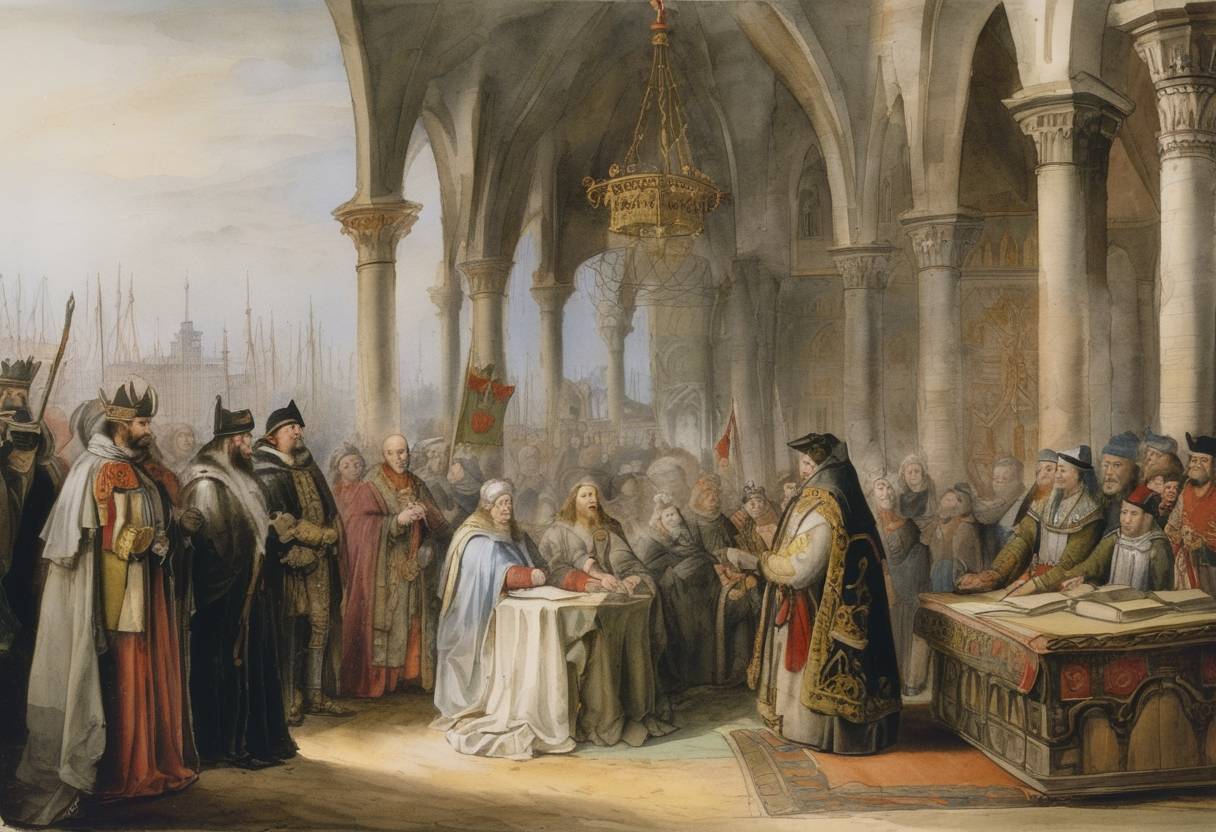
The Treaty of Stralsund, signed on April 22, 1370, marked a pivotal moment in the power dynamics of Northern Europe during the late Middle Ages. This treaty concluded the conflict between the Kingdom of Denmark, ruled by King Valdemar IV, and the Hanseatic League, a powerful economic and defensive alliance of merchant guilds and market towns in Northern Europe.
Throughout the 14th century, the burgeoning power of the Hanseatic League increasingly clashed with the territorial ambitions of Denmark. The conflict reached its height in the 1360s as both entities vied for control over trade routes and influence in the strategically significant Baltic Sea region. This led to the outbreak of the war, as the league sought to maintain its dominance over the lucrative trading lanes vital for their economic prosperity.
Hanseatic League’s Territorial Gains: The treaty granted the Hanseatic League a series of significant privileges and territorial concessions along the Baltic coastline. These not only bolstered their trading rights but also secured their influence over major ports, thereby enhancing their control over Baltic commerce.
Trade Advantages: The League achieved vast economic benefits and privileges that elevated its members above other traders. This included exclusive rights to trade certain goods and favored status in Hanseatic towns.
Political Leverage: The League emerged from the treaty having significantly increased its political leverage over Danish territorial and foreign policy, establishing a precedent for their role as a formidable political force as well as an economic one.
The Treaty of Stralsund greatly strengthened the Hanseatic League’s position in the Baltic Sea, solidifying its dominance over Northern European trade. It marked a shift in power away from the centralized monarchies towards regional trade alliances, setting the stage for similar economic coalitions in European history.
Moreover, the treaty had long-lasting effects on Danish foreign policy and internal politics. It curtailed Danish ambitions in the Baltic region, effectively stabilizing the region temporarily by aligning the interests of the two parties.
The agreement exemplified the rising influence of trade organizations in medieval geopolitics. It underscored the ability of non-state actors to shape regional affairs, laying groundwork for the role of economic coalitions in future European political landscapes. The Hanseatic League’s enhanced sway following the treaty maintained its prominence across the Baltic until well into the 15th century, influencing trade and political decisions across Northern Europe.
Source: en.wikipedia.org